Ingredient

Hyaluronic Acid

Products with Hyaluronic acid on sale in the United States.

Find products
Share

Email article

Published

Hyaluronic acid is a long sugar chain found in skin, the eye and joint fluid. Supplements contain it as hyaluronic acid or its salt, sodium hyaluronate. It is made by bacterial fermentation or extracted from rooster combs. This page is about taking it by mouth; injections and skin creams are other topics.

Hyaluronic acid in the body

Hyaluronic acid is a long chain of two sugars that repeat in turn. One chain can weigh up to 6 million daltons. That is about 16,000 repeats of the sugar pair, by our calculation. In the body it is present as a salt, hyaluronate. It is found in high amounts in skin, the umbilical cord and the clear gel inside the eye. It is also present in joint fluid, cartilage and blood vessels.

Terms and sources
two sugars
glucuronic acid and N-acetylglucosamine. Liu et al., Microbial Cell Factories, 2011.
daltons
a unit of molecular mass. Liu et al., Microbial Cell Factories, 2011.
16,000 repeats
6,000,000 divided by 379, the mass of one sugar pair in daltons.
clear gel inside the eye
the vitreous humor. The name joins hyaloid, meaning glassy, and uronic acid. Meyer and Palmer described it in 1934, from cattle eyes. Liu et al., Microbial Cell Factories, 2011.
joint fluid
Fraser et al., 1997, find it in all tissues and body fluids of vertebrates.

In rats, more than half of the body's hyaluronic acid is in the skin. About a quarter is in the skeleton and connective structures, and less than a tenth in muscle. In women's skin, it made up 0.030% of skin weight at ages 19–47. The share fell to 0.015% at age 60 and 0.007% at age 75.

Terms and sources
In rats
Rats of 250 g held 40–60 mg in total. Reed et al., Acta Physiologica Scandinavica, 1988.
women's skin
Skin samples from women aged about 19 to 75. Longas et al., Carbohydrate Research, 1987.

In tissues, the half-life of hyaluronic acid ranges from less than 1 day to several days. Hyaluronic acid that reaches the blood has a half-life of 2–5 minutes. Cells lining the small vessels of the liver remove most of it. At only 0.1% in water, the chains tangle and the solution becomes thick. Roles proposed for it include lubrication and control of water in tissues.

Terms and sources
half-life
the time it takes for half of it to be broken down. Fraser et al., Journal of Internal Medicine, 1997.
becomes thick
highly viscous. Liu et al., Microbial Cell Factories, 2011.
Roles proposed
Fraser et al., Journal of Internal Medicine, 1997.

What happens to swallowed hyaluronic acid has been studied mostly in rats. In a 2008 rat study, 87–96% of a radioactive label was recovered, almost all of it in feces. Some of the label still appeared in joints, bones and skin. A 2016 rat study found no hyaluronic acid in feces. Gut bacteria broke it into small pieces, which passed through rat large intestine tissue in lab tests.

Terms and sources
radioactive label
technetium-99m attached to hyaluronic acid. Dogs were also studied. Balogh et al., Journal of Agricultural and Food Chemistry, 2008.
2016 rat study
It measured hyaluronic acid itself, not a label. Kimura et al., Journal of Medicinal Food, 2016. Five of six authors work for Kewpie, a maker of hyaluronic acid.
small pieces
oligosaccharides, short chains of sugar pairs. Pieces of 1, 2 and more sugar pairs reached rat skin.

Where hyaluronic acid comes from

Hyaluronic acid for supplements comes from rooster combs or from bacteria grown in tanks. Traditionally, it was extracted from rooster combs. Most hyaluronic acid is now made by fermentation, mainly with Streptococcus zooepidemicus bacteria. Some producers use genetically modified bacteria of other species.

Terms and sources
bacteria grown in tanks
microbial fermentation. Liu et al., Microbial Cell Factories, 2011.
Streptococcus zooepidemicus
Shiseido first made hyaluronic acid this way on an industrial scale in the 1980s. Liu et al., Microbial Cell Factories, 2011.
genetically modified bacteria
recombinant production. Novozymes makes hyaluronic acid this way on an industrial scale, according to Liu et al., 2011.

Rooster comb extracts sold as ingredients contain hyaluronic acid with other comb compounds. Hyal-Joint is described as about 60% hyaluronic acid, and Mobilee as 65%. BioCell Collagen comes from chicken sternum cartilage and contains hyaluronic acid among other compounds.

Terms and sources
Hyal-Joint
a chicken comb extract. Kalman et al., Nutrition Journal, 2008.
Mobilee
a rooster comb extract. Sánchez et al., Genes and Nutrition, 2014.
BioCell Collagen
Per 500 mg: at least 300 mg type II collagen, 100 mg chondroitin sulfate and 50 mg hyaluronic acid. Schwartz et al., 2019.

Daily amounts and the upper limit

Trials on this page used 60–120 mg of hyaluronic acid or sodium hyaluronate a day for 6–12 weeks. The reviews on this page combined trials of 120–200 mg a day for 4–12 weeks. A 2022 review reports no adverse events linked to hyaluronic acid in its 4 trials of up to 12 weeks.

Terms and sources
The reviews
Sun et al., Frontiers in Nutrition, 2022, and Yang et al., Frontiers in Medicine, 2025.
2022 review
Sun et al., Frontiers in Nutrition, 2022. Three trials reported no adverse events, and one none related to hyaluronic acid.
adverse events
unwanted effects. In a 2025 trial of 150 adults, mild complaints were as common with the dummy liquid. Dolečková et al., 2025.

United States

The National Academies have not set an upper limit for hyaluronic acid. They have not set a recommended amount either. US labels list hyaluronic acid in mg per serving, without a percent Daily Value.

Terms and sources
upper limit
Hyaluronic acid has no Dietary Reference Intake. National Academies, Dietary Reference Intakes summary tables.
percent Daily Value
FDA has not set a Daily Value for hyaluronic acid. 21 CFR 101.36.

In 172 US labels of hyaluronic acid-only products, the middle half list 100–141 mg per serving. The most common amounts are 100 mg, 200 mg and 120 mg per serving. Of these labels, 55% name sodium hyaluronate as the form; 40% name no form.

Terms and sources
172 US labels
NIH Dietary Supplement Label Database, including products no longer sold. The only ingredient is hyaluronic acid; Nutrition Facts lines were not counted. Rooster comb extracts, Injuv and BioCell were left out, also when named as the form. On some labels, Injuv contains rooster comb extract. All 172 state mg. A serving is not always a full day's amount.
100 mg, 200 mg and 120 mg
On 71, 17 and 13 labels. 39 labels list less than 100 mg and 9 list more than 200 mg. We counted these.
55%
95 of 172. Another 8 name hyaluronic acid. We counted these.

In the same download, 2,041 labels list hyaluronic acid, and 83% of them list other ingredients too. In ingredient and form names, 15 of these labels name a comb source and 3 name fermentation. Brand names on these labels include Hyal-Joint on 36 labels, Injuv on 18 and Hyabest on 16.

Terms and sources
2,041 labels
Labels with an ingredient or form named hyaluronic acid, hyaluronate or hyaluronan, or a hyaluronic acid brand. 209 of them are BioCell labels. Nutrition Facts lines do not count as other ingredients. We counted these.
15 of these labels
Rooster, hen or chicken comb. Labels may state the source elsewhere on the package. We counted these.
Hyal-Joint on 36 labels
Oralvisc on 14, Mobilee on 13 and Hyamax on 13. BioCell is on 209 of these labels, and 246 in the whole download. We counted these.

Forms of hyaluronic acid and how they differ

Hyaluronic acid in supplements differs by source, chain size and salt form. Chain size is given as molecular weight in kDa. Trials on this page tested chains of 2, 300, 800 and 1,800 kDa. Two trials compared chain sizes directly. On the main skin measure, only the 300 kDa group differed from the dummy capsule, each at one time point. A 2025 trial of 1,800 kDa chains found a difference in facial hydration at 60 and 120 mg. We do not rank forms.

Terms and sources
kDa
kilodaltons, thousands of daltons, a unit of molecular mass.
compared chain sizes
Oe et al., 2017, compared 2 and 300 kDa. Kawada et al., 2015, compared 300 and 800 kDa.
one time point
Wrinkle volume at week 8 in Oe 2017, and skin moisture 2 weeks after intake ended in Kawada 2015. In Kawada 2015, self-rated luster also differed, with 800 kDa, per the authors' correction.
2025 trial
Dolečková et al., Scientific Reports, 2025, in 150 adults. It did not compare chain sizes.
Sodium hyaluronate, 2 to 1,800 kDa chains, rooster comb extracts and BioCell
FormWhat it isWhat is known
Sodium hyaluronateThe sodium salt; 94.5% hyaluronic acid by our calculationSugiyama 2023 and Dolečková 2025 name their product sodium hyaluronate.
Hyaluronic acid, 300 kDaChains averaging about 300 kDaUsed in 4 of the 5 trials on this page, at 111–120 mg a day.
Hyaluronic acid, 2 kDaShort chains of about 5 sugar pairsDid not differ from the dummy capsule in Oe 2017.
Hyaluronic acid, 800 kDaChains averaging about 800 kDaDid not differ from the dummy capsule in Kawada 2015.
Sodium hyaluronate, 1,800 kDaLong chains from microbial fermentationFacial hydration differed from a dummy liquid at 60 and 120 mg in Dolečková 2025.
Rooster comb extractHyal-Joint about 60% and Mobilee 65% hyaluronic acid, with other comb compoundsTrials of these extracts are not on this page.
BioCell CollagenChicken sternum cartilage with type II collagen, chondroitin sulfate and at least 10% hyaluronic acidA separate ingredient; its trials are not on this page.

Shares from Kalman 2008 (Hyal-Joint), Sánchez 2014 (Mobilee) and Schwartz 2019 (BioCell). Hsu 2021 and Sugiyama 2023 used Hyabest(S) LF-P, which Oe 2017 and Kawada 2015 describe as about 300 kDa. Sodium hyaluronate share and sugar pairs per chain: our calculation, from 379.3 daltons per sugar pair.

Published studies of hyaluronic acid

7 studies in adults without a diagnosis: 3 found a difference, 1 found none, 3 had mixed results.

2 reviews and 5 trials: 4 of skin and 1 of knees. Hsu 2021 is in both reviews. Authors of all 5 trials include staff of Kewpie or Contipro, makers of the products tested. These makers funded 4 of the 5 trials and made the product in the fifth.

Our one-line summary comes first. The original is on PubMed.

Show the 7 studies
  • In 4 trials combined, skin hydration rose more with hyaluronic acid than with a dummy product.

    Review · 196 people · 4–12 weeks

    Sun et al., Frontiers in Nutrition, 2022

    Terms and sources
    4 trials
    196 adults, 120–200 mg a day for 4–12 weeks. Part of a review of 66 trials of supplements for skin moisture in healthy adults.
    skin hydration
    Water in the outer skin layer, measured with a device on the skin. The combined difference was statistically significant.
    a dummy product
    placebo

    Study · Free full text · about 38 min to read

    Our estimate at about 200 words a minute, from the full text on PubMed Central.

    Study summary

    Researchers reviewed 66 trials of supplements for skin moisture in healthy adults. Four trials tested hyaluronic acid alone against a dummy product, in 196 people. Doses were 120 mg a day in three trials and 200 mg in one, for 4–12 weeks. Combined, skin hydration rose more with hyaluronic acid. The difference was statistically significant. Water loss through the skin was not combined; two trials reported less loss on the face. The review rated one trial at high risk of bias because of company authors. Funding: Sichuan Key Technologies Research and Development Program.

    • In 40 adults, facial skin hydration was higher after 12 weeks of 120 mg hyaluronic acid than a dummy capsule.

      Trial · 40 people · 12 weeks · maker-funded

      Hsu et al., Nutrients, 2021

      Terms and sources
      40 adults
      Healthy men and women in Taiwan, aged 35–64.
      facial skin hydration
      Water in the outer skin layer of the face, statistically significant at 12 weeks. On the arm and waist, values did not differ.
      120 mg hyaluronic acid
      Hyabest(S) LF-P from Kewpie. Water loss through facial skin was lower. R0, how far the skin stretched under suction, was higher. R2, gross elasticity, did not differ. Wrinkle scores in skin images differed; wrinkles in face photos did not.
      a dummy capsule
      placebo, dextrin
      maker-funded
      Kewpie, maker of the product tested, funded the study. Three of the seven authors work there.

      Study · Free full text · about 12 min to read

      Our estimate at about 200 words a minute, from the full text on PubMed Central.

      Study summary

      Researchers gave 40 healthy adults in Taiwan 120 mg of hyaluronic acid or a dummy capsule daily for 12 weeks. After 12 weeks, facial skin hydration was higher with hyaluronic acid. Water loss through facial skin was lower. R0, how far the skin stretched under suction, was higher. These three differences were statistically significant. R2, gross elasticity, did not differ. Wrinkle scores in skin images also differed. Wrinkles in face photos, skin thickness and a sound-wave elasticity device did not differ. Arm and waist hydration did not differ in value. Funding: Kewpie, the maker.

  • In 2 trials combined, skin elasticity did not differ between hyaluronic acid and a dummy product.

    Review · in the 2 trials combined; 178 in the 4 hyaluronic acid trials reviewed · 4–12 weeks

    Yang et al., Frontiers in Medicine, 2025

    Terms and sources
    2 trials
    Hsu 2021, above, and Michelotti 2021, with 120–200 mg a day. Part of a review of 40 trials on sun-related skin aging in healthy adults.
    skin elasticity
    Overall elasticity, R2, measured by suction on the skin. In the review's calculation, the two trials differed widely. Hsu 2021's own table shows no R2 difference between groups.
    a dummy product
    placebo

    Study · Free full text · about 35 min to read

    Our estimate at about 200 words a minute, from the full text on PubMed Central.

    Study summary

    Researchers reviewed 40 trials of supplements and sun-related skin aging in healthy adults. Four trials tested hyaluronic acid, in 178 people, at 120–200 mg a day for 4–12 weeks. Two of them, with 100 people, could be combined for overall skin elasticity. Combined, elasticity did not differ between hyaluronic acid and a dummy product. In the review's calculation, the two trials differed widely. Hsu 2021, above, shows no R2 difference in its own table. The review also describes Oe 2017 and Kawada 2015, below. Funding: none, the authors write.

  • In 150 adults taking sodium hyaluronate, cheek hydration was 9.1–11.5% higher than with a dummy liquid.

    Trial · 150 people · 12 weeks · maker-funded

    Dolečková et al., Scientific Reports, 2025

    Terms and sources
    150 adults
    Healthy white adults in the Czech Republic aged 18–60, men and women, 50 per group. 147 finished.
    cheek hydration
    The main measure, statistically significant at 12 weeks. On the forehead, hydration fell with the dummy liquid and was 7.2–8.7% higher with sodium hyaluronate. Forearm hydration did not change. The authors write that participants did not notice it, yet their conclusion lists subjective gains.
    sodium hyaluronate
    60 or 120 mg a day: 9.1% higher with 60 mg, 11.5% with 120 mg. Chains of 1,800 kDa from microbial fermentation, 15 mL of liquid each morning for 12 weeks. Water loss through the skin and eye wrinkle depth also differed.
    a dummy liquid
    placebo, xanthan gum in water
    maker-funded
    Contipro, maker of the product tested, funded the study, which took place at Contipro's facilities. Six of seven authors worked there. The study was cleared by Contipro's own ethics committee. The authors write that the company had no role in design or analysis.

    Study · Free full text · about 42 min to read

    Our estimate at about 200 words a minute, from the full text on PubMed Central.

    Study summary

    Researchers gave 150 healthy adults in the Czech Republic sodium hyaluronate or a dummy liquid daily. Doses were 60 or 120 mg, for 12 weeks. Cheek hydration was 9.1% and 11.5% higher than with the dummy liquid. Both differences were statistically significant. Water loss through the skin and eye wrinkle depth were also lower with both doses. With 120 mg, several elasticity readings, dermal density and epidermal thickness fell less than with the dummy liquid. Forearm hydration and skin color did not differ. Participants did not notice the hydration change, the authors write. Funding: Contipro, the maker.

  • In 60 adults, eye wrinkle volume differed from a dummy capsule with 300 kDa hyaluronic acid; 2 kDa did not.

    Trial · 50 finished the wrinkle measurements · 12 weeks · maker-funded

    Oe et al., Clinical, Cosmetic and Investigational Dermatology, 2017

    Terms and sources
    60 adults
    Healthy Japanese men and women aged 22–59 with crow's feet wrinkles, in three groups.
    eye wrinkle volume
    Measured on silicone copies of the skin at the eye corner. The difference was statistically significant at week 8 only.
    a dummy capsule
    placebo, microcrystalline cellulose
    300 kDa
    kilodaltons, a measure of chain size. Both forms were given at 120 mg a day for 12 weeks.
    2 kDa did not
    The abstract and conclusion say both sizes reduced wrinkles. Results show a statistically significant difference only for 300 kDa, at week 8. Self-rated luster and suppleness rose in all three groups.
    maker-funded
    Kewpie, maker of both products tested, funded and ran the study. Six of seven authors work there.

    Study · Free full text · about 12 min to read

    Our estimate at about 200 words a minute, from the full text on PubMed Central.

    Study summary

    Researchers gave 60 healthy Japanese adults with eye-corner wrinkles hyaluronic acid of two chain sizes, or a dummy capsule. Both sizes were given at 120 mg a day for 12 weeks. Wrinkles were measured on silicone copies of the skin. After 8 weeks, wrinkle volume was lower with the 300 kDa form than with the dummy capsule. The difference was statistically significant. The 2 kDa form did not differ, although the abstract says both sizes reduced wrinkles. Self-rated skin luster and suppleness rose in all groups. Funding: Kewpie, the maker, which also ran the study.

  • In 66 women with dry skin (61 started), moisture differed from a dummy capsule only after 300 kDa intake ended.

    Trial · 61 started; 5 left before intake began · 6 weeks · maker-supplied

    Kawada et al., Journal of Clinical Biochemistry and Nutrition, 2015

    Terms and sources
    66 women
    Healthy Japanese women aged 35–60, chosen for low moisture and elasticity of the cheek skin.
    moisture
    Water in the outer skin layer of the cheek. During intake, it rose from the start in both hyaluronic acid groups. The abstract says it rose more than with the dummy capsule. Results show a significant group difference only 2 weeks after intake ended.
    a dummy capsule
    placebo, microcrystalline cellulose
    300 kDa
    120 mg a day for 6 weeks. The 800 kDa group did not differ from the dummy capsule. Elasticity did not differ in either group.
    maker-supplied
    Kewpie made both products tested. The article names no funder and reports no conflicts of interest. Nine of ten authors work there.
    intake ended
    The authors published a correction in 2015; it changed figure 3, two tables and one sentence on skin luster.

    Study · Free full text · about 17 min to read

    Our estimate at about 200 words a minute, from the full text on PubMed Central.

    Study summary

    Researchers assigned 66 healthy Japanese women with dry skin to hyaluronic acid or a dummy capsule. 61 of them started. Both sizes were given at 120 mg a day for 6 weeks. Skin moisture rose from the start in both hyaluronic acid groups. Compared with the dummy capsule, the difference was statistically significant only for 300 kDa, 2 weeks after intake ended. Elasticity did not differ. Self-rated skin luster differed with 800 kDa 2 weeks after intake ended, per the authors' correction. Funding: not stated; nine of ten authors work for Kewpie, the maker.

  • In healthy adults with knee discomfort, pain scores differed with 111 mg sodium hyaluronate; mobility tests did not.

    Trial · 31 were analyzed; 25 were left out for X-ray grade 2 or higher or form errors · 12 weeks · maker-funded

    Sugiyama et al., Experimental and Therapeutic Medicine, 2023

    Terms and sources
    healthy adults with knee discomfort
    Recreational runners in Japan aged 20–65, mean age 60, with knee discomfort in the past year. Of 56 randomized, 31 were analyzed. People with knee X-ray grade 2 or higher, found during the study, and those with form errors were left out.
    pain scores
    Self-rated on 100 mm lines, compared with a dummy capsule of dextrin. Pain, stiffness and discomfort totals were lower with sodium hyaluronate at 12 weeks, statistically significant. Scores rose in the dummy group and stayed flat with sodium hyaluronate.
    111 mg sodium hyaluronate
    Hyabest(S) LF-P from Kewpie, one capsule a day for 12 weeks.
    mobility tests did not
    Stand-up, two-step and one-leg standing tests and blood markers did not differ. The abstract names the dummy group where Results name sodium hyaluronate.
    maker-funded
    Kewpie, maker of the product tested, funded the study and supplied the capsules. Five of seven authors work there.

    Study · Free full text · about 17 min to read

    Our estimate at about 200 words a minute, from the full text on PubMed Central.

    Study summary

    Researchers gave healthy adult runners in Japan 111 mg of sodium hyaluronate or a dummy capsule daily for 12 weeks. All had knee discomfort. Of 56 randomized, 31 were analyzed. People with X-ray grade 2 or higher, found during the study, and those with form errors were left out. Pain, stiffness and discomfort scores were lower with sodium hyaluronate at 12 weeks. The differences were statistically significant. Scores rose in the dummy group. Mobility tests and blood markers did not differ. Funding: Kewpie, the maker, which also supplied the capsules.
Sources

Information, not a prescription. Do not start, stop or combine supplements or medicines on your own.

Products with Hyaluronic acid on sale in the United States

View products with filters
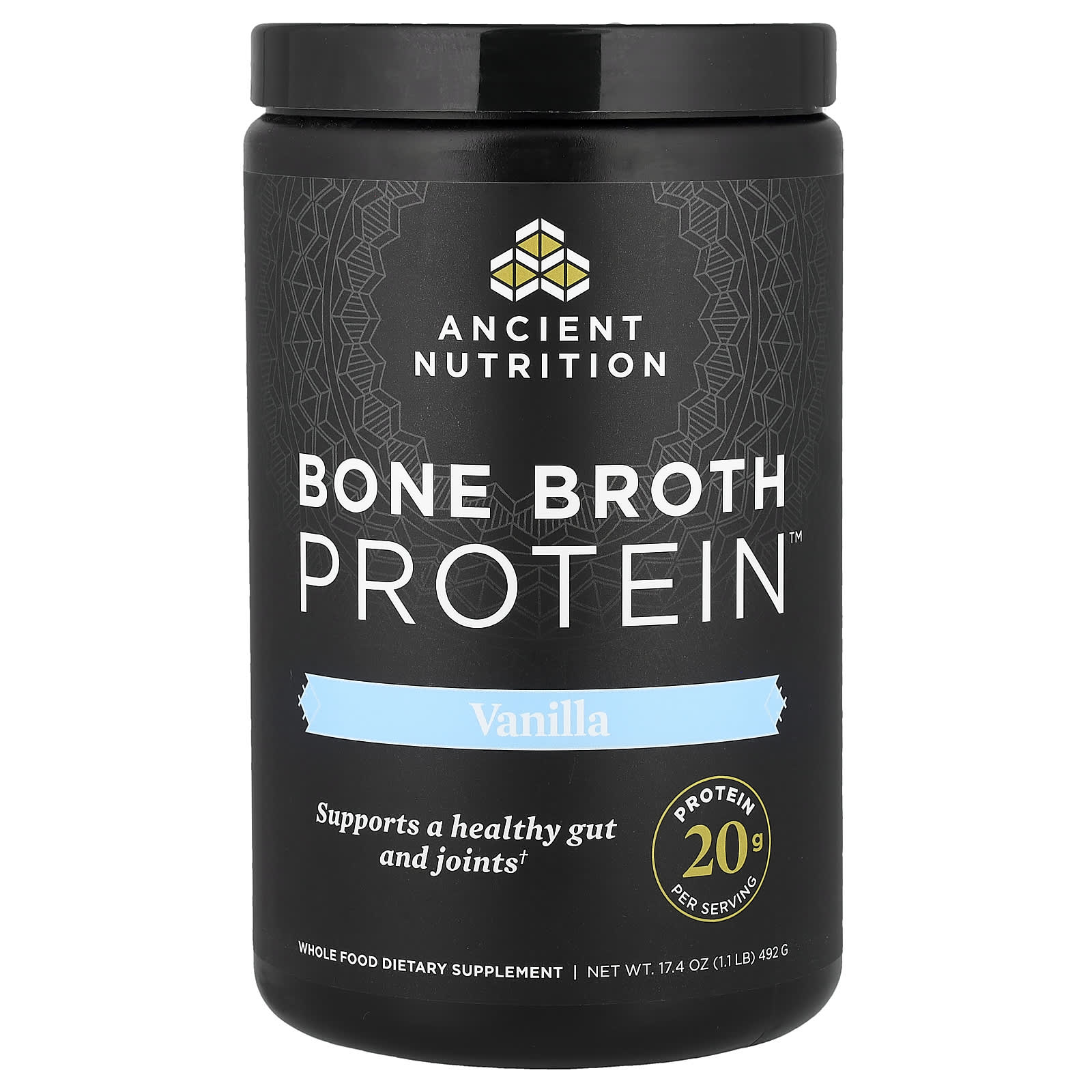
Bone Broth Protein Vanilla
Ancient Nutrition

Bone Broth Protein Vanilla

Potassium 193 mg · Collagen 14500 mg · Chondroitin 800 mg · +2 more
Label on file (NIH DSLD)
$2.25Per dayCalculated at 1 serving a day. The label does not state how many to take daily.$45.01 · Per pack
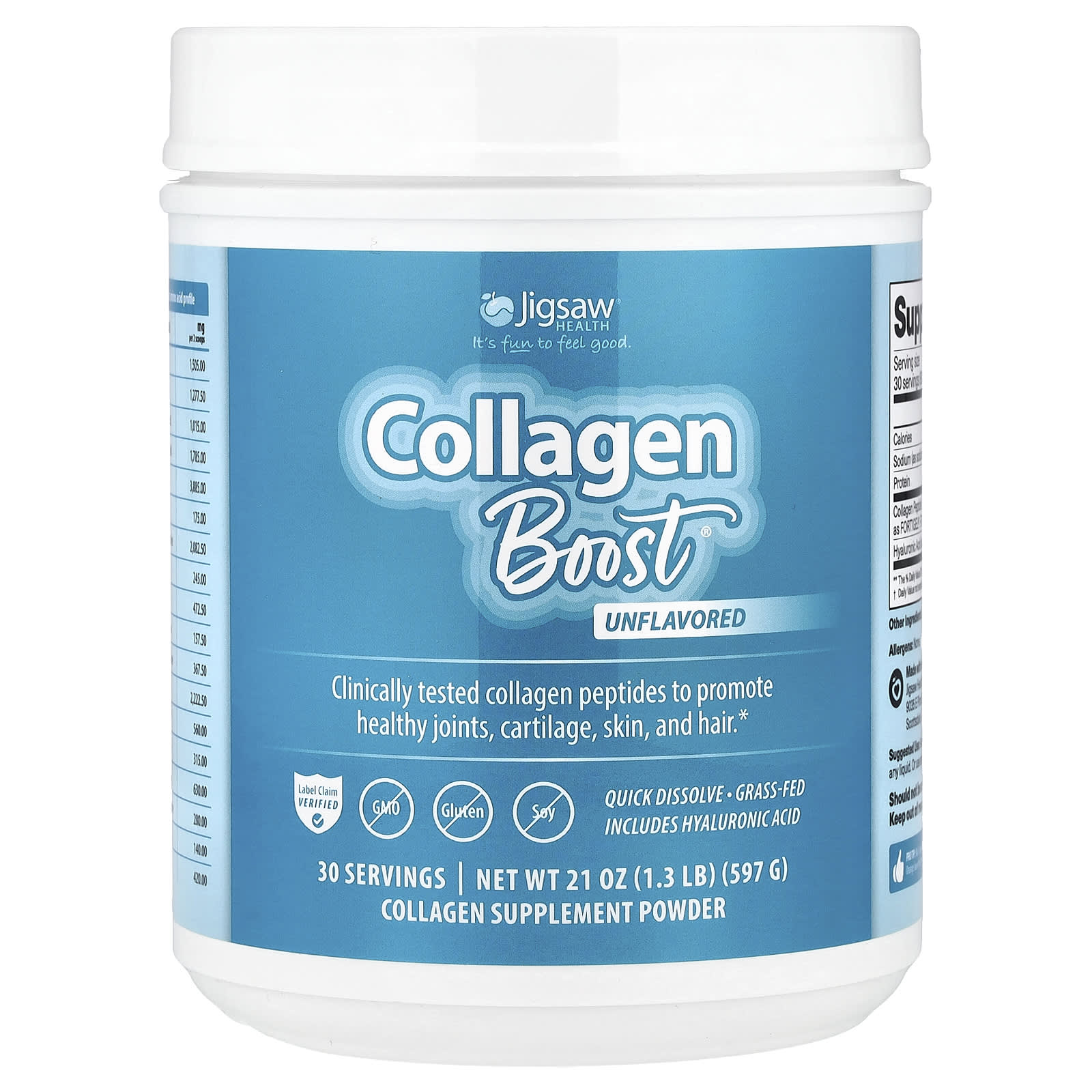
Collagen Boost Unflavored
Jigsaw Health

Collagen Boost Unflavored

Bovine Collagen Peptide Complex 17500 mg · Hyaluronic Acid 80 mg
Label on file (NIH DSLD)
$2.33Per dayCalculated at 1 serving a day. The label does not state how many to take daily.$69.97 · Per pack
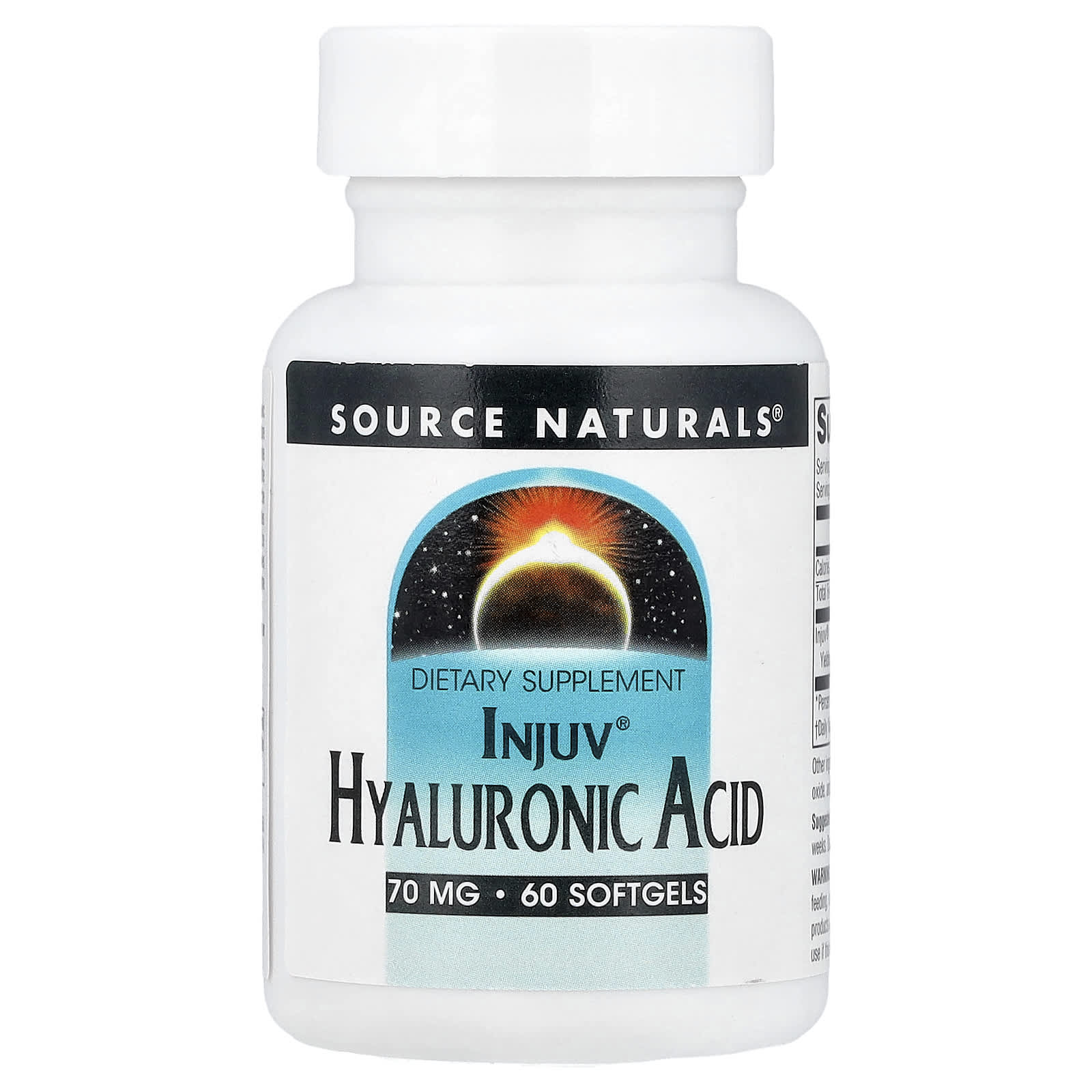
Injuv Hyaluronic Acid 70 mg
Source Naturals

Injuv Hyaluronic Acid 70 mg

Hyaluronic Acid 12.6 mg · At the recorded label maximum: 25.2 mg per day (2 servings × 12.6 mg; 2 softgels per serving)
Label on file (NIH DSLD)
$2.51Per dayAt the label maximum of 4 softgels a day.$37.70 · Per pack
Collagen JS
Pure Encapsulations

Collagen JS

BioCell Collagen hydrolyzed Collagen Complex 1000 mg · Collagen; Hydrolyzed 600 mg · Chondroitin Sulfate 200 mg · +1 more
Label on file (NIH DSLD)
$1.40 – $2.80Per dayFor 2 to 4 capsules a day as stated on the label.$84.00 · Per pack
Hyaluronic Acid 100 mg
Nutricost

Hyaluronic Acid 100 mg

Hyaluronic Acid 100 mg · At the recorded label maximum: 100 mg per day (1 serving × 100 mg; 100 mg [1/2 Scoop] per serving)
Label on file (NIH DSLD)
Daily cost unavailable$13.95 · Per pack
Bone Food Unflavored
California Gold Nutrition

Bone Food Unflavored

Vitamin C 90 mg · Vitamin D 5 mcg · Vitamin K 120 mcg · +5 more
Label on file (NIH DSLD)
No current price

Lowest price per day first. Status shown for the United States.

Not sure what to choose, or couldn’t find what you were looking for? Ask our expert

Information, not a prescription. Do not start, stop or combine supplements or medicines on your own. If you have a health condition, are pregnant or breastfeeding, take medicines, or are under 18, talk to a doctor or pharmacist first.