Iron is an essential mineral that the body uses to carry oxygen in the blood. An adult body holds about 3 to 4 g of iron, most of it in hemoglobin. Meat, seafood and grain foods made with fortified flour are major sources. Supplements contain iron as part of a compound, such as ferrous sulfate, ferrous fumarate or ferrous bisglycinate.
Terms and sources
3 to 4 g
NIH Office of Dietary Supplements. The Linus Pauling Institute estimates 2.3 g in women and 3.8 g in men.
Iron in the body
Iron is part of hemoglobin, the red blood cell protein that carries oxygen from the lungs to the tissues. It is also part of myoglobin, a protein that carries and stores oxygen in muscle cells. Iron is needed for physical growth, the work of cells and making some hormones. Hundreds of proteins and enzymes contain iron, including those that make energy in cells.
Terms and sources
hemoglobin
NIH Office of Dietary Supplements.
myoglobin
Linus Pauling Institute. Its 2016 update was paid for in part by a grant from Bayer Consumer Care AG.
making some hormones
NIH Office of Dietary Supplements.
Hundreds of proteins
Including cytochromes, which carry electrons when cells make ATP, their main energy molecule. Linus Pauling Institute.
The body loses very little iron, so it reuses most of what it has. About 20 mg of iron a day is recovered from old red blood cells. To cover losses, the gut absorbs only 1–2 mg of iron a day. A hormone made in the liver, hepcidin, sets how much iron the gut takes up. Spare iron is stored as ferritin in the liver, spleen and bone marrow.
Terms and sources
loses very little iron
Small amounts leave in urine, stool, sweat and shed skin cells; more is lost with menstrual blood. NIH Office of Dietary Supplements.
About 20 mg
The same article gives about 35 mg a day for all iron recycling. Linus Pauling Institute. Its 2016 update was paid for in part by a grant from Bayer Consumer Care AG.
1–2 mg
Linus Pauling Institute.
hepcidin
When stores are full, hepcidin blocks iron uptake from food; when they are low, it is barely made. Linus Pauling Institute; NIH.
ferritin
A storage protein. Its level in blood is a common test of iron stores. NIH Office of Dietary Supplements.
NIH notes: "Adults with normal intestinal function have very little risk of iron overload from dietary sources of iron. However, supplements containing 25 mg iron or more can reduce zinc absorption and plasma zinc concentrations. High-dose iron supplements can also cause gastrointestinal effects, including gastric upset, constipation, nausea, abdominal pain, vomiting, and diarrhea. Taking iron supplements with food can help minimize these adverse effects. Case reports, some of which involved doses of 130 mg iron, suggest that some people develop even more serious gastrointestinal effects, including gastritis and gastric lesions (along with iron deposits in the gastric mucosa in some cases)." It goes on: "Acute intakes of more than 20 mg/kg iron (about 1,365 mg iron for a person weighing 150 pounds [lb]) from supplements or medicines can lead to corrosive necrosis of the intestine, which might lead to fluid and blood loss, shock, tissue damage, and organ failure, especially if food is not taken at the same time as the iron. In severe cases (e.g., one-time ingestions of 60 mg/kg, or about 4,090 mg iron for a 150-lb person), overdoses of iron can lead to multisystem organ failure, coma, convulsions, and even death." NIH continues: "Between 1983 and 2000, at least 43 U.S. children died from ingesting supplements containing high doses of iron (36–443 mg iron/kg body weight). Accidental ingestion of iron supplements caused about a third of poisoning deaths among children reported in the United States between 1983 and 1991." It adds: "In 1997, FDA began requiring oral supplements containing more than 30 mg elemental iron per dose to be sold in single-dose packaging with strong warning labels. At the same time, many manufacturers voluntarily replaced the sugar coating on iron tablets with film coatings. Between 1998 and 2002, only one child death due to ingesting an iron-containing tablet was reported. As a result of a court decision, FDA removed its single-dose packaging requirement for iron supplements in 2003. FDA currently requires that iron-containing dietary supplements sold in solid form (e.g., tablets or capsules but not powders) carry the following label statement: “WARNING: Accidental overdose of iron-containing products is a leading cause of fatal poisoning in children under 6. Keep this product out of reach of children. In case of accidental overdose, call a doctor or poison control center immediately”. In addition, since 1978, the Consumer Product Safety Commission has required manufacturers to package dietary supplements that contain 250 mg or more elemental iron per container in child-resistant bottles or packaging to prevent accidental poisoning." NIH adds: "Hemochromatosis, a disease caused by a mutation in the hemochromatosis (HFE) gene, is associated with an excessive buildup of iron in the body. About 1 in 10 Whites carry the most common HFE mutation (C282Y), but only 4.4 Whites per 1,000 are homozygous for the mutation and have hemochromatosis. The condition is much less common in other ethnic groups. Without treatment by periodic chelation or phlebotomy, people with hereditary hemochromatosis typically develop signs of iron toxicity by their 30s. These effects can include liver cirrhosis, hepatocellular carcinoma, heart disease, and impaired pancreatic function. The American Association for the Study of Liver Diseases recommends that treatment of hemochromatosis include the avoidance of iron and vitamin C supplements."
Terms and sources
NIH notes
NIH Office of Dietary Supplements, Iron fact sheet for health professionals, section on health risks from excessive iron. The next paragraphs follow in the order of that section.
It adds
Same NIH section, the paragraph on packaging and label rules. In the United States, 21 CFR 101.17(e) requires the same statement.
NIH adds
Same NIH section, next paragraph.
Where iron comes from
Food iron comes in two forms, heme and nonheme. Plants and fortified foods contain only nonheme iron; meat, seafood and poultry contain both. Heme iron makes up about 10–15% of the iron people eat in Western diets. Yet it may provide up to one third of the iron the body absorbs from food.
Terms and sources
heme
Iron bound in a ring-shaped molecule, as in hemoglobin and myoglobin. NIH Office of Dietary Supplements.
10–15%
NIH Office of Dietary Supplements.
up to one third
Because it is absorbed by a different route. The summary of the same article gives up to 40%. Linus Pauling Institute. Its 2016 update was paid for in part by a grant from Bayer Consumer Care AG.
85 g (3 ounces) of cooked eastern oysters has 8 mg of iron, 44% of the Daily Value. A cup of canned white beans also has 8 mg; fully fortified breakfast cereal has 18 mg a serving. In many countries, wheat flour is fortified with iron.
Terms and sources
8 mg
NIH Office of Dietary Supplements, table of food sources; the Daily Value is 18 mg. Grams are our conversion.
fully fortified
Cereal fortified with 100% of the Daily Value for iron. NIH Office of Dietary Supplements.
In many countries
Including the United States and Canada. NIH Office of Dietary Supplements.
The body absorbs about 14–18% of the iron in mixed diets with meat, and 5–12% in vegetarian diets. With vitamin C, meat, poultry or seafood in the meal, a larger share of nonheme iron is absorbed. Phytate in grains and beans, and some plant compounds in tea and coffee, lower that share. Half a cup of boiled spinach has 3 mg of iron, but other compounds in spinach hold back absorption.
Terms and sources
14–18%
NIH Office of Dietary Supplements.
vitamin C
NIH Office of Dietary Supplements.
plant compounds in tea and coffee
Coffee, black tea and herbal tea "can markedly inhibit the absorption of nonheme iron." Linus Pauling Institute. Its 2016 update was paid for in part by a grant from Bayer Consumer Care AG.
hold back absorption
NIH Office of Dietary Supplements.
In supplements, iron most often comes as ferrous or ferric salts. Iron is the fourth most common element in the Earth's crust.
Terms and sources
ferrous or ferric
Ferrous iron carries two positive charges (Fe2+), ferric iron three (Fe3+). Linus Pauling Institute; NIH.
fourth most common
Linus Pauling Institute. Its 2016 update was paid for in part by a grant from Bayer Consumer Care AG.
Daily amounts and the upper limit
United States
US recommended amounts for adults: 8 mg of iron a day for men, 18 mg for women aged 19–50. For vegetarians, the requirement is 80% higher, because nonheme iron is absorbed less. The Daily Value on US labels is 18 mg. From food, US men get on average 16.3–18.2 mg of iron a day, and women 12.6–13.5 mg.
Terms and sources
recommended amounts
RDA, National Academies, 2001. For women 51 and older it is 8 mg; in pregnancy, 27 mg. These amounts count food, drinks and supplements together.
80% higher
NIH: "The requirement for iron is 1.8 times higher for people who follow vegetarian diets."
Daily Value
Set by the US Food and Drug Administration for adults and children 4 and older. NIH Office of Dietary Supplements.
on average
Average intakes from food in adults older than 19. NIH Office of Dietary Supplements.
US upper limit for adults: 45 mg of iron a day (National Academies; a reference value, not a legal limit). The US limit counts iron from food and supplements together. It is set to avoid stomach upset.
Terms and sources
upper limit
Tolerable Upper Intake Level (UL), National Academies, 2001, for ages 14 and older. For infants and children up to 13 it is 40 mg.
food and supplements together
NIH: the limits are set "for iron from food and supplements." "The ULs apply to healthy infants, children, and adults."
stomach upset
NIH notes the basis: "the amounts of iron that are associated with gastrointestinal effects following supplemental intakes of iron salts." It adds: "Physicians sometimes prescribe intakes higher than the UL, such as when people with IDA need higher doses to replenish their iron stores."
US rules require this statement on iron tablets and capsules: "WARNING: Accidental overdose of iron-containing products is a leading cause of fatal poisoning in children under 6. Keep this product out of reach of children. In case of accidental overdose, call a doctor or poison control center immediately." In our count, 371 of 436 US labels of iron-only products carry a version of this warning.
Terms and sources
US rules
21 CFR 101.17(e). The statement must be set off in a box. Scope: "any dietary supplement in solid oral dosage form (e.g., tablets or capsules) that contains iron or iron salts for use as an iron source."
371 of 436
Labels whose statements contain the words "accidental overdose of iron." On 149, the wording matches the FDA text, apart from capital letters and punctuation. The rule covers tablets and capsules. Our data do not show the product form. We counted these.
The Supplement Facts panel states the amount of iron itself, not the weight of the whole compound. In 436 US labels of iron-only products, the median is 27 mg of iron per serving. The most common amount is 65 mg, on 86 labels; next is 18 mg, on 70. 30% of these labels (132 of 436) list 45 mg or more per serving.
Terms and sources
iron itself
elemental iron. NIH: "elemental iron is listed in the Supplement Facts panel."
436 US labels
NIH Dietary Supplement Label Database, including products no longer sold. Labels whose only main ingredient row is named Iron, with an amount. A serving is not always a full day's amount. We counted these.
65 mg
The iron in a 325 mg tablet of ferrous sulfate as the heptahydrate, by our calculation. NIH notes that many iron-only supplements provide 65 mg.
30% of these labels
The highest entry is 150 mg, on 8 labels; 7 of them name a polysaccharide-iron complex.
Of these 436 labels, 26% name a glycinate or bisglycinate form, 19% sulfate, 7% gluconate and 6% fumarate. In the same download, 15,899 labels list iron, and 64% of them also list vitamin C. Of 137 labels with two main rows, exactly one of them iron, 28 pair it with vitamin C.
Terms and sources
26% name a glycinate
Including the trade name Ferrochel. Carbonyl iron 5%, a chelate without a named partner 9%, citrate 2%. Polysaccharide-iron complex 2%, protein succinylate 2%, heme iron polypeptide 1%. 20% name no form (87 of 436). Median per serving: 65 mg on labels naming sulfate, 25 mg on those naming a glycinate form. We matched whole words within one form name.
15,899 labels
83% of them have 10 or more rows in the Supplement Facts panel. Labels with a main row whose name starts with Iron, Ferrous, Ferric, Carbonyl Iron or Heme Iron. Across them, fumarate is the form named most often, on 14%. We counted these.
28 pair it
The next most common partner is calcium, on 25. We counted these.
The partner compound sets how much iron a gram of the compound holds. Ferrous fumarate is 33% iron by weight; ferrous gluconate is 12%. NIH notes: "High doses of supplemental iron (45 mg/day or more) may cause gastrointestinal side effects, such as nausea and constipation." NIH adds: "Other forms of supplemental iron, such as heme iron polypeptides, carbonyl iron, iron amino-acid chelates, and polysaccharide-iron complexes, might have fewer gastrointestinal side effects than ferrous or ferric salts." We do not rank forms.
Terms and sources
33% iron by weight
NIH gives 33%, 20% for ferrous sulfate and 12% for ferrous gluconate. Our calculation from the formula agrees.
NIH notes
NIH Office of Dietary Supplements, Iron fact sheet for health professionals, section on dietary supplements.
NIH adds
Same section. NIH gives no trial numbers for this comparison.
NIH notes: "Calcium might interfere with the absorption of iron, although this effect has not been definitively established." It goes on: "For this reason, experts suggest that people take individual calcium and iron supplements at different times of the day." NIH notes: "Iron supplements may interact with medications, including levodopa and levothyroxine. In addition, proton pump inhibitors can potentially reduce iron absorption."
Terms and sources
NIH notes
NIH Office of Dietary Supplements, Iron fact sheet for health professionals, section on dietary supplements.
interact with medications
NIH Office of Dietary Supplements, Iron fact sheet for health professionals, section on interactions with medications.
Ferrous sulfate, fumarate, gluconate, bisglycinate, carbonyl iron and other forms
Form
Iron in the compound
What is known
Ferrous sulfate
20% as the heptahydrate; 33% as the monohydrate; 37% with no water
NIH gives 20%, the value for the heptahydrate.
Ferrous fumarate
33%
NIH gives 33%.
Ferrous gluconate
12% as the dihydrate; 13% with no water
NIH gives 12%. By our calculation, 325 mg of the dihydrate holds 37.6 mg of iron.
Ferrous bisglycinate
27% as Fe(C2H4NO2)2
Iron bound to two molecules of the amino acid glycine. NIH lists amino-acid forms among those that might cause fewer gut side effects.
Ferric pyrophosphate
30% as Fe4(P2O7)3, with no water
A ferric form. NIH: ferrous iron "is more bioavailable than ferric iron."
Ferric citrate
No single formula
A ferric form, listed by NIH among frequently used supplement forms.
Carbonyl iron
No single formula in our sources
NIH lists it among forms that might cause fewer gut side effects than ferrous or ferric salts.
Polysaccharide-iron complex
No single formula
NIH lists it among forms that might cause fewer gut side effects than ferrous or ferric salts.
Heme iron polypeptide
No single formula
NIH lists it among forms that might cause fewer gut side effects. NIH's comparison of heme and nonheme iron refers to food.
Amino acid chelate, partner not named
No single formula
The name does not say which amino acid. Not in the NIH percentages by form.
Share of iron by mass, our calculation from the chemical formula, with water content named. Sources: NIH Office of Dietary Supplements; Linus Pauling Institute.
Published studies of iron
3 studies: 2 found a difference and 1 had mixed results.
Terms and sources
3 studies
Healthy adults; 5 to 37.5 mg of iron, in single doses or daily. One of them used 30 mg or less.
Studies in adults without a diagnosis, each with our one-line summary.
Not shown here: studies in people with a diagnosis, or chosen for low iron or hemoglobin on a blood test. Also not shown: studies in expectant mothers, in children, or with participants who are or may be under 18. Studies with more than 45 mg of iron a day are not shown either. Iron in fortified foods and reviews that include such trials are left out too. So are comparisons in a fixed order and repeat reports.
Our one-line summary comes first. The original is on PubMed.
Show the studies
After blood donation, donors regained 80% of lost hemoglobin in about 31 days with 37.5 mg iron, 78–158 without.
Trial · 215 people · 24 weeks
Kiss et al., JAMA, 2015
Terms and sources
blood donation
215 repeat donors aged 18–79 at 4 US blood centers, after giving 500 mL of whole blood. They were randomly assigned to iron or no iron. There was no dummy pill, and everyone knew their group.
about 31 days
Mean time to regain 80% of the hemoglobin lost. In donors with low iron stores at the start: 32 days with iron, 158 without. In the others: 31 and 78 days. In donors with the highest starting ferritin, 51–192 ng/mL, recovery time did not differ with iron.
37.5 mg iron
One 325 mg tablet of ferrous gluconate a day for 24 weeks, made by Major Pharmaceuticals. Ferritin was back to its starting level after a median of 76 days with iron. Without iron, 67% had not reached it by 24 weeks. Three people taking iron reported gut side effects; two of them left the study. Of 111 taking iron, 10 dropped out; of 104 without iron, 1.
Our estimate at about 200 words a minute, from the PMC full text.
Study summary
This trial followed 215 repeat blood donors aged 18–79 at four US blood centers. After giving blood, they were randomly assigned to 37.5 mg of iron a day or no iron for 24 weeks. The iron came as ferrous gluconate. Everyone knew their group. With iron, hemoglobin regained 80% of the loss in about 31–32 days. Without iron, it took 78 days in donors with fuller iron stores and 158 days in those with low stores. In donors with the highest starting ferritin, recovery time did not differ with iron. Ferritin returned to its starting level in a median of 76 days with iron. Without iron, 67% had not recovered it by 24 weeks. The difference was statistically significant. In an exploratory analysis, by day 56, 92% with iron and 73% without had hemoglobin above 12.5 g/dL. Funding: US National Heart, Lung, and Blood Institute contracts. One author reported a grant from Novo Nordisk and fees from Siemens.
In 219 female soldiers in basic training, ferritin fell less with daily iron than with a dummy capsule.
Trial · 219 people · 8 weeks · funding not stated
McClung et al., American Journal of Clinical Nutrition, 2009
Terms and sources
219 female soldiers
US Army volunteers in 8 weeks of basic combat training, randomly assigned. The abstract gives no age range. PubMed tags them as adults and young adults.
basic training
After training, vigor scores on a mood questionnaire were higher with iron; statistically significant. Two-mile run times were faster with iron only in recruits who began with low hemoglobin and low iron stores.
ferritin fell less
Ferritin fell during training. Its change, and that of soluble transferrin receptor, a marker of iron supply, differed between groups; statistically significant.
daily iron
A capsule with 100 mg of ferrous sulfate a day. The abstract does not give the iron in it. By formula, that is 20–37 mg of iron, depending on water content; our estimate.
funding not stated
PubMed tags it as US government research. The first author works at a US Army research institute. We could not read the funding section.
This trial gave 219 female US Army volunteers 100 mg of ferrous sulfate or a dummy capsule daily. It lasted through 8 weeks of basic combat training. Ferritin, a marker of iron stores, fell during training; it fell less with iron. After training, vigor scores on a mood questionnaire were higher with iron. Two-mile run times were faster with iron only in women who started with low hemoglobin and low iron stores. The abstract does not give the iron content of the capsule or the age range. Funding: we could not check.
With 5 mg of iron, absorption was lower with calcium citrate than calcium chloride; five other salts did not differ.
Trial · 27 people · Single doses on 4 days · funding not stated
Candia et al., Journal of Trace Elements in Medicine and Biology, 2018
Terms and sources
5 mg of iron
Ferrous sulfate with radioactive iron labels, taken after an overnight fast with 800 mg of calcium. Absorption was measured from iron built into red blood cells.
calcium citrate
27 women aged 35–45 in two groups, each tested on four days. The abstract calls it randomized and single-blinded. It does not report absorption without calcium.
five other salts
Calcium gluconate, carbonate, lactate, sulfate and phosphate. Each was compared with calcium chloride, not with iron alone.
funding not stated
The abstract does not name who paid. Authors list the University of Chile, Boston University, a hospital in Colombia and the UN Food and Agriculture Organization.
This study gave 27 women aged 35–45 a 5 mg dose of labeled iron after an overnight fast. The iron was ferrous sulfate. Each dose came with 800 mg of calcium as one of seven salts, on four test days per group. Calcium chloride served as the comparison. Iron absorption was lower only with calcium citrate, compared with calcium chloride. The difference was statistically significant. Gluconate, carbonate, lactate, sulfate and phosphate did not differ. Absorption without calcium was not reported in the abstract. Funding: we could not check.
Law = legally binding maximum; recommendation = an authority's recommended maximum, not binding; reference = a reference value, not a legal limit; used where the country sets no maximum. Information only — not a dosage recommendation. Report an error
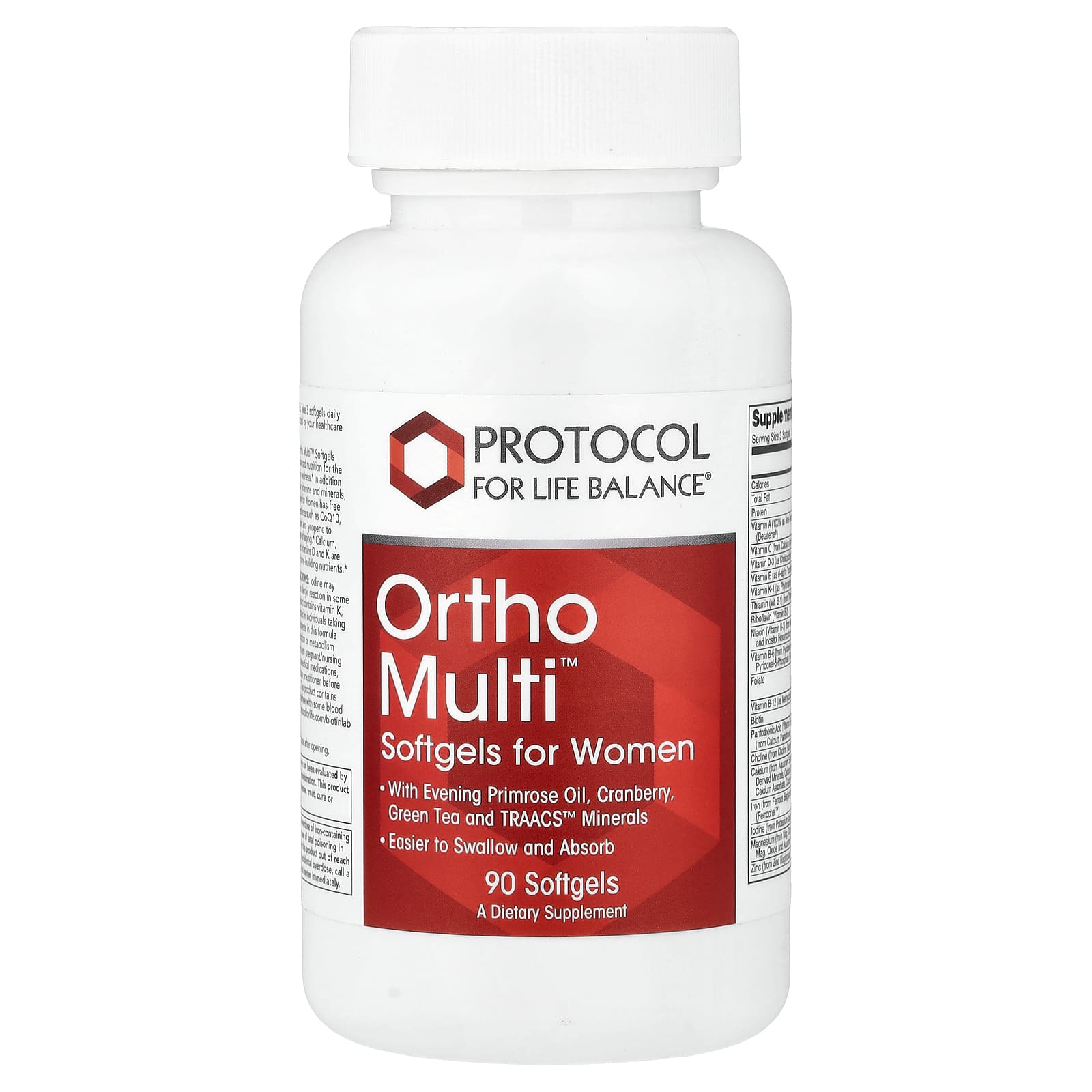
Vitamin A 1.501 mg · Vitamin C 45 mg · Vitamin D 7.5 mcg · +17 more
Label on file (NIH DSLD)
$1.14Per dayAt the label maximum of 3 capsules a day.$34.29 · Per pack
Lowest price per day first. Status shown for the United States.
Information, not a prescription. Do not start, stop or combine supplements or medicines on your own. If you have a health condition, are pregnant or breastfeeding, take medicines, or are under 18, talk to a doctor or pharmacist first.