Ingredient

Zinc

Products with Zinc on sale in the United States.

Find products
Share

Email article

Published

Zinc is an essential mineral that the body needs for the work of hundreds of enzymes. An adult body holds about 1.5–2.5 g of it. Oysters, meat and other seafood are rich sources. Supplements contain zinc as part of a compound, such as zinc citrate, zinc oxide or zinc gluconate.

Terms and sources
1.5–2.5 g
About 1.5 g in women and 2.5 g in men. NIH Office of Dietary Supplements.

Zinc in the body

Zinc-dependent enzymes are found in all six classes of enzymes. More than 3,000 human proteins have sites that bind zinc. In some proteins, zinc holds a fold called a zinc finger in shape. Zinc also takes part in immune function, protein and DNA synthesis, cell division and the sense of taste.

Terms and sources
all six classes of enzymes
Enzymes are proteins that speed up chemical reactions in cells. The classes are those of the International Union of Biochemistry and Molecular Biology. Linus Pauling Institute.
More than 3,000
An estimate from searches of protein data. Linus Pauling Institute.
zinc finger
Zinc fingers let some proteins bind DNA and switch genes on or off. Linus Pauling Institute.
sense of taste
NIH Office of Dietary Supplements.

Most of the body's zinc is in skeletal muscle and bone. In healthy people, blood zinc is usually 80–120 mcg/dL. These blood values do not always follow how much zinc a person gets from food or supplements. As intake rises, the body absorbs more zinc, but a smaller share of it.

Terms and sources
80–120 mcg/dL
Serum or plasma zinc, 12–18 micromoles per liter. NIH Office of Dietary Supplements.
do not always follow
They also vary with age, sex and the time of the blood draw. NIH Office of Dietary Supplements.
a smaller share
Fractional absorption drops as intake rises. NIH Office of Dietary Supplements.

NIH notes: "High zinc intakes can cause nausea, dizziness, headaches, gastric distress, vomiting, and loss of appetite. If used for weeks, doses of 50 mg zinc or more—typically from supplements or excessive use of denture adhesive creams that contain zinc—can interfere with copper absorption (which can cause low copper status), reduce immune function, and lower HDL cholesterol levels. The amount of zinc obtained from food is rarely as high as 50 mg, so the zinc in foods is unlikely to cause zinc toxicity. Very high doses of zinc from supplements (142 mg/day) might also interfere with magnesium absorption and disrupt magnesium balance."

Terms and sources
NIH notes
NIH Office of Dietary Supplements, Zinc fact sheet for health professionals, section on health risks from excessive zinc.

Where zinc comes from

Meat, fish and other seafood, eggs and dairy foods contain zinc. 85 g (3 ounces) of raw farmed oysters has 32 mg of zinc, 291% of the Daily Value. The same amount of roasted beef sirloin has 3.8 mg. Fruits and vegetables contain very little zinc.

Terms and sources
32 mg
The Daily Value is 11 mg. NIH Office of Dietary Supplements, table of food sources. Grams are our conversion.

Beans, nuts and whole grains also contain zinc, but the body absorbs less of it. The share absorbed from food ranges from 5% to more than 50%, depending on how much phytate the diet holds. Yeast breaks down phytate, so leavened whole-grain bread has more absorbable zinc than unleavened bread.

Terms and sources
absorbs less of it
Phytates in these foods bind zinc in the gut. Phytate is the storage form of phosphorus in plants. NIH Office of Dietary Supplements.
Yeast breaks down phytate
Linus Pauling Institute.

Zinc supplements are made from zinc compounds; the forms section below compares them.

Daily amounts and the upper limit

United States

US recommended amounts for adults: 11 mg of zinc a day for men and 8 mg for women. The Daily Value on US labels is 11 mg. In the US, 15% of adults get less zinc than their estimated need.

Terms and sources
recommended amounts
RDA, National Academies, 2001, for ages 19 and over. These amounts count food, drinks and supplements together.
Daily Value
Set by the US Food and Drug Administration for adults and children 4 and older.
estimated need
Estimated Average Requirement (EAR). National survey NHANES 2005–2016, ages 19 and older.

US upper limit for adults: 40 mg of zinc a day (National Academies; a reference value, not a legal limit). The US limit counts zinc from food and supplements together. It is set to avoid low copper.

Terms and sources
upper limit
Tolerable Upper Intake Level (UL), National Academies, 2001. For ages 14–18 it is 34 mg.
food and supplements together
NIH: the limits are set "for zinc from food and supplements for healthy individuals." "The ULs do not apply to individuals who are receiving zinc for medical treatment, but such individuals should be under the care of a physician."
low copper
The National Academies based it on "the levels of zinc that have an adverse effect on copper status," NIH notes.

The Supplement Facts panel states the amount of zinc itself, not the weight of the whole compound. In 798 US labels of zinc-only products, the middle half list 22–50 mg per serving. The median is 30 mg, and 48% of these labels list 40 mg or more per serving.

Terms and sources
zinc itself
elemental zinc. NIH Office of Dietary Supplements.
798 US labels
NIH Dietary Supplement Label Database, including products no longer sold. Labels whose only main ingredient row is named Zinc, with an amount; rows named after a compound were not counted. A serving is not always a full day's amount. We counted these.
48% of these labels
383 of 798. The most common amount is 50 mg, on 287 labels. The highest entry is 500 mg, on one label.

In the same download, 26,168 labels list zinc. Of them, 97% list something besides zinc; 49.5% list copper and 61% list magnesium. 21% name citrate as the form, 19% oxide, 11% gluconate and 10% glycinate or bisglycinate; 13% name no form.

Terms and sources
26,168 labels
Labels with a main ingredient row whose name starts with the word zinc, or OptiZinc. We counted these.
13% name no form
A label can name more than one form. Picolinate 6%, monomethionine or methionine 5%, sulfate 3%, aspartate 2.5%, ascorbate 2%, acetate 0.3%. 7% name an amino acid chelate without naming the amino acid. We matched whole words within one form name.

Upper limits in other countries: see the table of limits by country on this page.

Forms of zinc and how they differ

The partner compound decides how much zinc a gram of the compound holds. Zinc oxide is 80% zinc by weight; zinc gluconate is 14%. In one study without food, about 61% of the zinc was absorbed from citrate or gluconate and 50% from oxide. Iron supplements with 25 mg of iron or more, taken at the same time, can lower zinc absorption. We do not rank forms.

Terms and sources
80% zinc by weight
Our calculation from the chemical formula: 80.3% and 14.3%.
In one study without food
Summary by the NIH Office of Dietary Supplements, from a study in young adults (Wegmüller 2014, below).
25 mg of iron or more
Iron added to fortified foods does not interfere much, NIH notes. NIH Office of Dietary Supplements.

NIH notes: "Zinc may interact with certain medications, such as quinolone antibiotics, tetracycline antibiotics, and penicillamine."

Terms and sources
certain medications
NIH Office of Dietary Supplements, Zinc fact sheet for health professionals, section on interactions with medications.
Zinc citrate, oxide, gluconate, bisglycinate, picolinate and other forms
FormZinc in the compoundWhat is known
Oxide80%In one study without food, about 50% was absorbed, less than from citrate or gluconate. In two of 15 people, absorption was below the detection limit. Without them, the difference was not statistically significant.
Sulfate40%NIH lists it among common supplement forms. In one small study with milk, less was absorbed than from gluconate.
Acetate36%NIH lists it among common supplement forms. Not in the NIH summary of absorption by form.
Citrate34%In one study without food, about 61% was absorbed; it did not differ from gluconate.
Bisglycinate (glycinate)31%Zinc bound to the amino acid glycine. In one study in 12 women, blood zinc rose more than with gluconate.
Picolinate21%LPI notes that few human data show whether picolinate is absorbed more than other forms.
Aspartate20%In one small study with milk, more was absorbed than from gluconate or sulfate.
Gluconate14%In one study without food, about 61% was absorbed; it did not differ from citrate.
Monomethionine (OptiZinc)No single formula on labelsLabels name zinc bound to the amino acid methionine, some as a sulfate complex. Not in the NIH summary of absorption by form.
Amino acid chelateNo single formulaThe name does not say which amino acid. Not in the NIH summary of absorption by form.

Share of zinc by mass of the anhydrous compound. Hydrates hold less: sulfate monohydrate 36%, heptahydrate 23%; citrate dihydrate 32%; acetate dihydrate 30%. We calculated these from the chemical formula. Aspartate as Zn(C4H6NO4)2, the form in the study below. Sources: NIH Office of Dietary Supplements; Linus Pauling Institute; studies below; US labels.

Published studies of zinc

10 reports from 8 studies: 4 found a difference, 3 found none and 3 had mixed results.

Terms and sources
10 reports from 8 studies
Healthy adults; 2–30 mg of zinc a day. 3 of the studies used 15 mg or less. Two more reports of the ZENITH trial are listed under it.

Studies in adults without a diagnosis, each with our one-line summary.

Not shown here: studies in people with a diagnosis or an illness, and studies in children. Also not shown: more than 40 mg of zinc a day, and zinc mixed with other ingredients or in foods. Reviews whose trials we could not check are left out too. Other reports of listed trials, on blood, immune, vitamin, taste and protein measures, are left out too.

Our one-line summary comes first. The original is on PubMed.

Show the studies
  • In 15 adults, zinc from citrate and gluconate was absorbed alike, about 61%, and from oxide less, about 50%.

    Trial · 15 people · Single doses, 4 weeks apart · maker-funded

    Wegmüller et al., Journal of Nutrition, 2014

    Terms and sources
    15 adults
    Healthy adults aged 18–45 at a university in Zurich. Each took all three forms in random order, one after the other, 4 weeks apart, without food.
    about 61%
    Medians: 61.3% from citrate, 60.9% from gluconate; they did not differ. 10 mg of zinc in a capsule, measured with zinc isotopes in urine.
    about 50%
    49.9% from oxide; the difference from citrate and from gluconate was statistically significant. In two people, absorption from oxide was below the 1.5% detection limit; one absorbed 14%. Without the two, the overall difference was no longer statistically significant.
    maker-funded
    Funded by Jungbunzlauer International, Basel. Jungbunzlauer Ladenburg prepared the labeled zinc citrate and zinc gluconate. The authors declare no conflicts of interest.

    Study · Free full text · about 14 min to read

    Our estimate at about 200 words a minute, from the PMC full text.

    Study summary

    This trial compared three zinc forms in 15 healthy adults aged 18–45. Each took 10 mg of zinc as citrate, gluconate and oxide, one at a time without food, 4 weeks apart. Absorption was measured with zinc isotopes in urine. About 61% was absorbed from citrate and from gluconate, and about 50% from oxide. In two people, absorption from oxide was below the detection limit. Without them, the difference was not statistically significant. Funding: Jungbunzlauer International. Jungbunzlauer Ladenburg prepared the labeled citrate and gluconate.

  • After one 15 mg dose in 12 women, the bisglycinate form gave 43% more zinc in blood than gluconate.

    Trial · 12 people · Single doses, 7 days apart · industry author

    Gandia et al., International Journal for Vitamin and Nutrition Research, 2007

    Terms and sources
    12 women
    Healthy female volunteers. Each took both forms in random order, one after the other, 7 days apart. The dose was two units of 7.5 mg.
    43% more zinc in blood
    The abstract reports +43.4% oral bioavailability and calls it significant. It compared peak serum zinc and serum zinc over time. It does not say which measure gave 43.4%.
    industry author
    Two of seven authors list Laboratoire Oenobiol, Paris. Three list contract research firms. We could not check the funding section.

    Study · Access not checked · about 2 min to read

    Our estimate at about 200 words a minute, from the PubMed abstract. We could not check whether the full text is free.

    Study summary

    This trial compared two zinc forms in 12 healthy women. Each took a single 15 mg dose of zinc as bisglycinate and as gluconate, in random order, 7 days apart. Blood zinc was measured over time. The authors report 43.4% higher oral bioavailability with bisglycinate, a statistically significant difference. The abstract does not say which blood measure gave this number. It calls bisglycinate a new formulation. Two of seven authors list Laboratoire Oenobiol, Paris. Funding: we could not check.

  • In 8 adults taking 2 mg zinc with milk, absorption was highest from aspartate, then gluconate, lowest from sulfate.

    Trial · 8 people · Single doses, 2 weeks apart

    Piacenza et al., Nutrients, 2023

    Terms and sources
    8 adults
    Healthy adults aged 25–50, 4 men and 4 women, with normal blood zinc. Each took all three forms in random order, one after the other, 2 weeks apart. The labeled zinc compounds came from Sigma-Aldrich.
    with milk
    Capsules with about 200 mL of cow's milk, in the morning, fasting.
    highest from aspartate
    Estimated absorption: aspartate 34.6%, gluconate 19.1%, sulfate 8.9%; the differences were statistically significant. The authors say these estimates serve comparison only, not absolute values.

    Study · Free full text · about 14 min to read

    Our estimate at about 200 words a minute, from the PMC full text.

    Study summary

    This small trial compared three zinc forms in 8 healthy adults aged 25–50. Each took 2 mg of zinc as aspartate, gluconate and sulfate with milk, in random order, 2 weeks apart. Absorption was estimated from a zinc isotope in urine after 48 hours. Estimates were 34.6% for aspartate, 19.1% for gluconate and 8.9% for sulfate, all statistically different. The authors call the study preliminary and the numbers comparative only. Funding: Regione Marche, an Italian regional government. The authors declare no conflicts of interest.

  • In 12 men, peak blood zinc was 18% higher with 20 mg as gluconate than 17.4 mg as oxide.

    Trial · 12 people · 14 days each · industry author

    Siepmann et al., International Journal of Clinical Pharmacology and Therapeutics, 2005

    Terms and sources
    12 men
    Healthy men aged 21–31. Each took both forms for 14 days in random order, one after the other, at least 14 days apart.
    18% higher
    Peak blood zinc 18.3% higher; blood zinc over 24 hours 8.1% higher. Both differences were statistically significant.
    20 mg
    20 mg of zinc a day from gluconate and 17.4 mg from oxide, so the doses were not equal.
    industry author
    Author affiliations include Dr. Gerhard Mann Pharma, Berlin, and a contract research firm. We could not check the funding section.

    Study · Abstract only · about 2 min to read

    Our estimate at about 200 words a minute, from the PubMed abstract.

    Study summary

    This trial compared two zinc forms in 12 healthy men aged 21–31. Each took zinc gluconate and zinc oxide for 14 days each, in random order. The daily doses were 20 mg and 17.4 mg of zinc, so they were not equal. Peak blood zinc was 18.3% higher with gluconate, and the 24-hour total 8.1% higher. Both differences were statistically significant. Author affiliations include Dr. Gerhard Mann Pharma, Berlin. Funding: we could not check.

  • Adults aged 55–85 took 15 or 30 mg zinc daily; blood zinc rose, blood copper did not change.

    Trial · 387 people · 6 months

    Hininger-Favier et al., British Journal of Nutrition, 2007

    Terms and sources
    Adults aged 55–85
    387 healthy adults, living independently, aged 55–70 (188) and 70–85 (199), in France, Italy and Northern Ireland. Three groups: 15 mg, 30 mg or a dummy capsule, for 6 months. The ZENITH trial. Funded by the European Commission. E-Pharma (Creapharm, France) prepared and supplied the zinc gluconate.
    blood zinc rose
    Serum and urine zinc rose with both doses. Over the whole group, zinc in red blood cells did not change. It rose in the 70–85 group and in men. Urine zinc rose only in the 70–85 group and in women. The abstract says red cell SOD, a copper and zinc enzyme, did not change; the Results say it rose.
    15 or 30 mg zinc daily
    At 30 mg, cholesterol, LDL and two iron markers rose at ages 55–70. Hemoglobin fell at 70–85. In women, hemoglobin fell, and iron markers and triglycerides rose. At 30 mg, the enzyme alkaline phosphatase rose at ages 55–70 and fell at 70–85.
    blood copper
    Serum copper, over the whole group. The Discussion adds that at 30 mg, serum copper fell in women.

    Study · Access not checked · about 2 min to read

    Our estimate at about 200 words a minute, from the PubMed abstract. We could not check whether the full text is free.

    Study summary

    The ZENITH trial gave 387 healthy Europeans aged 55–85 zinc gluconate or a dummy capsule for 6 months. The zinc groups took 15 mg or 30 mg a day. Blood and urine zinc rose with both doses. Over the whole group, blood copper did not change. The abstract says red cell SOD did not change; the Results say it rose. At 30 mg, cholesterol and LDL rose at ages 55–70, and hemoglobin fell at 70–85. Funding: the European Commission. E-Pharma (Creapharm, France) prepared and supplied the zinc gluconate.

    • In 387 adults aged 55–87, 2 of 8 test scores differed with zinc, one in each direction.

      Trial · 387 people · 6 months · funding not stated

      Maylor et al., British Journal of Nutrition, 2006

      Another report of the ZENITH trial above

      Terms and sources
      387 adults aged 55–87
      Healthy adults in France, Italy and Northern Ireland. 15 mg, 30 mg or a dummy capsule for 6 months. Computer tests of memory, attention and reaction time at the start, 3 and 6 months.
      one in each direction
      One spatial working memory score changed favorably with 15 or 30 mg, at 3 months only. One attention score changed unfavorably with 15 mg. Both were statistically significant. The other 6 did not differ.
      funding not stated
      We could not check this report's funding section. Hininger-Favier 2007, above, names the European Commission as the trial's funder.

      Study · Access not checked · about 2 min to read

      Our estimate at about 200 words a minute, from the PubMed abstract. We could not check whether the full text is free.

      Study summary

      This report of the ZENITH trial tested memory, attention and reaction time in 387 healthy adults aged 55–87. They took 15 mg or 30 mg of zinc a day, or a dummy capsule, for 6 months. Of 8 test scores, 6 did not differ. One spatial working memory score changed favorably with both doses, at 3 months only. One attention score changed unfavorably with 15 mg. Funding: we could not check this report.

    • In 387 adults aged 55–87, positive and negative mood scores did not differ between zinc and a dummy capsule.

      Trial · 387 people · 6 months · funding not stated

      Stewart-Knox et al., Public Health Nutrition, 2011

      Another report of the ZENITH trial above

      Terms and sources
      387 adults aged 55–87
      Healthy adults in Rome, Grenoble, Coleraine and Clermont-Ferrand. 15 mg or 30 mg of zinc gluconate a day, or a dummy capsule, for 6 months.
      mood scores
      Rated on a mood scale four times a day over 4 days, at the start, 3 and 6 months. Neither age group differed.
      funding not stated
      We could not check this report's funding section. Hininger-Favier 2007, above, names the European Commission as the trial's funder.

      Study · Access not checked · about 2 min to read

      Our estimate at about 200 words a minute, from the PubMed abstract. We could not check whether the full text is free.

      Study summary

      This report of the ZENITH trial rated mood in 387 healthy adults aged 55–87. They took 15 mg or 30 mg of zinc gluconate a day, or a dummy capsule, for 6 months. Positive and negative mood were rated four times a day over 4 days, at the start, 3 and 6 months. Neither score differed between zinc and the dummy capsule, in either age group. Funding: we could not check this report.

  • In 38 men, 30 mg zinc daily for 14 weeks did not change copper markers versus a dummy product.

    Trial · 38 people · 14 weeks · funding not stated

    Bonham et al., Biological Trace Element Research, 2003

    Terms and sources
    38 men
    Healthy men; 19 took zinc and 19 a dummy product. Food gave about 10 mg of zinc a day, so total intake was about 40 mg.
    copper markers
    The authors call them putative indices of copper status. Blood fats and markers of blood clotting also did not change. After 14 weeks, the zinc group took 3 mg of copper a day for 8 weeks.
    funding not stated
    We could not check the funding section. PubMed lists an affiliation only for the first author, a diet and health research unit at the University of Ulster.

    Study · Abstract only · about 2 min to read

    Our estimate at about 200 words a minute, from the PubMed abstract.

    Study summary

    This trial gave 38 healthy men either 30 mg of zinc a day or a dummy product for 14 weeks. Their food gave about 10 mg of zinc a day, so total intake was about 40 mg. Markers the authors use for copper status did not change. Blood fats and blood clotting markers also did not change. Funding: not stated in the abstract.

  • In 44 women, 20 mg zinc daily for 2 months did not change iron absorption versus a dummy product.

    Trial · 44 people · 2 months · funding not stated

    López de Romaña et al., Nutrition, 2008

    Terms and sources
    44 women
    Healthy women aged 35–45 in Chile, assigned at random to zinc sulfate or a dummy product, taken between meals.
    iron absorption
    Measured with iron isotopes before and after 2 months. Iron status markers also did not differ. Plasma zinc did not change significantly in either group.
    funding not stated
    We could not check the funding section. PubMed lists an affiliation only for the first author, the Institute of Nutrition and Food Technology, University of Chile.

    Study · Access not checked · about 2 min to read

    Our estimate at about 200 words a minute, from the PubMed abstract. We could not check whether the full text is free.

    Study summary

    This trial gave 44 healthy women in Chile, aged 35–45, zinc or a dummy product for 2 months. The zinc group took 20 mg of zinc as zinc sulfate between meals. Iron absorption was measured with iron isotopes before and after. It rose over time in both groups, with no difference between them. Iron status markers did not differ. Plasma zinc did not change significantly in either group. Funding: not stated in the abstract.

  • In 10 men, rated effort in an exercise test was lower with 20 mg zinc than with a dummy product.

    Trial · 10 people · 7 days each · funding not stated

    Khaled et al., Clinical Hemorheology and Microcirculation, 1999

    Terms and sources
    10 men
    Healthy men, average age 26. Each took zinc and a dummy product for 7 days, in random order, one after the other.
    rated effort
    A 25-minute test below maximal effort. Borg scale at minute 20: 5.6 with zinc and 6.6 with the dummy product; statistically significant. Blood viscosity at rest was also lower with zinc.
    funding not stated
    The abstract does not name who paid. PubMed lists an affiliation only for the first author, a hospital metabolism and muscle unit in Montpellier.

    Study · Access not checked · about 2 min to read

    Our estimate at about 200 words a minute, from the PubMed abstract. We could not check whether the full text is free.

    Study summary

    This small trial gave 10 healthy men 20 mg of zinc a day and a dummy product, 7 days each. The order was random. On day 8 they did a 25-minute exercise test below maximal effort. Rated effort at minute 20 was 5.6 with zinc and 6.6 with the dummy product, a statistically significant difference. Blood viscosity at rest was also lower with zinc. Funding: not stated in the abstract.

Sources

Information, not a prescription. Do not start, stop or combine supplements or medicines on your own.

Upper limits by country

CountryLimitType of limitApplies toSource
United States40 mgreferencefrom food and supplements, adults · food is not counted herencbi.nlm.nih.govas of 17 Oct 2026
Limits in other countries
CountryLimitType of limitApplies toSource
Austria15 mgrecommendationadults (healthy)apothekerkammer.atas of 14 Oct 2026
Croatia15 mglawadultsnarodne-novine.nn.hras of 14 Oct 2026
Cyprus15 mglawadultsbusinessincyprus.gov.cyas of 14 Oct 2026
EAEU25 mglawadultseec.eaeunion.orgas of 14 Oct 2026
Estonia25 mgrecommendationadultspta.agri.eeas of 14 Oct 2026
Finland25 mgrecommendationadultsruokavirasto.fias of 14 Oct 2026
France15 mglawadultsfaolex.fao.orgas of 14 Oct 2026
Germany6.5 mgrecommendationadults and adolescents >=15 y (BfR 2021 basis)bfr.bund.deas of 14 Oct 2026
Italy15 mgrecommendationadultssalute.gov.itas of 14 Oct 2026
Luxembourg15 mglawadultscc.luas of 14 Oct 2026
Malta25 mgrecommendationadultsfaolex.fao.orgas of 14 Oct 2026
Norway14 mglawadultslovdata.noas of 14 Oct 2026
Poland15 mgrecommendationadultsgov.plas of 14 Oct 2026
Switzerland5.3 mglawadultslexfind.chas of 14 Oct 2026
Limits for children
CountryLimitType of limitApplies toSource
Estonia7 mgrecommendationchildren 1-3 ypta.agri.eeas of 14 Oct 2026
Estonia10 mgrecommendationchildren 4-6 ypta.agri.eeas of 14 Oct 2026
Estonia13 mgrecommendationchildren 7-10 ypta.agri.eeas of 14 Oct 2026
Estonia18 mgrecommendationchildren 11-14 ypta.agri.eeas of 14 Oct 2026
Estonia22 mgrecommendationchildren 15-17 ypta.agri.eeas of 14 Oct 2026
Finland7 mgrecommendationchildren 1-3 yruokavirasto.fias of 14 Oct 2026
Finland10 mgrecommendationchildren 4-6 yruokavirasto.fias of 14 Oct 2026
Finland13 mgrecommendationchildren 7-10 yruokavirasto.fias of 14 Oct 2026
Finland18 mgrecommendationchildren 11-14 yruokavirasto.fias of 14 Oct 2026
Finland22 mgrecommendationadolescents 15-17 yruokavirasto.fias of 14 Oct 2026
Norway2 mglawchildren 1-3 ylovdata.noas of 14 Oct 2026
Norway2 mglawchildren 3-11 ylovdata.noas of 14 Oct 2026
Norway5 mglawadolescents 11-18 ylovdata.noas of 14 Oct 2026

Law = legally binding maximum; recommendation = an authority's recommended maximum, not binding; reference = a reference value, not a legal limit; used where the country sets no maximum. Information only — not a dosage recommendation. Report an error

Products with Zinc on sale in the United States

View products with filters
Women's 40+ Multivitamin
Innate Response Formulas

Women's 40+ Multivitamin

Vitamin A 525 mcg · Vitamin C 100 mg · Vitamin D3 25 mcg · +20 more
Label on file (NIH DSLD)
$1.25Per dayAt the label maximum of 2 tablets a day.$74.99 · Per pack
Life Force Multiple
Source Naturals

Life Force Multiple

Vitamin A 3.75 mg · Beta-Carotene 3 mg · Vitamin A Palmitate 750 mcg · +50 more
Label on file (NIH DSLD)
$0.63 – $1.25Per dayFor 2 to 4 tablets a day as stated on the label.$37.52 · Per pack
Magnesium + P-5-P
EuroMedica

Magnesium + P-5-P

Vitamin B6 10 mg · Magnesium 100 mg · Zinc 5 mg
Label on file (NIH DSLD)
$0.32Per dayAt the label maximum of 1 capsule a day.$18.99 · Per pack
Bone Builder Chewable
Metagenics

Bone Builder Chewable

Vitamin D 1.8 mcg · Vitamin D 1.8 mcg · Calcium 300 mg · +11 more
Label on file (NIH DSLD)
No current price
Collagenics
Metagenics

Collagenics

Vitamin C 150 mg · Vitamin B6 30 mg · Pantothenic Acid 30 mg · +10 more
Label on file (NIH DSLD)
No current price
Testosterone Booster
OL Olympian Labs Performance Sports Nutrition

Testosterone Booster

Vitamin B6 2 mg · Zinc 15 mg · Diindolylmethane 75 mg · +2 more
Label on file (NIH DSLD)
$1.53Per dayAt the label maximum of 2 capsules a day.$45.99 · Per pack
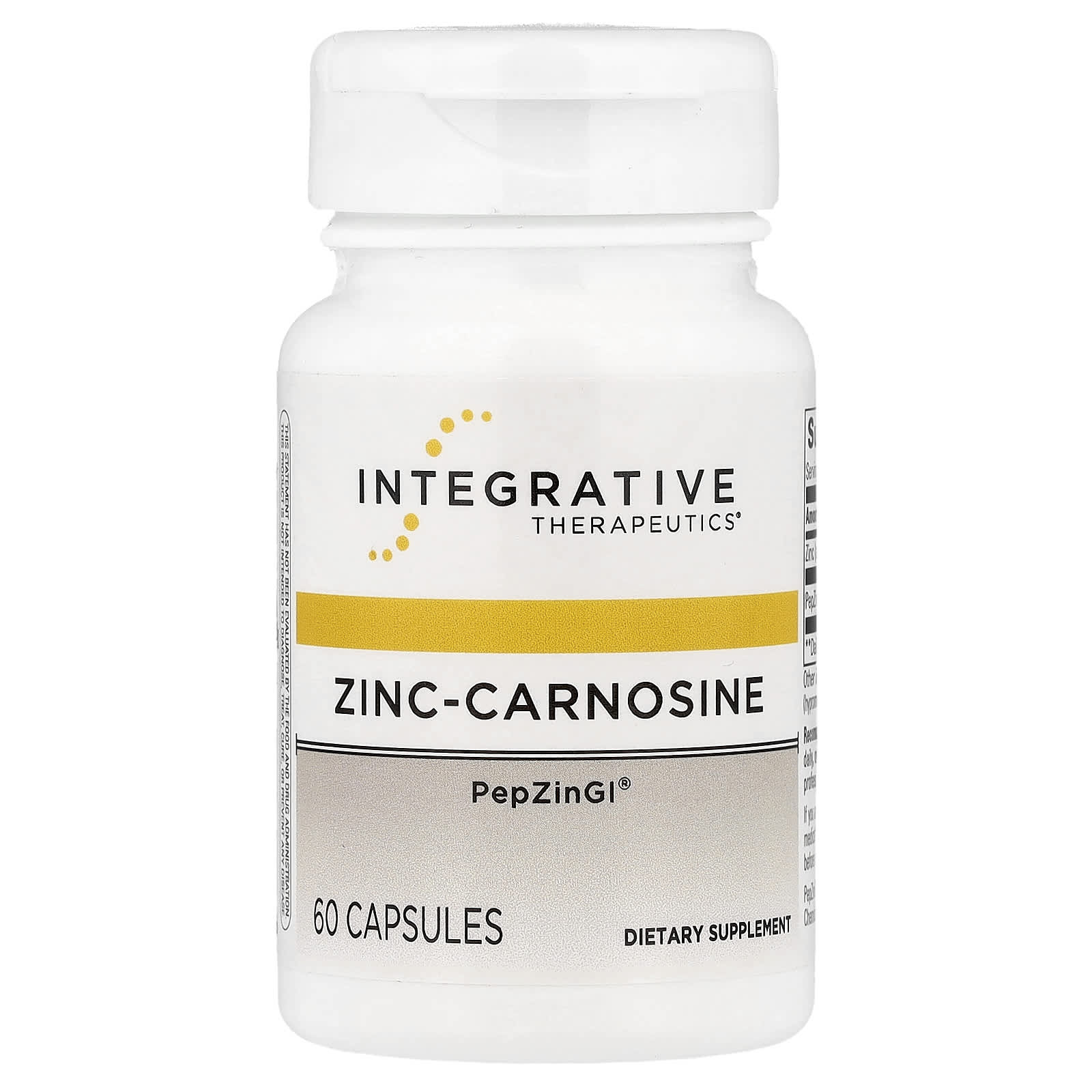
Zinc-Carnosine
Integrative Therapeutics

Zinc-Carnosine

Zinc 16 mg · Zinc-Carnosine 75 mg
Label on file (NIH DSLD)
$1.28Per dayAt the label maximum of 2 capsules a day.$38.50 · Per pack
Ultimate Hair & Nail Formula
Bluebonnet

Ultimate Hair & Nail Formula

Vitamin A 3 mg · Vitamin C 500 mg · Vitamin E 134 mg · +22 more
Label on file (NIH DSLD)
$1.30Per dayAt the label maximum of 3 capsules a day.$38.95 · Per pack
Sensitivi-T
LifeSeasons

Sensitivi-T

Vitamin B1 25 mg · Vitamin B2 25 mg · Vitamin B3 50 mg · +15 more
Label on file (NIH DSLD)
$1.30Per dayAt the label maximum of 3 capsules a day.$30.44 · Per pack
Life Force Multiple
Source Naturals

Life Force Multiple

Vitamin A 3.75 mg · Beta-Carotene 3 mg · Vitamin A Palmitate 750 mcg · +45 more
Label on file (NIH DSLD)
$0.65 – $1.31Per dayFor 2 to 4 tablets a day as stated on the label.$19.59 · Per pack
Adrenal Care
Blackstone Labs

Adrenal Care

Zinc 30 mg · Inositol Hexanicotinate 750 mg · DMAE 750 mg · +3 more
Label on file (NIH DSLD)
$1.33Per dayAt the label maximum of 4 tablets a day.$39.99 · Per pack
Thyrocsin
Thorne

Thyrocsin

Vitamin C 200 mg · Vitamin E 67 mg · Vitamin B12 100 mcg · +5 more
Label on file (NIH DSLD)
$1.33Per dayAt the label maximum of 4 capsules a day.$40.00 · Per pack
Brewer's Yeast Powder
Bluebonnet Super Earth

Brewer's Yeast Powder

Thiamine 0.9 mg · Riboflavin 1.8 mg · Niacin 10 mg · +13 more
Label on file (NIH DSLD)
$1.35Per dayAt the label maximum of 1 serving a day.$40.76 · Per pack
Brewer's Yeast Powder Unflavored
Bluebonnet

Brewer's Yeast Powder Unflavored

Thiamine 1 mg · Riboflavin 2 mg · Niacin 10 mg · +12 more
Label on file (NIH DSLD)
$1.91Per dayAt the label maximum of 1 serving a day.$28.95 · Per pack
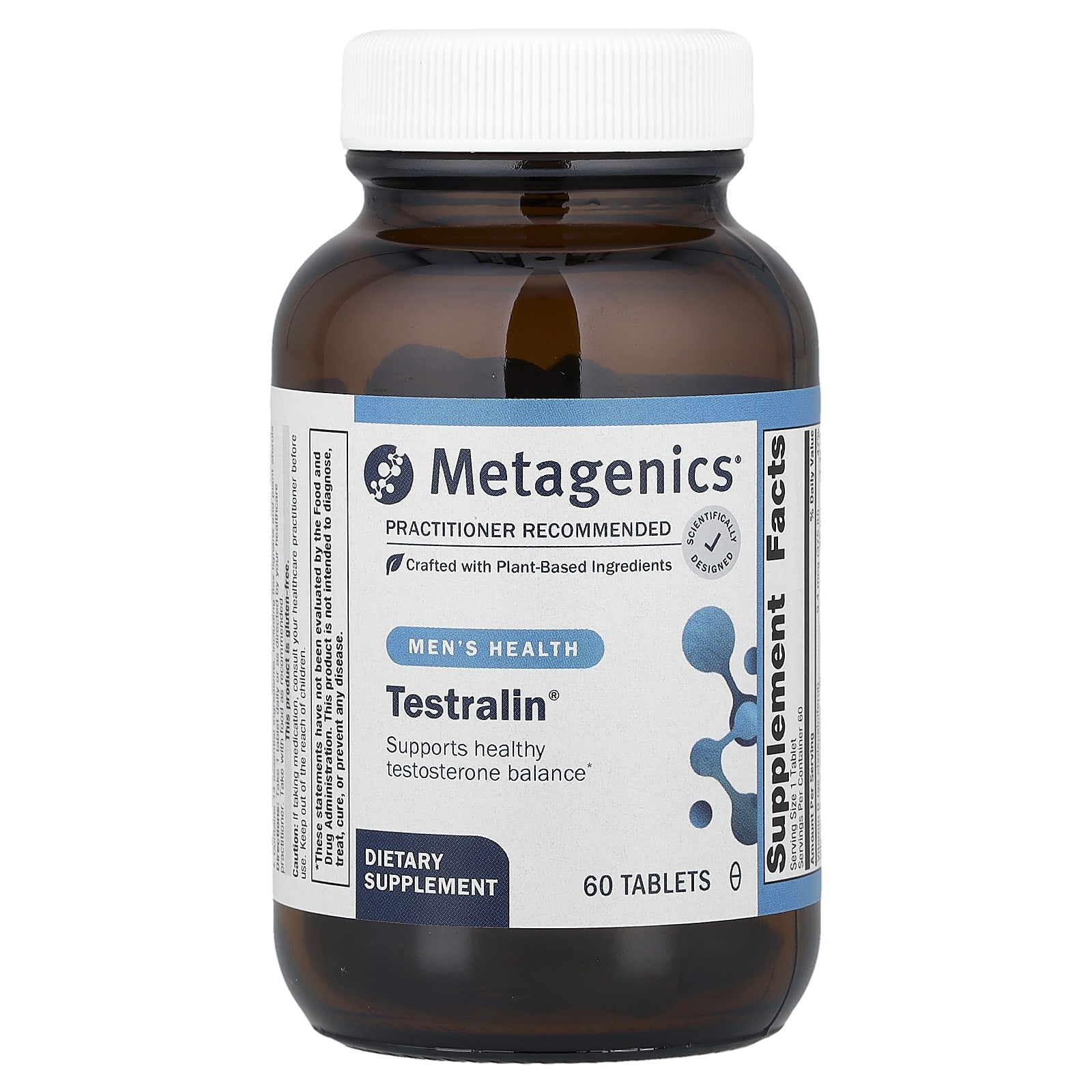
Testralin
Metagenics

Testralin

Vitamin D 9.4 mcg · Vitamin B6 25 mg · Vitamin B12 15 mcg · +10 more
Label on file (NIH DSLD)
$1.37Per dayAt the label maximum of 1 tablet a day.$81.99 · Per pack
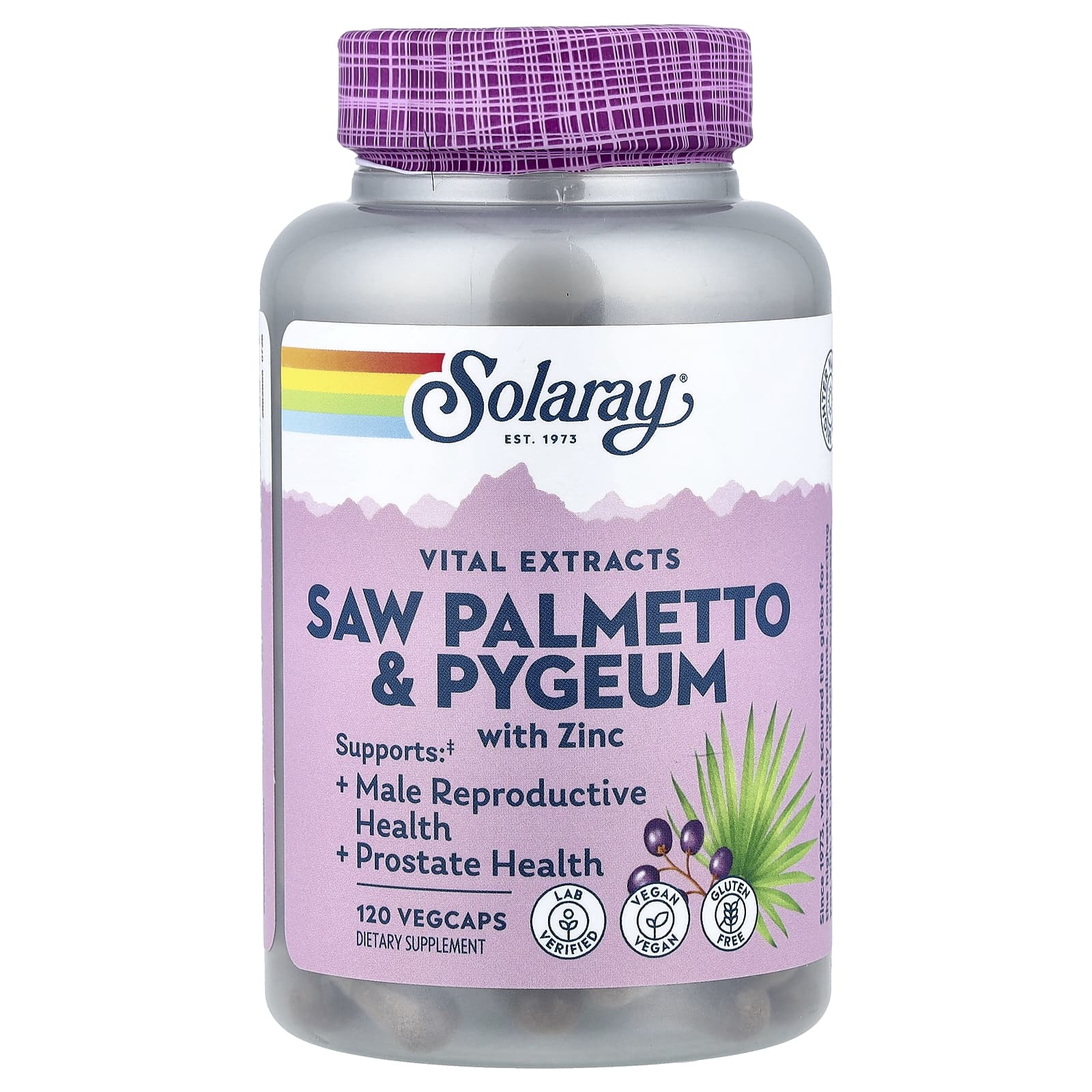
Saw Palmetto & Pygeum with Zinc
Solaray

Saw Palmetto & Pygeum with Zinc

Vitamin B6 20 mg · Zinc 15 mg · Saw Palmetto Berry Oil 320 mg · +1 more
Label on file (NIH DSLD)
$1.57Per dayAt the label maximum of 4 capsules a day.$46.99 · Per pack
Inflama-Rest
Source Naturals

Inflama-Rest

Vitamin C 4 mg · Vitamin D3 25 mcg · Calcium 26 mg · +21 more
Label on file (NIH DSLD)
$1.42Per dayAt the label maximum of 4 tablets a day.$21.30 · Per pack
Royal Maca for Men Vegetarian Capsules
Whole World Botanicals

Royal Maca for Men Vegetarian Capsules

Selenium 2.49 mcg · Zinc Glycinate 12 mg · Vitamin B6 2 mg · +1 more
Label on file (NIH DSLD)
Daily cost unavailable$32.17 · Per pack
Saw Palmetto & Pygeum with Zinc
Solaray

Saw Palmetto & Pygeum with Zinc

Vitamin B6 20 mg · Zinc 15 mg · Saw Palmetto Berry Oil 320 mg
Label on file (NIH DSLD)
$1.43Per dayAt the label maximum of 4 capsules a day.$21.49 · Per pack
Advanced Testosterone Support
Thorne

Advanced Testosterone Support

Zinc 15 mg · Shilajit Extract 500 mg · Luteolin Phytosome 150 mg · +1 more
Label on file (NIH DSLD)
$1.43Per dayAt the label maximum of 2 capsules a day.$43.00 · Per pack
OsteoBalance
Pure Encapsulations

OsteoBalance

Vitamin D 10.7 mcg · Calcium 514 mg · Magnesium 64 mg · +5 more
Label on file (NIH DSLD)
No current price
Super Miraforte with Standardized Lignans
Life Extension

Super Miraforte with Standardized Lignans

Zinc 7.5 mg · Maca 160 mg · Stinging & Dwarf Nettle Extracts 141 mg · +1 more
Label on file (NIH DSLD)
$1.45Per dayAt the label maximum of 4 capsules a day.$43.50 · Per pack
Sucontral D
EuroMedica

Sucontral D

Vitamin C 30 mg · Vitamin E 5 mg · Thiamine 0.7 mg · +8 more
Label on file (NIH DSLD)
No current price

Lowest price per day first. Status shown for the United States.

Information, not a prescription. Do not start, stop or combine supplements or medicines on your own. If you have a health condition, are pregnant or breastfeeding, take medicines, or are under 18, talk to a doctor or pharmacist first.