Terms and sources
- vitamin B7
- Or D-biotin or vitamin H. Names as written on labels in the NIH Dietary Supplement Label Database.
- some bacteria, yeasts, molds, algae and plants
- Linus Pauling Institute, Oregon State University.
Biotin in the body
Biotin works with five enzymes called carboxylases. They carry out key steps in the metabolism of fatty acids, glucose and amino acids. Biotin also has roles in gene regulation and cell signaling. It was discovered in 1927, and 40 more years of research were needed to establish it as a vitamin.
Terms and sources
- five enzymes
- Propionyl-CoA carboxylase, pyruvate carboxylase, methylcrotonyl-CoA carboxylase and acetyl-CoA carboxylases 1 and 2. NIH Office of Dietary Supplements.
- 1927
- Linus Pauling Institute, Oregon State University.
In food, most biotin is bound to protein. Gut enzymes, including one called biotinidase, release free biotin, which the small intestine absorbs. Most biotin in the body is stored in the liver. Most bacteria in the gut make biotin; whether people absorb meaningful amounts of it is unknown. In healthy adults, blood biotin is 133–329 pmol/L. Blood biotin rises with large doses taken by mouth.
Terms and sources
- biotinidase
- The enzyme that frees biotin from its protein-bound forms. NIH Office of Dietary Supplements.
- Most bacteria in the gut
- Linus Pauling Institute, Oregon State University.
- blood biotin
- Serum biotin. In urine: 18–127 nmol per 24 hours. NIH Office of Dietary Supplements.
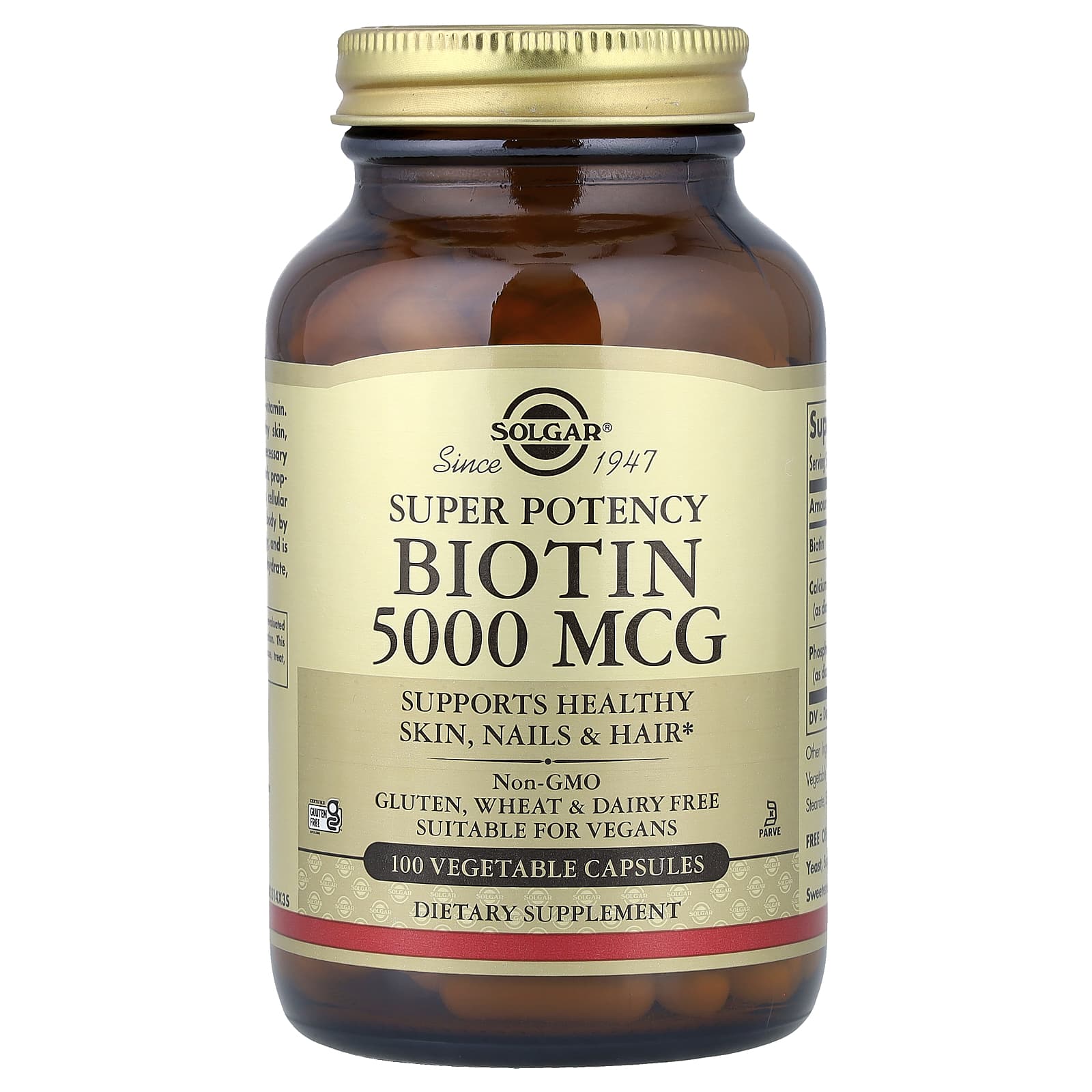
NIH notes that biotin supplements “are often promoted for hair, skin, and nail health.” It adds: “However, these claims are supported, at best, by only a few case reports and small studies.” It also notes: “Future studies are needed to determine whether biotin supplements might improve hair, nail, and skin health, especially among healthy individuals.”
Terms and sources
- NIH notes
- NIH Office of Dietary Supplements, Biotin fact sheet for health professionals, section on hair, nail and skin health.
Information, not a prescription. Do not start, stop or combine supplements or medicines on your own.