PlantFusion · powder

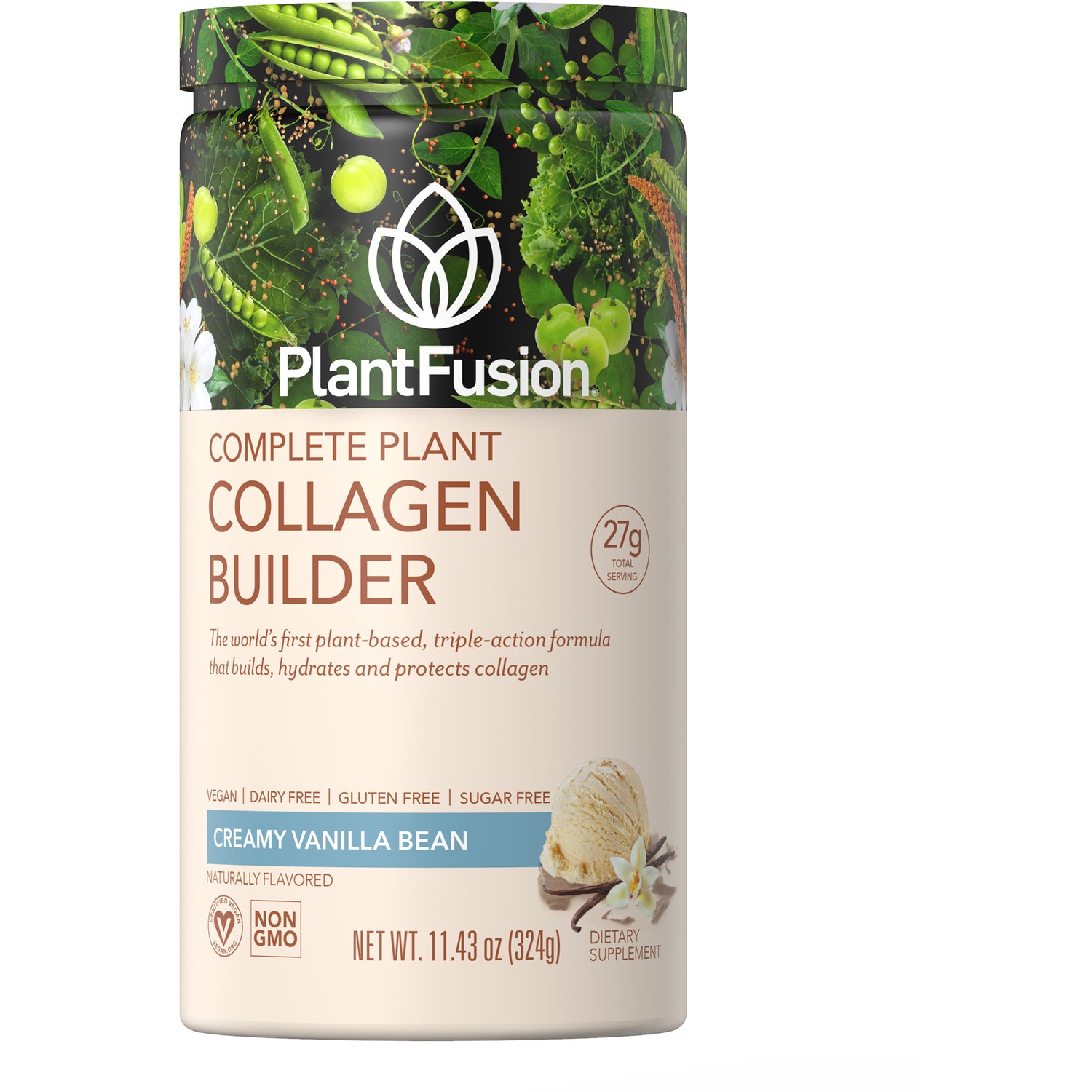
Complete Plant Collagen Builder Creamy Vanilla Bean

2 Scoops [approximately 27 grams] · how many a day not stated

Add to my list
Per dayDaily cost unavailable

Daily cost unavailable

Per pack$34.48

11.43 ozs; 324 g · Vitacost · checked 13 Nov 2026. Delivery is not included.

Per 100 g$10.64

Pack price divided by the pack size, shown per 100 g.

Composition

Recorded amounts. How many servings a day is not stated.

Amounts not disclosed. The label gives only the total weight of this blend, not the amount of each ingredient in it. Without the individual amounts, we cannot compare these ingredients with upper limits.

150 mgrecorded amount; daily frequency not stated
8% of 2,000 mg — US upper limit for adults, National Academiesfrom food and supplements, adults · food is not counted here · a reference value, not a legal limit
Vitamin D3
About this formvitamin D3 (cholecalciferol). Raises vitamin D levels more than D2. Reference level V0; no form is called “better” here.
12.5 mcgrecorded amount; daily frequency not stated
13% of 100 mcg — US upper limit for adults, National Academiesfrom food and supplements, adults · food is not counted here · a reference value, not a legal limit
Vitamin K2as Menaquinone-7
About this formvitamin K2 MK-7. Long-acting; dosed in micrograms. Reference level V0; no form is called “better” here.
50 mcgrecorded amount; daily frequency not stated
No US upper limitNational Academies: not determined — too little data on harm
Limits in other countries (12)Austria, Belgium, Croatia, Denmark, Eurasian Economic Union (EAEU), France, Germany, Italy, Luxembourg, Malta, Poland, Switzerland
10 mgrecorded amount; daily frequency not stated · as calcium itself
<1% of 2,000 mg — US upper limit for adults, National Academies2,500 mg (ages 19–50) · 2,000 mg (51 and older) · from food and supplements, adults · food is not counted here · a reference value, not a legal limit
3 mgrecorded amount; daily frequency not stated · as iron itself
7% of 45 mg — US upper limit for adults, National Academiesfrom food and supplements, adults · food is not counted here · a reference value, not a legal limit
Potassium
20 mgrecorded amount; daily frequency not stated
No US upper limitNational Academies: not determined — too little data on harm
Limits in other countries (11)Austria, Belgium, Croatia, Denmark, Eurasian Economic Union (EAEU), France, Germany, Luxembourg, Malta, Poland, Switzerland
L-Isoleucine
Amount not disclosedpart of PlantFusion Amino Acid Infused Protein Blend · not counted
No limit on file for the United StatesNone on file in any country
L-Leucine
Amount not disclosedpart of PlantFusion Amino Acid Infused Protein Blend · not counted
No limit on file for the United StatesNone on file in any country
L-Valine
Amount not disclosedpart of PlantFusion Amino Acid Infused Protein Blend · not counted
No limit on file for the United StatesNone on file in any country
L-Glutamine
Amount not disclosedpart of PlantFusion Amino Acid Infused Protein Blend · not counted
No limit on file for the United StatesNone on file in any country
Amount not disclosedpart of PlantFusion Amino Acid Infused Protein Blend · not counted
No limit on file for the United StatesNone on file in any country
Alpha-Galactosidase
Amount not disclosedpart of PlantFusion Proprietary Enzyme Blend · not counted
No limit on file for the United StatesNone on file in any country
Bromelain
Amount not disclosedpart of PlantFusion Proprietary Enzyme Blend · not counted
No limit on file for the United StatesNone on file in any country
L-Proline
100 mgrecorded amount; daily frequency not stated
No limit on file for the United StatesNone on file in any country
100 mgrecorded amount; daily frequency not stated
No limit on file for the United States
Limits in other countries (1)Switzerland
Saberry (Emblica officinalis) (Amla) fruit extractas Beta-Glucogallin | Gallic Acid
50 mgrecorded amount; daily frequency not stated
No limit on file for the United StatesNone on file in any country
50 mgrecorded amount; daily frequency not stated
No limit on file for the United StatesNone on file in any country

Where no limit is shown, none is set or on file for the United States. That is not the same as having no maximum.

Manufacturer's directions

Easy preparationAdd 2 scoops to 10 oz. of chilled water or beverage of your choice in a shaker cup or blender and mix for 5 seconds.

Other ingredients on the label

Natural Flavors, organic Tapioca powder, Stevia extract powder (Reb A), Silica, Guar Gum Powder, Lucuma powder, Monk Fruit extract powder, Yacon powder

Limits in other countries
CountryVitamin CVitamin D3Vitamin K2Calcium
United States2,000 mgreference, not a law · 8%100 mcgreference, not a law · 13%—not on file2,000 mgreference, not a law · 1%
Comparison note2,500 mg (ages 19–50) · 2,000 mg (51 and older)
Austria500 mgrecommendation · 30%20 mcgrecommendation · 63%75 mcgrecommendation · 67%800 mgrecommendation · 1%
Belgium1,000 mglaw · 15%75 mcglaw · 17%210 mcglaw · 24%1,600 mglaw · 1%
Croatia800 mglaw · 19%10 mcglaw · 125% · above100 mcglaw · 50%1,500 mglaw · 1%
Cyprus2,000 mglaw · 8%10 mcglaw · 125% · above—not on file1,500 mglaw · 1%
Denmark1,000 mgrecommendation · 15%95 mcgrecommendation · 13%919 mcgrecommendation · 5%1,327 mgrecommendation · 1%
EAEU900 mglaw · 17%15 mcglaw · 83%360 mcglaw · 14%2,500 mglaw · 0%
Estonia—not on file100 mcgrecommendation · 13%—not on file2,500 mgrecommendation · 0%
Finland—not on file100 mcgrecommendation · 13%—not on file2,500 mgrecommendation · 0%
France180 mglaw · 83%5 mcglaw · 250% · above25 mcglaw · 200% · above800 mglaw · 1%
Germany250 mgrecommendation · 60%20 mcgrecommendation · 63%80 mcgrecommendation · 63%500 mgrecommendation · 2%
Ireland2,000 mgrecommendation · 8%100 mcgrecommendation · 13%—not on file2,500 mgrecommendation · 0%
Italy1,000 mgrecommendation · 15%50 mcgrecommendation · 25%200 mcgrecommendation · 25%1,200 mgrecommendation · 1%
Luxembourg1,000 mglaw · 15%50 mcglaw · 25%112.5 mcglaw · 44%1,600 mglaw · 1%
Malta1,000 mgrecommendation · 15%25 mcgrecommendation · 50%1,000 mcgrecommendation · 5%1,500 mgrecommendation · 1%
Netherlands—not on file75 mcglaw · 17%—not on file—not on file
Norway1,000 mglaw · 15%80 mcglaw · 16%—not on file705 mglaw · 1%
Poland1,000 mgrecommendation · 15%50 mcgrecommendation · 25%200 mcgrecommendation · 25%1,500 mgrecommendation · 1%
Switzerland750 mglaw · 20%70 mcglaw · 18%225 mcglaw · 22%750 mglaw · 1%

Maximum amounts per daily dose of a food supplement, as each country sets them; the share is the daily amount on the label against that maximum. Law = legally binding; recommendation = an authority's recommended maximum, not binding; reference = the U.S. upper intake level for adults from all sources (National Academies), not a legal limit. Verification level V0 · 3 more ingredients have limits on file · Report an error

About the ingredients

Ingredient information

Ingredient guideVitamin CVitamin C, also called L-ascorbic acid, is a water-soluble vitamin. Most animals make vitamin C in the body; humans cannot and get it from food. Fruits and vegetables such as peppers, citrus fruits and kiwifruit are the main sources. Supplements contain it as ascorbic acid or as mineral salts such as sodium and calcium ascorbate.Read moreShow less
Terms and sources
water-soluble
It dissolves in water, not in fat. NIH Office of Dietary Supplements.

Vitamin C in the body

Vitamin C is needed to make collagen, carnitine and some neurotransmitters. It is also an antioxidant and can return used vitamin E to its active form. It is needed for normal immune function. It increases the absorption of iron from plant foods.

Terms and sources
collagen
A protein that holds together connective tissue, such as skin, tendons and blood vessels. NIH Office of Dietary Supplements.
carnitine
A substance cells need to get energy from fat. Linus Pauling Institute.
neurotransmitters
Chemical messengers between nerve cells.
antioxidant
A substance that limits damage from free radicals, reactive molecules made in cells.
iron from plant foods
Nonheme iron, the only form of iron in plant foods. NIH Office of Dietary Supplements.

An adult body holds from about 300 mg to about 2 g of vitamin C. White blood cells, the eyes, the adrenal and pituitary glands and the brain hold the most. Cells hold vitamin C in millimolar concentrations, blood plasma in micromolar concentrations. At 100 mg a day or more, cells appear to be saturated.

Terms and sources
about 300 mg
The lower figure is for very low intake. NIH Office of Dietary Supplements.
adrenal and pituitary glands
Small glands that make hormones: the adrenals sit above the kidneys, the pituitary below the brain.
millimolar
Thousandths of a mole per liter; micromolar means millionths. NIH Office of Dietary Supplements.
saturated
Holding as much as they take up. Above 200 mg a day, blood plasma levels rise little more.

The body absorbs about 70–90% of vitamin C at 30–180 mg a day. Above 1 g a day, less than 50% is absorbed, and unused vitamin C leaves in urine.

Terms and sources
less than 50%
Summary by the NIH Office of Dietary Supplements. Absorption in the gut runs through a dose-dependent transporter protein.

Information, not a prescription. Do not start, stop or combine supplements or medicines on your own.
Ingredient guideVitamin DVitamin D is a fat-soluble vitamin. The skin makes it when ultraviolet light from the sun reaches it, and a few foods contain it. Supplements contain one or both of its two main forms: vitamin D3 and vitamin D2. Labels state the amount in micrograms (mcg), international units (IU) or both.Read moreShow less
Terms and sources
fat-soluble
It dissolves in fat, not in water. NIH Office of Dietary Supplements.

Vitamin D in the body

Vitamin D from the sun, food and supplements is inactive at first. The liver turns it into 25-hydroxyvitamin D, the form a blood test measures. Mainly the kidneys then make the active form.

Terms and sources
25-hydroxyvitamin D
Also called calcidiol or 25(OH)D. Results come in nmol/L or ng/mL; 50 nmol/L equals 20 ng/mL.
active form
1,25-dihydroxyvitamin D, also called calcitriol.

Vitamin D is needed for normal absorption of calcium from the gut and for normal bones. It is also needed for normal muscle and immune function. Many tissues in the body carry vitamin D receptors.

Terms and sources
vitamin D receptors
Proteins in cells that respond to the active form of vitamin D. NIH Office of Dietary Supplements.

Information, not a prescription. Do not start, stop or combine supplements or medicines on your own.

Ingredient guideCalciumCalcium is the most abundant mineral in the human body. An adult body holds about 1.2–1.4 kg of it, almost all in bones and teeth. Milk, yogurt and cheese are rich sources. Supplements contain calcium as part of a compound, most often calcium carbonate or calcium citrate.Read moreShow less
Terms and sources
1.2–1.4 kg
About 1,200 g in women and 1,400 g in men. NIH Office of Dietary Supplements.

Calcium in the body

About 99% of the body's calcium is in bones and teeth. The other 1% is in the blood and soft tissues. This small part is needed for normal muscle function, nerve signaling, blood clotting and hormone release. It also takes part as blood vessels tighten and relax.

Terms and sources
bones and teeth
There it sits in hydroxyapatite, a mineral of calcium and phosphate. Linus Pauling Institute; NIH Office of Dietary Supplements.

The body keeps blood calcium in a narrow range, about 8.8–10.4 mg/dL. When intake is low, it draws calcium from bone to hold that range. A blood test therefore does not show how much calcium a person gets. Bone is rebuilt all the time; teeth are not. Vitamin D is needed to absorb calcium in the gut.

Terms and sources
8.8–10.4 mg/dL
2.2–2.6 mmol/L, total calcium in serum in healthy people. NIH Office of Dietary Supplements.
absorb calcium in the gut
Vitamin D is needed for active transport, the main route when intake is low. NIH Office of Dietary Supplements.

Information, not a prescription. Do not start, stop or combine supplements or medicines on your own.

Ingredient guideIronIron is an essential mineral that the body uses to carry oxygen in the blood. An adult body holds about 3 to 4 g of iron, most of it in hemoglobin. Meat, seafood and grain foods made with fortified flour are major sources. Supplements contain iron as part of a compound, such as ferrous sulfate, ferrous fumarate or ferrous bisglycinate.Read moreShow less
Terms and sources
3 to 4 g
NIH Office of Dietary Supplements. The Linus Pauling Institute estimates 2.3 g in women and 3.8 g in men.

Iron in the body

Iron is part of hemoglobin, the red blood cell protein that carries oxygen from the lungs to the tissues. It is also part of myoglobin, a protein that carries and stores oxygen in muscle cells. Iron is needed for physical growth, the work of cells and making some hormones. Hundreds of proteins and enzymes contain iron, including those that make energy in cells.

Terms and sources
hemoglobin
NIH Office of Dietary Supplements.
myoglobin
Linus Pauling Institute. Its 2016 update was paid for in part by a grant from Bayer Consumer Care AG.
making some hormones
NIH Office of Dietary Supplements.
Hundreds of proteins
Including cytochromes, which carry electrons when cells make ATP, their main energy molecule. Linus Pauling Institute.

The body loses very little iron, so it reuses most of what it has. About 20 mg of iron a day is recovered from old red blood cells. To cover losses, the gut absorbs only 1–2 mg of iron a day. A hormone made in the liver, hepcidin, sets how much iron the gut takes up. Spare iron is stored as ferritin in the liver, spleen and bone marrow.

Terms and sources
loses very little iron
Small amounts leave in urine, stool, sweat and shed skin cells; more is lost with menstrual blood. NIH Office of Dietary Supplements.
About 20 mg
The same article gives about 35 mg a day for all iron recycling. Linus Pauling Institute. Its 2016 update was paid for in part by a grant from Bayer Consumer Care AG.
1–2 mg
Linus Pauling Institute.
hepcidin
When stores are full, hepcidin blocks iron uptake from food; when they are low, it is barely made. Linus Pauling Institute; NIH.
ferritin
A storage protein. Its level in blood is a common test of iron stores. NIH Office of Dietary Supplements.

NIH notes: "Adults with normal intestinal function have very little risk of iron overload from dietary sources of iron. However, supplements containing 25 mg iron or more can reduce zinc absorption and plasma zinc concentrations. High-dose iron supplements can also cause gastrointestinal effects, including gastric upset, constipation, nausea, abdominal pain, vomiting, and diarrhea. Taking iron supplements with food can help minimize these adverse effects. Case reports, some of which involved doses of 130 mg iron, suggest that some people develop even more serious gastrointestinal effects, including gastritis and gastric lesions (along with iron deposits in the gastric mucosa in some cases)." It goes on: "Acute intakes of more than 20 mg/kg iron (about 1,365 mg iron for a person weighing 150 pounds [lb]) from supplements or medicines can lead to corrosive necrosis of the intestine, which might lead to fluid and blood loss, shock, tissue damage, and organ failure, especially if food is not taken at the same time as the iron. In severe cases (e.g., one-time ingestions of 60 mg/kg, or about 4,090 mg iron for a 150-lb person), overdoses of iron can lead to multisystem organ failure, coma, convulsions, and even death." NIH continues: "Between 1983 and 2000, at least 43 U.S. children died from ingesting supplements containing high doses of iron (36–443 mg iron/kg body weight). Accidental ingestion of iron supplements caused about a third of poisoning deaths among children reported in the United States between 1983 and 1991." It adds: "In 1997, FDA began requiring oral supplements containing more than 30 mg elemental iron per dose to be sold in single-dose packaging with strong warning labels. At the same time, many manufacturers voluntarily replaced the sugar coating on iron tablets with film coatings. Between 1998 and 2002, only one child death due to ingesting an iron-containing tablet was reported. As a result of a court decision, FDA removed its single-dose packaging requirement for iron supplements in 2003. FDA currently requires that iron-containing dietary supplements sold in solid form (e.g., tablets or capsules but not powders) carry the following label statement: “WARNING: Accidental overdose of iron-containing products is a leading cause of fatal poisoning in children under 6. Keep this product out of reach of children. In case of accidental overdose, call a doctor or poison control center immediately”. In addition, since 1978, the Consumer Product Safety Commission has required manufacturers to package dietary supplements that contain 250 mg or more elemental iron per container in child-resistant bottles or packaging to prevent accidental poisoning." NIH adds: "Hemochromatosis, a disease caused by a mutation in the hemochromatosis (HFE) gene, is associated with an excessive buildup of iron in the body. About 1 in 10 Whites carry the most common HFE mutation (C282Y), but only 4.4 Whites per 1,000 are homozygous for the mutation and have hemochromatosis. The condition is much less common in other ethnic groups. Without treatment by periodic chelation or phlebotomy, people with hereditary hemochromatosis typically develop signs of iron toxicity by their 30s. These effects can include liver cirrhosis, hepatocellular carcinoma, heart disease, and impaired pancreatic function. The American Association for the Study of Liver Diseases recommends that treatment of hemochromatosis include the avoidance of iron and vitamin C supplements."

Terms and sources
NIH notes
NIH Office of Dietary Supplements, Iron fact sheet for health professionals, section on health risks from excessive iron. The next paragraphs follow in the order of that section.
It adds
Same NIH section, the paragraph on packaging and label rules. In the United States, 21 CFR 101.17(e) requires the same statement.
NIH adds
Same NIH section, next paragraph.

Information, not a prescription. Do not start, stop or combine supplements or medicines on your own.

Ingredient guideArtichoke leaf extractArtichoke leaf extract is made from the leaves of the globe artichoke, Cynara cardunculus, also named Cynara scolymus. As a vegetable, people eat the immature flower head, not the leaves. Supplements contain leaf extract in capsules and tablets, leaf powder or liquid extracts, alone or in blends.Read moreShow less
Terms and sources
Cynara cardunculus
Botanists now place globe artichoke, cultivated cardoon and wild cardoon in this one species. Sonnante et al., Annals of Botany, 2007.
immature flower head
Also called the capitulum or head. Sonnante et al., Annals of Botany, 2007.

Artichoke leaf extract in the body

Artichoke leaf extract is not a nutrient, and the body has no daily requirement for it. Globe artichoke belongs to the Asteraceae family and comes from the Mediterranean basin. Its wild ancestor is wild cardoon; cultivated cardoon, the same species, is grown for its leaf stalks. The edible portion is typically only 30–40% of the plant's biomass.

Terms and sources
Asteraceae family
Sonnante et al., Annals of Botany, 2007.
wild ancestor
Wild cardoon is the progenitor of both crops. Sonnante et al., Annals of Botany, 2007.
30–40% of the plant's biomass
The stems and leaves are discarded or used as animal feed or fertilizer. Olas, Nutrients, 2024. The review summarizes earlier work.

The main phenolic compounds of the leaf extract are caffeoylquinic acids and flavonoids. Cynarin is one of the dicaffeoylquinic acids. Of all parts of the plant, the leaves hold the most luteolin. Cynarin rises as the plant grows, from 0.01% to 0.05% of dry matter. Leaves and stems also hold bitter compounds called sesquiterpenes, such as cynaropicrin.

Terms and sources
caffeoylquinic acids
Mono- and dicaffeoylquinic acids, such as chlorogenic acid and cynarin, and caffeic acid. Wittemer et al., Phytomedicine, 2005.
flavonoids
Such as luteolin-7-O-glucoside. Wittemer et al., Phytomedicine, 2005.
dicaffeoylquinic acids
Sonnante et al., Annals of Botany, 2007.
the most luteolin
Olas, Nutrients, 2024.
0.01% to 0.05%
Olas, Nutrients, 2024. The review summarizes earlier analyses.
sesquiterpenes
The review says they are believed to taste very bitter. Olas, Nutrients, 2024.

In 14 healthy volunteers, the extract's own caffeoylquinic acids and luteolin glycosides were not found in blood or urine. Instead, blood and urine held their breakdown products, such as caffeic, ferulic and isoferulic acid. These peaked within 1 hour; dihydrocaffeic and dihydroferulic acid peaked only after 6–7 hours. Luteolin appeared only in bound forms, with a peak within half an hour. In another study of 10 volunteers, urine held ferulic, isoferulic, dihydroferulic and vanillic acid after the extract.

Terms and sources
14 healthy volunteers
Each took two different leaf extracts, one after the other. Wittemer et al., Phytomedicine, 2005. The first author's affiliation is Lichtwer Pharma AG.
breakdown products
All but dihydroferulic acid were present as sulfates or glucuronides. Wittemer et al., Phytomedicine, 2005.
6–7 hours
The authors read this as two different routes of breakdown. Wittemer et al., Phytomedicine, 2005.
bound forms
As sulfate or glucuronide, not as the glucoside in the extract and not as free luteolin. Wittemer et al., Phytomedicine, 2005.
10 volunteers
The abstract says three capsules of 320 mg artichoke extract, given every 4 hours (at 0, 4 and 8 hours). It does not say which part of the plant was used. Rechner et al., Free Radical Research, 2001.

Neither the US complementary health center (NCCIH) nor the NIH Office of Dietary Supplements has a fact sheet on artichoke. So the safety text on this page comes from the EU herbal medicine monograph.

Terms and sources
a fact sheet
Artichoke is not in NCCIH's Herbs at a Glance list or in the ODS list of fact sheets. National Center for Complementary and Integrative Health; NIH Office of Dietary Supplements.

The European Medicines Agency's EU herbal medicine monograph on artichoke leaf covers it as a traditional herbal medicine. For these herbal medicines, it states for children: "The use in children under 12 years of age is not recommended (see section 4.4 ‘Special warnings and precautions for use’)." On how long to use it, it states: "If the symptoms persist longer than 2 weeks during the use of the medicinal product, a doctor or a qualified health care practitioner should be consulted." Under contraindications, it lists: "Hypersensitivity to the active substance or to plants of the Asteraceae family (Compositae)." It also lists: "Obstruction of bile duct, cholangitis, liver disease, gallstones and any other biliary disorders that require medical supervision and advice." Under special warnings, it adds: "The use in children under 12 years of age has not been established due to lack of adequate data." Under interactions with other medicines, it states: "None reported." The monograph also states: "Safety during pregnancy and lactation has not been established. In the absence of sufficient data, the use during pregnancy and lactation is not recommended." It adds: "No fertility data available." On driving, it states: "No studies on the effect on the ability to drive and use machines have been performed." As side effects, it notes: "Slight diarrhoea with abdominal spasm, epigastric complaints like nausea, and heartburn have been reported. The frequency is not known." It adds: "Allergic reactions may occur. The frequency is not known." And: "If other adverse reactions not mentioned above occur, a doctor or a qualified health care practitioner should be consulted." On taking too much, it states: "No case of overdose has been reported." On laboratory safety data, it states: "Not required as per Article 16c(1)(a)(iii) of Directive 2001/83/EC, unless necessary for the safe use of the product." It adds: "Adequate tests on reproductive toxicity, genotoxicity and carcinogenicity have not been performed." In a later periodic review, the EMA committee found no new data that called for a revision of the monograph.

Terms and sources
EU herbal medicine monograph
Cynara cardunculus L. (syn. Cynara scolymus L.), folium. The quotes below are from it. EU herbal medicine monograph on artichoke leaf, European Medicines Agency.
contraindications
Reasons not to use the product, in medicine labeling terms. EU herbal medicine monograph on artichoke leaf, European Medicines Agency.
a later periodic review
Reports in the EU safety database were non-serious. The committee found them covered by the side-effect section. It notes a rat study where rosuvastatin blood levels were lower with the extract. The committee did not find this a reason to revise. Addendum to the assessment report on artichoke leaf, European Medicines Agency.

Information, not a prescription. Do not start, stop or combine supplements or medicines on your own.

Ingredient guideGlycineGlycine is the lightest amino acid. It is found in protein foods and is plentiful in collagen. The body also makes it, mostly from serine, another amino acid. The body uses glycine to build proteins and to make glutathione and creatine.Read moreShow less

Glycine in the body

Its molar mass is 75.07 g per mole, the lowest of the amino acids. It is a building block of proteins. The body also uses it to make glutathione, creatine and purine nucleotides.

Terms and sources
75.07 g per mole
The review calls glycine the lightest amino acid. Ramos-Jiménez et al., Sports, 2024, a review of glycine and exercise.
glutathione
The review links glutathione to limiting free radicals. Ramos-Jiménez et al., Sports, 2024.

In the nervous system, glycine is an inhibitory messenger. In blood plasma, glycine makes up about 11.5% of all amino acids.

Terms and sources
inhibitory messenger
An inhibitory neurotransmitter: it makes nerve cells less likely to fire. Ramos-Jiménez et al., Sports, 2024.
about 11.5%
The review gives normal plasma levels of 0.17–0.33 mM. Ramos-Jiménez et al., Sports, 2024.

Information, not a prescription. Do not start, stop or combine supplements or medicines on your own.

Ingredient guideHyaluronic AcidHyaluronic acid is a long sugar chain found in skin, the eye and joint fluid. Supplements contain it as hyaluronic acid or its salt, sodium hyaluronate. It is made by bacterial fermentation or extracted from rooster combs. This page is about taking it by mouth; injections and skin creams are other topics.Read moreShow less

Hyaluronic acid in the body

Hyaluronic acid is a long chain of two sugars that repeat in turn. One chain can weigh up to 6 million daltons. That is about 16,000 repeats of the sugar pair, by our calculation. In the body it is present as a salt, hyaluronate. It is found in high amounts in skin, the umbilical cord and the clear gel inside the eye. It is also present in joint fluid, cartilage and blood vessels.

Terms and sources
two sugars
glucuronic acid and N-acetylglucosamine. Liu et al., Microbial Cell Factories, 2011.
daltons
a unit of molecular mass. Liu et al., Microbial Cell Factories, 2011.
16,000 repeats
6,000,000 divided by 379, the mass of one sugar pair in daltons.
clear gel inside the eye
the vitreous humor. The name joins hyaloid, meaning glassy, and uronic acid. Meyer and Palmer described it in 1934, from cattle eyes. Liu et al., Microbial Cell Factories, 2011.
joint fluid
Fraser et al., 1997, find it in all tissues and body fluids of vertebrates.

In rats, more than half of the body's hyaluronic acid is in the skin. About a quarter is in the skeleton and connective structures, and less than a tenth in muscle. In women's skin, it made up 0.030% of skin weight at ages 19–47. The share fell to 0.015% at age 60 and 0.007% at age 75.

Terms and sources
In rats
Rats of 250 g held 40–60 mg in total. Reed et al., Acta Physiologica Scandinavica, 1988.
women's skin
Skin samples from women aged about 19 to 75. Longas et al., Carbohydrate Research, 1987.

In tissues, the half-life of hyaluronic acid ranges from less than 1 day to several days. Hyaluronic acid that reaches the blood has a half-life of 2–5 minutes. Cells lining the small vessels of the liver remove most of it. At only 0.1% in water, the chains tangle and the solution becomes thick. Roles proposed for it include lubrication and control of water in tissues.

Terms and sources
half-life
the time it takes for half of it to be broken down. Fraser et al., Journal of Internal Medicine, 1997.
becomes thick
highly viscous. Liu et al., Microbial Cell Factories, 2011.
Roles proposed
Fraser et al., Journal of Internal Medicine, 1997.

What happens to swallowed hyaluronic acid has been studied mostly in rats. In a 2008 rat study, 87–96% of a radioactive label was recovered, almost all of it in feces. Some of the label still appeared in joints, bones and skin. A 2016 rat study found no hyaluronic acid in feces. Gut bacteria broke it into small pieces, which passed through rat large intestine tissue in lab tests.

Terms and sources
radioactive label
technetium-99m attached to hyaluronic acid. Dogs were also studied. Balogh et al., Journal of Agricultural and Food Chemistry, 2008.
2016 rat study
It measured hyaluronic acid itself, not a label. Kimura et al., Journal of Medicinal Food, 2016. Five of six authors work for Kewpie, a maker of hyaluronic acid.
small pieces
oligosaccharides, short chains of sugar pairs. Pieces of 1, 2 and more sugar pairs reached rat skin.

Information, not a prescription. Do not start, stop or combine supplements or medicines on your own.

Services

Choose the option that suits you.

Quick selection

I know my goal

$5

1–2 minutes · a few questions with fixed answers

One goal. Up to three products. Set a budget per day if you like.

Product checks
form and amount on the label, plus shop prices
Daily schedule
what to take, when, how much
Totals and limits
next to the upper limit
Reasons & sources
for each product
Prices and shops
plus food and habits
Progress
what to track, when to see a doctor

Complete the questionnaire before you pay. If no product fits any of your goals, you won’t be charged.

Order · $5View example

Full selection

I have several goals

$15

5–7 minutes · questionnaire with fixed answers

Up to three goals in one set. Where two goals overlap, one product is used for both.

Product checks
form and amount on the label, plus shop prices
Daily schedule
what to take, when, how much
Totals and limits
next to the upper limit
Reasons & sources
for each product
Prices and shops
plus food and habits
Progress
what to track, when to see a doctor

Complete the questionnaire before you pay. If no product fits any of your goals, you won’t be charged.

Order · $15View example

Expert review

I want a person to look at my supplements

$50

Written review within 48 hours of your completed questionnaire

An expert reviews your supplement list and questionnaire.

Written review
duplicates, limits, forms
Detailed questionnaire
supplements, medicines, history
Optional uploads
supplement-label photos or documents relevant to your review
Your notes
your priorities and questions
Follow-up questions
in writing, when needed
Next steps
points to discuss with your doctor

Complete the questionnaire before you pay.

Order · $50View example
Sources, label & certificates

Label record

Copied from the NIH label database (DSLD 230120) · not yet compared with the label · checked 19 Oct 2026 · Report an error

The United States has no pre-market registration for supplements.
Label on file in the NIH Dietary Supplement Label Database
checked 19 Oct 2026source: NIH DSLDReport an error

Barcode 8 90985 00130 3

Third-party certificates

No third-party certificate on file for this product.

Information, not a prescription. Do not start, stop or combine supplements or medicines on your own. If you have a health condition, are pregnant or breastfeeding, take medicines, or are under 18, talk to a doctor or pharmacist first.

Photo credits

Image: © PlantFusion. Shown to identify the product. Source:

Rights holders can ask us to remove an image or send official product photos: info@verateca.com.

Product photo

PlantFusion Complete Plant Collagen Builder Creamy Vanilla Bean — enlarged pack