Terms and sources
- built much like cholesterol
- They are structurally related to cholesterol. Linus Pauling Institute, Oregon State University.
- beta-sitosterol
- Also written β-sitosterol. Linus Pauling Institute, Oregon State University.
- lack one double bond
- In the sterol ring; stanols are the saturated forms. Linus Pauling Institute, Oregon State University.
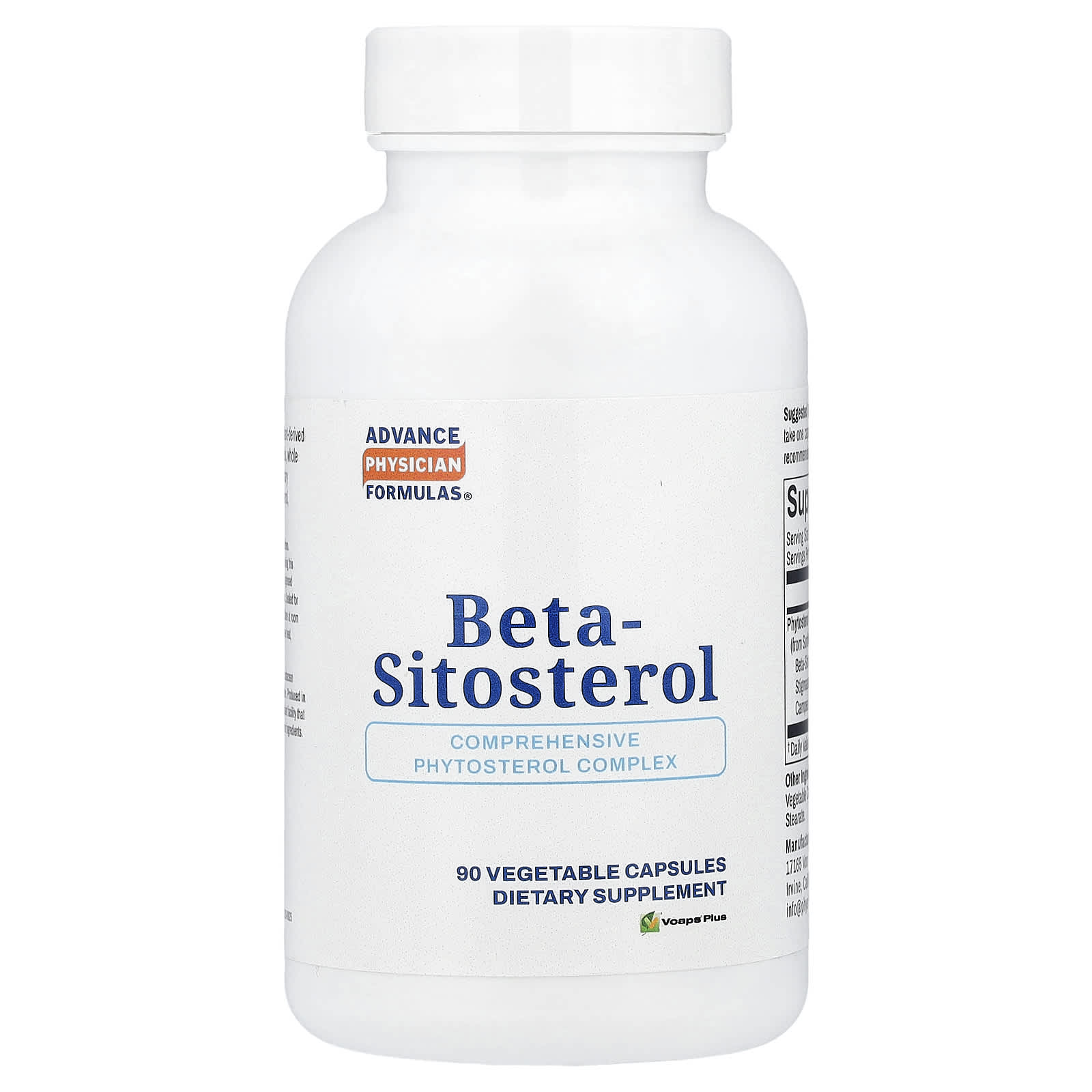
- in capsules, softgels or powders
- Product forms of 92 US labels with sterols or stanols alone, NIH Dietary Supplement Label Database. Tablets also appear. We counted these.
Plant sterols in the body
The body cannot make phytosterols, so all phytosterols in human blood come from the diet. Less than 5% of plant sterols eaten and less than 0.5% of plant stanols are absorbed. Gut cells pump most absorbed phytosterols straight back into the gut. Blood levels of phytosterols are usually several hundred times lower than blood cholesterol.
Terms and sources
- come from the diet
- Cholesterol, by contrast, comes from both the diet and the body's own production. Linus Pauling Institute, Oregon State University.
- are absorbed
- For cholesterol from food, the figure is about 50–60%. Linus Pauling Institute, Oregon State University.
- pump
- A transporter called ABCG5/G8 does this; in the liver, the same transporter moves them into bile. Linus Pauling Institute, Oregon State University.
In the gut, phytosterols take the place of cholesterol in the tiny fat droplets that carry it. More cholesterol from food and bile then leaves in the stool. LPI cites a feeding trial with 0.46 g and 2.1 g of phytosterols a day. Cholesterol absorption fell by about 10% and 25%. Cholesterol leaving in the stool rose by 36% and 74%, LPI notes.
Terms and sources
- tiny fat droplets
- mixed micelles: droplets of bile salts, fats and sterols that form after a meal with fat. Linus Pauling Institute, Oregon State University.
- leaves in the stool
- LPI: phytosterols also facilitate the excretion of biliary cholesterol in the feces.
- a feeding trial
- Phytosterols in drinks, compared with a dummy drink. LPI, citing Racette et al., American Journal of Clinical Nutrition, 2010.
LPI cites a meta-analysis of 124 studies of LDL cholesterol in the blood. LDL cholesterol was at least 5% lower with 0.6–1.1 g a day and about 12.4% lower with 3.3 g. These are blood measurements; LPI notes that the long-term effect on health outcomes is not known.
Terms and sources
- 124 studies
- Ras et al., British Journal of Nutrition, 2014, as cited by LPI. Two of the three authors worked for Unilever.
Phytosterols also lower blood levels of some carotenoids, the yellow and red pigments of plants. LPI cites a meta-analysis in which blood carotenoids such as beta-carotene were about 5–20% lower with enriched foods. LPI notes that in one trial, advice to eat 5 servings of fruit and vegetables a day kept carotenoid levels.
Terms and sources
- a meta-analysis
- Over 1 month to 1 year. Adjusted for cholesterol, alpha-carotene, beta-carotene and lycopene may stay lower. Baumgartner et al., European Journal of Nutrition, 2017, as cited by LPI. Two of the five authors worked for Unilever.
- one trial
- Including 1 serving of carotenoid-rich vegetables, in people taking 2.5 g of sterol or stanol esters a day. Noakes et al., American Journal of Clinical Nutrition, 2002, as cited by LPI.
LPI notes that in the US, plant sterols and stanols added to a variety of food products are "generally recognized as safe" (GRAS), an FDA status. LPI notes that few adverse effects have been reported with regular intake for up to 1 year. LPI notes that nausea, indigestion, diarrhea and constipation have occasionally been reported. LPI notes that people with sitosterolemia should avoid foods or supplements with added plant sterols. LPI notes: Phytosterol-enriched foods and supplements are not recommended for pregnant or breastfeeding women because their safety has not been studied. LPI notes that some cholesterol medicines change how much plant sterol the body absorbs or keeps in blood.
Terms and sources
- GRAS
- A US status for food ingredients. Linus Pauling Institute, Oregon State University.
- sitosterolemia
- A very rare inherited condition in which the body absorbs and keeps far more plant sterols. Linus Pauling Institute, Oregon State University.
- some cholesterol medicines
- LPI: statin therapy appears to increase the absorption of plant sterols. Ezetimibe (marketed as Zetia) is another cholesterol-lowering drug that may interfere with the intestinal absorption of phytosterols.
Information, not a prescription. Do not start, stop or combine supplements or medicines on your own.