Sunwarrior · powder

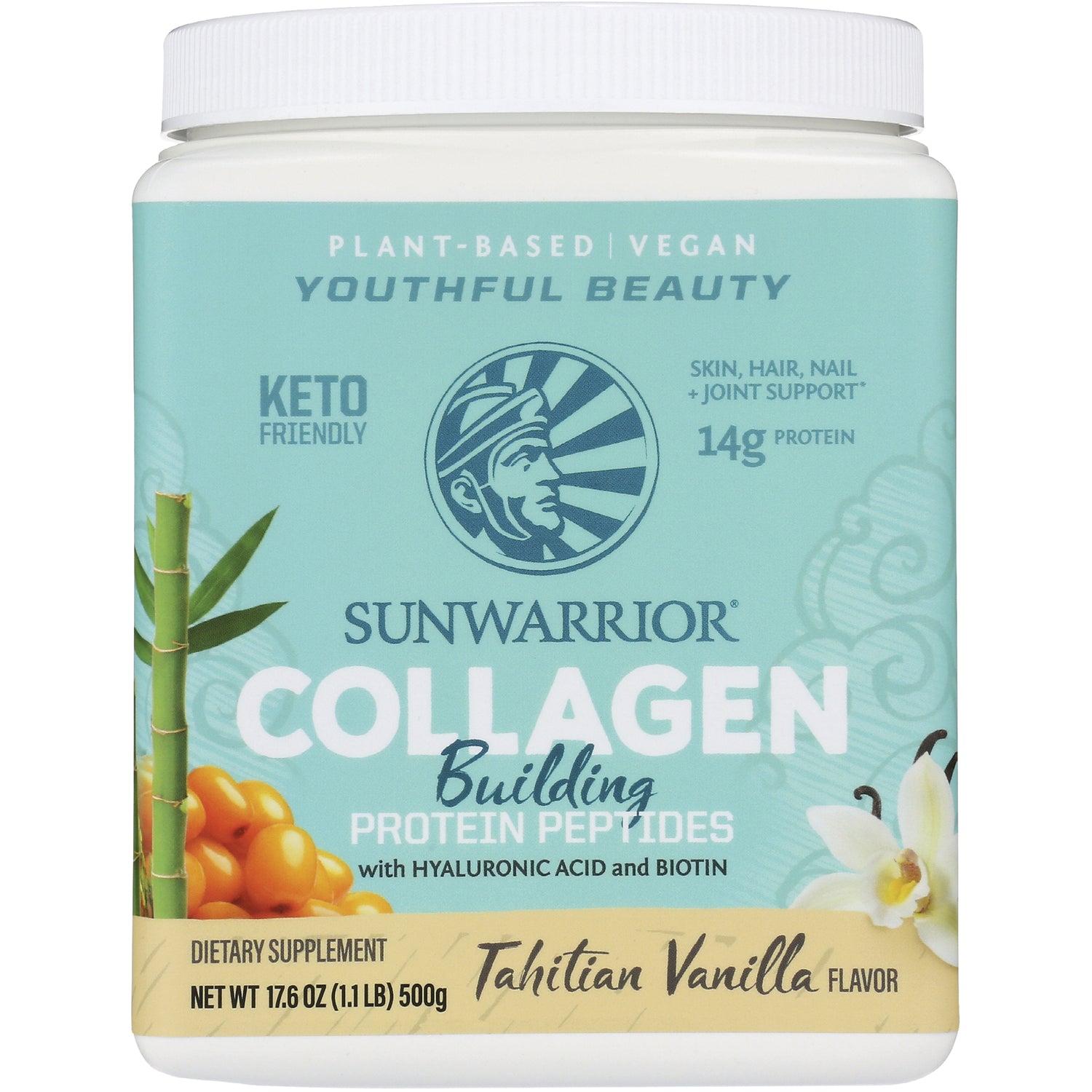
Collagen Building Protein Peptides Tahitian Vanilla Flavor

25 Grams [1 Scoop] · how many a day not stated

Add to my list
Per day$2.20

Calculated at 1 serving a day. The label does not state how many to take daily.

Per pack$43.97

1.1 pounds; 500 g · Vitacost · checked 13 Nov 2026. Delivery is not included.

Per serving$2.20

Pack price divided by the number of servings in the pack.

Composition

Recorded amounts. How many servings a day is not stated.

Amounts not disclosed. The label gives only the total weight of this blend, not the amount of each ingredient in it. Without the individual amounts, we cannot compare these ingredients with upper limits.

20 mcgrecorded amount; daily frequency not stated
Not compared with 3,000 mcg — US upper limit for adults, National Academiesthe limit counts retinol only · a reference value, not a legal limit
90 mgrecorded amount; daily frequency not stated
5% of 2,000 mg — US upper limit for adults, National Academiesfrom food and supplements, adults · food is not counted here · a reference value, not a legal limit
Vitamin K
6 mcgrecorded amount; daily frequency not stated
No US upper limitNational Academies: not determined — too little data on harm
Limits in other countries (12)Austria, Belgium, Croatia, Denmark, Eurasian Economic Union (EAEU), France, Germany, Italy, Luxembourg, Malta, Poland, Switzerland
2 mgrecorded amount; daily frequency not stated
6% of 35 mg — US upper limit for adults, National Academiesniacin from supplements, adults · a reference value, not a legal limit
30 mcgrecorded amount; daily frequency not stated
No US upper limitNational Academies: not determined — too little data on harm
Limits in other countries (7)Austria, Croatia, Cyprus, Eurasian Economic Union (EAEU), France, Italy, Malta
200 mgrecorded amount; daily frequency not stated · as calcium itself
10% of 2,000 mg — US upper limit for adults, National Academies2,500 mg (ages 19–50) · 2,000 mg (51 and older) · from food and supplements, adults · food is not counted here · a reference value, not a legal limit
4.2 mgrecorded amount; daily frequency not stated · as iron itself
9% of 45 mg — US upper limit for adults, National Academiesfrom food and supplements, adults · food is not counted here · a reference value, not a legal limit
Phosphorus
150 mgrecorded amount; daily frequency not stated
5% of 3,000 mg — US upper limit for adults, National Academies4,000 mg (ages 19–70) · 3,000 mg (71 and older) · from food and supplements, adults · food is not counted here · a reference value, not a legal limit
15 mgrecorded amount; daily frequency not stated · as magnesium itself
4% of 350 mg — US upper limit for adults, National Academiesmagnesium from supplements, adults · a reference value, not a legal limit
1.2 mgrecorded amount; daily frequency not stated · as zinc itself
3% of 40 mg — US upper limit for adults, National Academiesfrom food and supplements, adults · food is not counted here · a reference value, not a legal limit
200 mcgrecorded amount; daily frequency not stated
2% of 10 mg — US upper limit for adults, National Academiesfrom food and supplements, adults · food is not counted here · a reference value, not a legal limit
Manganese
300 mcgrecorded amount; daily frequency not stated
3% of 11 mg — US upper limit for adults, National Academiesfrom food and supplements, adults · food is not counted here · a reference value, not a legal limit
Potassium
80 mgrecorded amount; daily frequency not stated
No US upper limitNational Academies: not determined — too little data on harm
Limits in other countries (11)Austria, Belgium, Croatia, Denmark, Eurasian Economic Union (EAEU), France, Germany, Luxembourg, Malta, Poland, Switzerland
Kale
Amount not disclosedpart of Proprietary Beauty Blend · not counted
No limit on file for the United StatesNone on file in any country
Spinach
Amount not disclosedpart of Proprietary Beauty Blend · not counted
No limit on file for the United StatesNone on file in any country
Spirulina
Amount not disclosedpart of Proprietary Beauty Blend · not counted
No limit on file for the United StatesNone on file in any country
Amla Fruit Extract
Amount not disclosedpart of Proprietary Beauty Blend · not counted
No limit on file for the United StatesNone on file in any country
130 mgrecorded amount; daily frequency not stated
No limit on file for the United StatesNone on file in any country
45 mgrecorded amount; daily frequency not stated
No US upper limitNational Academies: not determined — too little data on harm
Limits in other countries (2)Eurasian Economic Union (EAEU), France

Where no limit is shown, none is set or on file for the United States. That is not the same as having no maximum.

Manufacturer's directions

Suggested use: Mix; shake; or blend 1 scoop with 10 oz of your favorite beverage. Refrigerate and use prepared product same day.

Other ingredients on the label

Vanilla Flavor, Guar Gum, Sea Salt, Stevia Leaf Extract (Steviol Glycosides), Medium Chain Triglyceride Oil (MCT Oil)

Limits in other countries
CountryVitamin AVitamin CVitamin KNiacin
United States3,000 mcgreference, not a law · not compared2,000 mgreference, not a law · 5%—not on file35 mgreference, not a law · 6%
Austria900 mcgrecommendation · 2%500 mgrecommendation · 18%75 mcgrecommendation · 8%32 mgrecommendation · 6%
Belgium1,200 mcglaw · 2%1,000 mglaw · 9%210 mcglaw · 3%54 mglaw · 4%
Croatia1,500 mcglaw · 1%800 mglaw · 11%100 mcglaw · 6%35 mglaw · 6%
Cyprus2,300 mcglaw · 1%2,000 mglaw · 5%—not on file150 mglaw · 1%
Denmark—not on file1,000 mgrecommendation · 9%919 mcgrecommendation · 1%891 mgrecommendation · 0%
EAEU3,000 mcglaw · 1%900 mglaw · 10%360 mcglaw · 2%60 mglaw · 3%
Estonia3,000 mcgrecommendation · 1%—not on file—not on file10 mgrecommendation · 20%
Finland3,000 mcgrecommendation · 1%—not on file—not on file—not on file
France800 mcglaw · 3%180 mglaw · 50%25 mcglaw · 24%54 mglaw · 4%
Germany200 mcgrecommendation · 10%250 mgrecommendation · 36%80 mcgrecommendation · 8%160 mgrecommendation · 1%
Ireland3,000 mcgrecommendation · 1%2,000 mgrecommendation · 5%—not on file900 mgrecommendation · 0%
Italy1,200 mcgrecommendation · 2%1,000 mgrecommendation · 9%200 mcgrecommendation · 3%54 mgrecommendation · 4%
Luxembourg1,200 mcglaw · 2%1,000 mglaw · 9%112.5 mcglaw · 5%48 mglaw · 4%
Malta1,500 mcgrecommendation · 1%1,000 mgrecommendation · 9%1,000 mcgrecommendation · 1%—not on file
Netherlands1,200 mcglaw · 2%—not on file—not on file—not on file
Norway—not on file1,000 mglaw · 9%—not on file—not on file
Poland800 mcgrecommendation · 3%1,000 mgrecommendation · 9%200 mcgrecommendation · 3%830 mgrecommendation · 0%
Switzerland1,360 mcglaw · 1%750 mglaw · 12%225 mcglaw · 3%600 mglaw · 0%

Maximum amounts per daily dose of a food supplement, as each country sets them; the share is the daily amount on the label against that maximum. Law = legally binding; recommendation = an authority's recommended maximum, not binding; reference = the U.S. upper intake level for adults from all sources (National Academies), not a legal limit. Verification level V0 · 10 more ingredients have limits on file · Report an error

About the ingredients

Ingredient information

Ingredient guideVitamin AVitamin A is the name for a group of fat-soluble compounds, mainly retinol and retinyl esters. Animal foods contain it as preformed vitamin A; plants contain carotenoids, some of which the body converts into it. Supplements contain retinyl acetate, retinyl palmitate, beta-carotene or a combination. Amounts are given in mcg RAE; older labels used IU.Read moreShow less
Terms and sources
fat-soluble
They dissolve in fat, not in water. NIH Office of Dietary Supplements.
carotenoids
Provitamin A carotenoids: beta-carotene, alpha-carotene and beta-cryptoxanthin. NIH Office of Dietary Supplements.
mcg RAE
Micrograms of retinol activity equivalents. The unit counts how much retinol each form gives the body.

Vitamin A in the body

Vitamin A is part of rhodopsin, the protein in the retina that responds to light. It is needed for normal vision. It is also involved in immune function, cell communication, growth and development, and reproduction.

Terms and sources
rhodopsin
The light-sensitive pigment of the eye's rod cells, which see in dim light. NIH Office of Dietary Supplements; Linus Pauling Institute.
normal vision
NIH Office of Dietary Supplements. It is also needed for the normal surface of the eye.
cell communication
NIH Office of Dietary Supplements. Vitamin A takes part in the growth and specialization of cells.

The body turns retinol into retinal and retinoic acid, the two main active forms. Most of the body's vitamin A is stored in the liver as retinyl esters. Blood retinol levels stay steady until the stores in the liver are almost used up.

Terms and sources
retinoic acid
It switches genes on and off; Linus Pauling Institute counts more than 500 genes that respond to it.
retinyl esters
Retinol joined to a fatty acid, such as retinyl palmitate. NIH Office of Dietary Supplements.
stay steady
NIH Office of Dietary Supplements. So a blood test is not always a reliable guide to the stores. See Green 2016 below: normal blood retinol with low stores.

Plants make hundreds of carotenoids; only about 10% of them can be converted to retinol. The body converts beta-carotene into vitamin A in the gut, through an enzyme. Lutein, zeaxanthin and lycopene are carotenoids that the body does not convert into vitamin A.

Terms and sources
about 10%
Linus Pauling Institute.
an enzyme
Beta-carotene monooxygenase type 1 (BCMO1). Conversion rates may vary with genes. NIH Office of Dietary Supplements.
does not convert
NIH Office of Dietary Supplements calls them non-provitamin A carotenoids.

Information, not a prescription. Do not start, stop or combine supplements or medicines on your own.
Ingredient guideVitamin CVitamin C, also called L-ascorbic acid, is a water-soluble vitamin. Most animals make vitamin C in the body; humans cannot and get it from food. Fruits and vegetables such as peppers, citrus fruits and kiwifruit are the main sources. Supplements contain it as ascorbic acid or as mineral salts such as sodium and calcium ascorbate.Read moreShow less
Terms and sources
water-soluble
It dissolves in water, not in fat. NIH Office of Dietary Supplements.

Vitamin C in the body

Vitamin C is needed to make collagen, carnitine and some neurotransmitters. It is also an antioxidant and can return used vitamin E to its active form. It is needed for normal immune function. It increases the absorption of iron from plant foods.

Terms and sources
collagen
A protein that holds together connective tissue, such as skin, tendons and blood vessels. NIH Office of Dietary Supplements.
carnitine
A substance cells need to get energy from fat. Linus Pauling Institute.
neurotransmitters
Chemical messengers between nerve cells.
antioxidant
A substance that limits damage from free radicals, reactive molecules made in cells.
iron from plant foods
Nonheme iron, the only form of iron in plant foods. NIH Office of Dietary Supplements.

An adult body holds from about 300 mg to about 2 g of vitamin C. White blood cells, the eyes, the adrenal and pituitary glands and the brain hold the most. Cells hold vitamin C in millimolar concentrations, blood plasma in micromolar concentrations. At 100 mg a day or more, cells appear to be saturated.

Terms and sources
about 300 mg
The lower figure is for very low intake. NIH Office of Dietary Supplements.
adrenal and pituitary glands
Small glands that make hormones: the adrenals sit above the kidneys, the pituitary below the brain.
millimolar
Thousandths of a mole per liter; micromolar means millionths. NIH Office of Dietary Supplements.
saturated
Holding as much as they take up. Above 200 mg a day, blood plasma levels rise little more.

The body absorbs about 70–90% of vitamin C at 30–180 mg a day. Above 1 g a day, less than 50% is absorbed, and unused vitamin C leaves in urine.

Terms and sources
less than 50%
Summary by the NIH Office of Dietary Supplements. Absorption in the gut runs through a dose-dependent transporter protein.

Information, not a prescription. Do not start, stop or combine supplements or medicines on your own.

Ingredient guideNiacin (vitamin B3)Niacin, also called vitamin B3, is a B vitamin that dissolves in water. The body turns it into NAD, a coenzyme that more than 400 enzymes need. Supplements contain nicotinic acid, niacinamide or inositol hexanicotinate, which is often sold as no-flush niacin. Amounts are counted in niacin equivalents, which include niacin the body makes from tryptophan.Read moreShow less
Terms and sources
vitamin B3
Niacin is the general name for nicotinic acid, nicotinamide and related compounds. NIH Office of Dietary Supplements.
coenzyme
A small molecule that an enzyme needs to run its reaction.
niacinamide
Another name for nicotinamide.
niacin equivalents
1 mg of niacin, or 60 mg of tryptophan, counts as 1 mg NE. NIH Office of Dietary Supplements.

Niacin in the body

All tissues in the body convert niacin into NAD, its main active form. More than 400 enzymes need NAD, more than for any other vitamin-derived coenzyme. NAD carries energy from carbohydrates, fats and proteins to ATP, the cell's energy currency. NADP, a second active form, is needed to make cholesterol and fatty acids.

Terms and sources
NAD
Nicotinamide adenine dinucleotide. NIH Office of Dietary Supplements.
400 enzymes
NIH Office of Dietary Supplements.
ATP
Adenosine triphosphate. NIH Office of Dietary Supplements.
NADP
Nicotinamide adenine dinucleotide phosphate. All tissues except skeletal muscle make it from NAD. NIH Office of Dietary Supplements.

Niacin is the general name for nicotinic acid, nicotinamide and related compounds. None of them is related to the nicotine in tobacco, despite the similar names. The body makes NAD from nicotinamide in two steps and from nicotinic acid in three.

Terms and sources
related compounds
Such as nicotinamide riboside. NIH Office of Dietary Supplements.
nicotine in tobacco
Linus Pauling Institute.
two steps
Two enzyme reactions; the route from nicotinic acid has three. Linus Pauling Institute.

The body absorbs almost all niacin, even from doses of 3–4 g. The liver changes the remaining excess into compounds that leave the body in urine. Blood niacin levels are not a reliable guide to how much niacin the body has. Researchers measure two niacin breakdown products in urine instead.

Terms and sources
almost all niacin
Mostly in the small intestine, some in the stomach. NIH Office of Dietary Supplements.
remaining excess
Red blood cells keep some excess as a reserve. NIH Office of Dietary Supplements.
compounds
Methylated products such as N1-methyl-nicotinamide. NIH Office of Dietary Supplements.
not a reliable guide
NIH Office of Dietary Supplements.
two niacin breakdown products
N1-methyl-nicotinamide and N1-methyl-2-pyridone-5-carboxamide. NIH calls it "the most sensitive and reliable measure of niacin status."

Information, not a prescription. Do not start, stop or combine supplements or medicines on your own.

Ingredient guideBiotinBiotin is a water-soluble B vitamin; labels also call it vitamin B7. Many foods contain it, mostly bound to protein. Mammals cannot make biotin, but some bacteria, yeasts, molds, algae and plants can. Supplements sell it alone, in B-complex products and in some multivitamins.Read moreShow less
Terms and sources
vitamin B7
Or D-biotin or vitamin H. Names as written on labels in the NIH Dietary Supplement Label Database.
some bacteria, yeasts, molds, algae and plants
Linus Pauling Institute, Oregon State University.

Biotin in the body

Biotin works with five enzymes called carboxylases. They carry out key steps in the metabolism of fatty acids, glucose and amino acids. Biotin also has roles in gene regulation and cell signaling. It was discovered in 1927, and 40 more years of research were needed to establish it as a vitamin.

Terms and sources
five enzymes
Propionyl-CoA carboxylase, pyruvate carboxylase, methylcrotonyl-CoA carboxylase and acetyl-CoA carboxylases 1 and 2. NIH Office of Dietary Supplements.
1927
Linus Pauling Institute, Oregon State University.

In food, most biotin is bound to protein. Gut enzymes, including one called biotinidase, release free biotin, which the small intestine absorbs. Most biotin in the body is stored in the liver. Most bacteria in the gut make biotin; whether people absorb meaningful amounts of it is unknown. In healthy adults, blood biotin is 133–329 pmol/L. Blood biotin rises with large doses taken by mouth.

Terms and sources
biotinidase
The enzyme that frees biotin from its protein-bound forms. NIH Office of Dietary Supplements.
Most bacteria in the gut
Linus Pauling Institute, Oregon State University.
blood biotin
Serum biotin. In urine: 18–127 nmol per 24 hours. NIH Office of Dietary Supplements.

NIH notes that biotin supplements “are often promoted for hair, skin, and nail health.” It adds: “However, these claims are supported, at best, by only a few case reports and small studies.” It also notes: “Future studies are needed to determine whether biotin supplements might improve hair, nail, and skin health, especially among healthy individuals.”

Terms and sources
NIH notes
NIH Office of Dietary Supplements, Biotin fact sheet for health professionals, section on hair, nail and skin health.

Information, not a prescription. Do not start, stop or combine supplements or medicines on your own.

Ingredient guideCalciumCalcium is the most abundant mineral in the human body. An adult body holds about 1.2–1.4 kg of it, almost all in bones and teeth. Milk, yogurt and cheese are rich sources. Supplements contain calcium as part of a compound, most often calcium carbonate or calcium citrate.Read moreShow less
Terms and sources
1.2–1.4 kg
About 1,200 g in women and 1,400 g in men. NIH Office of Dietary Supplements.

Calcium in the body

About 99% of the body's calcium is in bones and teeth. The other 1% is in the blood and soft tissues. This small part is needed for normal muscle function, nerve signaling, blood clotting and hormone release. It also takes part as blood vessels tighten and relax.

Terms and sources
bones and teeth
There it sits in hydroxyapatite, a mineral of calcium and phosphate. Linus Pauling Institute; NIH Office of Dietary Supplements.

The body keeps blood calcium in a narrow range, about 8.8–10.4 mg/dL. When intake is low, it draws calcium from bone to hold that range. A blood test therefore does not show how much calcium a person gets. Bone is rebuilt all the time; teeth are not. Vitamin D is needed to absorb calcium in the gut.

Terms and sources
8.8–10.4 mg/dL
2.2–2.6 mmol/L, total calcium in serum in healthy people. NIH Office of Dietary Supplements.
absorb calcium in the gut
Vitamin D is needed for active transport, the main route when intake is low. NIH Office of Dietary Supplements.

Information, not a prescription. Do not start, stop or combine supplements or medicines on your own.

Ingredient guideIronIron is an essential mineral that the body uses to carry oxygen in the blood. An adult body holds about 3 to 4 g of iron, most of it in hemoglobin. Meat, seafood and grain foods made with fortified flour are major sources. Supplements contain iron as part of a compound, such as ferrous sulfate, ferrous fumarate or ferrous bisglycinate.Read moreShow less
Terms and sources
3 to 4 g
NIH Office of Dietary Supplements. The Linus Pauling Institute estimates 2.3 g in women and 3.8 g in men.

Iron in the body

Iron is part of hemoglobin, the red blood cell protein that carries oxygen from the lungs to the tissues. It is also part of myoglobin, a protein that carries and stores oxygen in muscle cells. Iron is needed for physical growth, the work of cells and making some hormones. Hundreds of proteins and enzymes contain iron, including those that make energy in cells.

Terms and sources
hemoglobin
NIH Office of Dietary Supplements.
myoglobin
Linus Pauling Institute. Its 2016 update was paid for in part by a grant from Bayer Consumer Care AG.
making some hormones
NIH Office of Dietary Supplements.
Hundreds of proteins
Including cytochromes, which carry electrons when cells make ATP, their main energy molecule. Linus Pauling Institute.

The body loses very little iron, so it reuses most of what it has. About 20 mg of iron a day is recovered from old red blood cells. To cover losses, the gut absorbs only 1–2 mg of iron a day. A hormone made in the liver, hepcidin, sets how much iron the gut takes up. Spare iron is stored as ferritin in the liver, spleen and bone marrow.

Terms and sources
loses very little iron
Small amounts leave in urine, stool, sweat and shed skin cells; more is lost with menstrual blood. NIH Office of Dietary Supplements.
About 20 mg
The same article gives about 35 mg a day for all iron recycling. Linus Pauling Institute. Its 2016 update was paid for in part by a grant from Bayer Consumer Care AG.
1–2 mg
Linus Pauling Institute.
hepcidin
When stores are full, hepcidin blocks iron uptake from food; when they are low, it is barely made. Linus Pauling Institute; NIH.
ferritin
A storage protein. Its level in blood is a common test of iron stores. NIH Office of Dietary Supplements.

NIH notes: "Adults with normal intestinal function have very little risk of iron overload from dietary sources of iron. However, supplements containing 25 mg iron or more can reduce zinc absorption and plasma zinc concentrations. High-dose iron supplements can also cause gastrointestinal effects, including gastric upset, constipation, nausea, abdominal pain, vomiting, and diarrhea. Taking iron supplements with food can help minimize these adverse effects. Case reports, some of which involved doses of 130 mg iron, suggest that some people develop even more serious gastrointestinal effects, including gastritis and gastric lesions (along with iron deposits in the gastric mucosa in some cases)." It goes on: "Acute intakes of more than 20 mg/kg iron (about 1,365 mg iron for a person weighing 150 pounds [lb]) from supplements or medicines can lead to corrosive necrosis of the intestine, which might lead to fluid and blood loss, shock, tissue damage, and organ failure, especially if food is not taken at the same time as the iron. In severe cases (e.g., one-time ingestions of 60 mg/kg, or about 4,090 mg iron for a 150-lb person), overdoses of iron can lead to multisystem organ failure, coma, convulsions, and even death." NIH continues: "Between 1983 and 2000, at least 43 U.S. children died from ingesting supplements containing high doses of iron (36–443 mg iron/kg body weight). Accidental ingestion of iron supplements caused about a third of poisoning deaths among children reported in the United States between 1983 and 1991." It adds: "In 1997, FDA began requiring oral supplements containing more than 30 mg elemental iron per dose to be sold in single-dose packaging with strong warning labels. At the same time, many manufacturers voluntarily replaced the sugar coating on iron tablets with film coatings. Between 1998 and 2002, only one child death due to ingesting an iron-containing tablet was reported. As a result of a court decision, FDA removed its single-dose packaging requirement for iron supplements in 2003. FDA currently requires that iron-containing dietary supplements sold in solid form (e.g., tablets or capsules but not powders) carry the following label statement: “WARNING: Accidental overdose of iron-containing products is a leading cause of fatal poisoning in children under 6. Keep this product out of reach of children. In case of accidental overdose, call a doctor or poison control center immediately”. In addition, since 1978, the Consumer Product Safety Commission has required manufacturers to package dietary supplements that contain 250 mg or more elemental iron per container in child-resistant bottles or packaging to prevent accidental poisoning." NIH adds: "Hemochromatosis, a disease caused by a mutation in the hemochromatosis (HFE) gene, is associated with an excessive buildup of iron in the body. About 1 in 10 Whites carry the most common HFE mutation (C282Y), but only 4.4 Whites per 1,000 are homozygous for the mutation and have hemochromatosis. The condition is much less common in other ethnic groups. Without treatment by periodic chelation or phlebotomy, people with hereditary hemochromatosis typically develop signs of iron toxicity by their 30s. These effects can include liver cirrhosis, hepatocellular carcinoma, heart disease, and impaired pancreatic function. The American Association for the Study of Liver Diseases recommends that treatment of hemochromatosis include the avoidance of iron and vitamin C supplements."

Terms and sources
NIH notes
NIH Office of Dietary Supplements, Iron fact sheet for health professionals, section on health risks from excessive iron. The next paragraphs follow in the order of that section.
It adds
Same NIH section, the paragraph on packaging and label rules. In the United States, 21 CFR 101.17(e) requires the same statement.
NIH adds
Same NIH section, next paragraph.

Information, not a prescription. Do not start, stop or combine supplements or medicines on your own.

Ingredient guideMagnesiumMagnesium is an essential mineral: the human body cannot make it and gets it from food and drinks. An adult body holds about 25 g, mostly in bone. Supplements add to it, in forms such as magnesium citrate, glycinate and oxide.Read moreShow less

Magnesium in the body

Inside cells, magnesium is the second most common positively charged mineral, after potassium. It takes part in more than 300 enzyme systems. It is needed for normal muscle and nerve function, energy metabolism, protein synthesis, and normal bones and teeth.

Terms and sources
positively charged mineral
a cation. de Baaij et al., Physiological Reviews, 2015 (PMID 25540137).
enzyme systems
Enzymes are proteins that run chemical reactions in cells. The 300 figure is from NIH ODS. A 2015 review puts the number of enzyme reactions at over 600.
energy metabolism
How cells turn food into usable energy.

About 50–60% of the body's magnesium sits in bone. Most of the rest is in muscle and other soft tissue. Less than 1% is in the blood. A blood test sees only this small part.

Terms and sources
in the blood
In serum. The usual range is 0.75–0.95 mmol/L.

Information, not a prescription. Do not start, stop or combine supplements or medicines on your own.

Ingredient guideZincZinc is an essential mineral that the body needs for the work of hundreds of enzymes. An adult body holds about 1.5–2.5 g of it. Supplements contain zinc as part of a compound, such as zinc citrate, oxide or gluconate. Three things are easy to confuse: the label number, the recommended amounts, and what the forms do. This article sorts them out.Read moreShow less

What zinc does

Zinc-dependent enzymes are found in all six classes of enzymes, the proteins that speed up chemical reactions in cells. By one estimate, more than 3,000 human proteins have sites that bind zinc. In some of them, zinc holds a fold called a zinc finger in shape. Zinc fingers let some proteins bind DNA and switch genes on or off. Zinc also takes part in immune function, protein and DNA synthesis, cell division and the sense of taste.

Most of the body's zinc is in skeletal muscle and bone. As intake rises, the body absorbs more zinc, but a smaller share of it.

Information, not a prescription. Do not start, stop or combine supplements or medicines on your own.

Ingredient guideCopperCopper is an essential mineral that several enzymes need in order to work. An adult body holds about 50–120 mg of it, and only small amounts are stored. Supplements offer it in several forms. Three things are easy to confuse: the number on the label, the recommended amounts, and what the forms do. This article sorts them out.Read moreShow less

What copper does

Copper-dependent enzymes are called cuproenzymes. They take part in energy production, iron metabolism, building connective tissue and making brain signaling chemicals. One of them, ceruloplasmin, carries 60–95% of the copper in blood plasma, says the Linus Pauling Institute. Defense against oxidative damage depends mainly on copper-containing enzymes called superoxide dismutases.

Almost two-thirds of the body's copper is in the skeleton and muscle. Most copper leaves the body in bile, and a small amount in urine. The body keeps its copper level steady through absorption in the gut and release from the liver into bile.

Information, not a prescription. Do not start, stop or combine supplements or medicines on your own.

Ingredient guideHyaluronic AcidHyaluronic acid is a long sugar chain found in skin, the eye and joint fluid. Supplements contain it as hyaluronic acid or its salt, sodium hyaluronate. It is made by bacterial fermentation or extracted from rooster combs. This page is about taking it by mouth; injections and skin creams are other topics.Read moreShow less

Hyaluronic acid in the body

Hyaluronic acid is a long chain of two sugars that repeat in turn. One chain can weigh up to 6 million daltons. That is about 16,000 repeats of the sugar pair, by our calculation. In the body it is present as a salt, hyaluronate. It is found in high amounts in skin, the umbilical cord and the clear gel inside the eye. It is also present in joint fluid, cartilage and blood vessels.

Terms and sources
two sugars
glucuronic acid and N-acetylglucosamine. Liu et al., Microbial Cell Factories, 2011.
daltons
a unit of molecular mass. Liu et al., Microbial Cell Factories, 2011.
16,000 repeats
6,000,000 divided by 379, the mass of one sugar pair in daltons.
clear gel inside the eye
the vitreous humor. The name joins hyaloid, meaning glassy, and uronic acid. Meyer and Palmer described it in 1934, from cattle eyes. Liu et al., Microbial Cell Factories, 2011.
joint fluid
Fraser et al., 1997, find it in all tissues and body fluids of vertebrates.

In rats, more than half of the body's hyaluronic acid is in the skin. About a quarter is in the skeleton and connective structures, and less than a tenth in muscle. In women's skin, it made up 0.030% of skin weight at ages 19–47. The share fell to 0.015% at age 60 and 0.007% at age 75.

Terms and sources
In rats
Rats of 250 g held 40–60 mg in total. Reed et al., Acta Physiologica Scandinavica, 1988.
women's skin
Skin samples from women aged about 19 to 75. Longas et al., Carbohydrate Research, 1987.

In tissues, the half-life of hyaluronic acid ranges from less than 1 day to several days. Hyaluronic acid that reaches the blood has a half-life of 2–5 minutes. Cells lining the small vessels of the liver remove most of it. At only 0.1% in water, the chains tangle and the solution becomes thick. Roles proposed for it include lubrication and control of water in tissues.

Terms and sources
half-life
the time it takes for half of it to be broken down. Fraser et al., Journal of Internal Medicine, 1997.
becomes thick
highly viscous. Liu et al., Microbial Cell Factories, 2011.
Roles proposed
Fraser et al., Journal of Internal Medicine, 1997.

What happens to swallowed hyaluronic acid has been studied mostly in rats. In a 2008 rat study, 87–96% of a radioactive label was recovered, almost all of it in feces. Some of the label still appeared in joints, bones and skin. A 2016 rat study found no hyaluronic acid in feces. Gut bacteria broke it into small pieces, which passed through rat large intestine tissue in lab tests.

Terms and sources
radioactive label
technetium-99m attached to hyaluronic acid. Dogs were also studied. Balogh et al., Journal of Agricultural and Food Chemistry, 2008.
2016 rat study
It measured hyaluronic acid itself, not a label. Kimura et al., Journal of Medicinal Food, 2016. Five of six authors work for Kewpie, a maker of hyaluronic acid.
small pieces
oligosaccharides, short chains of sugar pairs. Pieces of 1, 2 and more sugar pairs reached rat skin.

Information, not a prescription. Do not start, stop or combine supplements or medicines on your own.

Ingredient guideSiliconSilicon is a chemical element found in food and water. Foods hold it as silica and silicates; water holds orthosilicic acid, EFSA notes. Whether the human body needs it has not been proven. Supplements use choline-stabilized orthosilicic acid (ch-OSA), monomethylsilanetriol (MMST), silicon dioxide (silica), or horsetail and bamboo extracts.Read moreShow less
Terms and sources
silica and silicates
EFSA, 2004: "Silicon occurs naturally in foods as silicon dioxide (silica) and silicates".
orthosilicic acid
Written Si(OH)4. EFSA, 2004: "Silicon in water is present as ortho-silicic acid Si(OH)4".
has not been proven
National Academies, 2001: "A biological role of silicon in humans has not yet been identified". EFSA, 2004: "Silicon has not been shown to be essential for humans".
Supplements use
Forms used in the trials below, in EU lists and in Italy's list of plants for supplements. The forms section below compares them.

Silicon in the body

In blood, silicon exists almost entirely as silicic acid, the National Academies note. As much as 50 percent of ingested silicon is excreted in urine, the National Academies note.

Terms and sources
the National Academies note
National Academies, 2001: "Silicon in blood exists almost entirely as silicic acid and is not bound to proteins".
excreted in urine
National Academies, 2001: "as much as 50 percent of ingested silicon is excreted in the urine". They write that this suggests "some dietary forms of silicon are well absorbed".

A biological role of silicon in humans has not yet been identified, the National Academies write.

Terms and sources
has not yet been identified
National Academies, 2001: "A biological role of silicon in humans has not yet been identified". EFSA, 2004: "Silicon has not been shown to be essential for humans". The National Academies add that various connective tissues "contain most of the silicon present in the body".

Information, not a prescription. Do not start, stop or combine supplements or medicines on your own.

Services

Choose the option that suits you.

Quick selection

I know my goal

$5

1–2 minutes · a few questions with fixed answers

One goal. Up to three products. Set a budget per day if you like.

Product checks
form and amount on the label, plus shop prices
Daily schedule
what to take, when, how much
Totals and limits
next to the upper limit
Reasons & sources
for each product
Prices and shops
plus food and habits
Progress
what to track, when to see a doctor

Complete the questionnaire before you pay. If no product fits any of your goals, you won’t be charged.

Order · $5View example

Full selection

I have several goals

$15

5–7 minutes · questionnaire with fixed answers

Up to three goals in one set. Where two goals overlap, one product is used for both.

Product checks
form and amount on the label, plus shop prices
Daily schedule
what to take, when, how much
Totals and limits
next to the upper limit
Reasons & sources
for each product
Prices and shops
plus food and habits
Progress
what to track, when to see a doctor

Complete the questionnaire before you pay. If no product fits any of your goals, you won’t be charged.

Order · $15View example

Expert review

I want a person to look at my supplements

$50

Written review within 48 hours of your completed questionnaire

An expert reviews your supplement list and questionnaire.

Written review
duplicates, limits, forms
Detailed questionnaire
supplements, medicines, history
Optional uploads
supplement-label photos or documents relevant to your review
Your notes
your priorities and questions
Follow-up questions
in writing, when needed
Next steps
points to discuss with your doctor

Complete the questionnaire before you pay.

Order · $50View example
Sources, label & certificates

Label record

Copied from the NIH label database (DSLD 317807) · not yet compared with the label · checked 19 Oct 2026 · Report an error

The United States has no pre-market registration for supplements.
Label on file in the NIH Dietary Supplement Label Database
checked 19 Oct 2026source: NIH DSLDReport an error

Barcode 8 14784 02652 7

Third-party certificates

Label mentions: Questions or comments? support@sunwarrior.com. Not yet checked against the certifiers’ registries.

Information, not a prescription. Do not start, stop or combine supplements or medicines on your own. If you have a health condition, are pregnant or breastfeeding, take medicines, or are under 18, talk to a doctor or pharmacist first.

Photo credits

Image: © Sunwarrior. Shown to identify the product. Source:

Rights holders can ask us to remove an image or send official product photos: info@verateca.com.

Product photo

Sunwarrior Collagen Building Protein Peptides Tahitian Vanilla Flavor — enlarged pack