BodyHealth · capsules

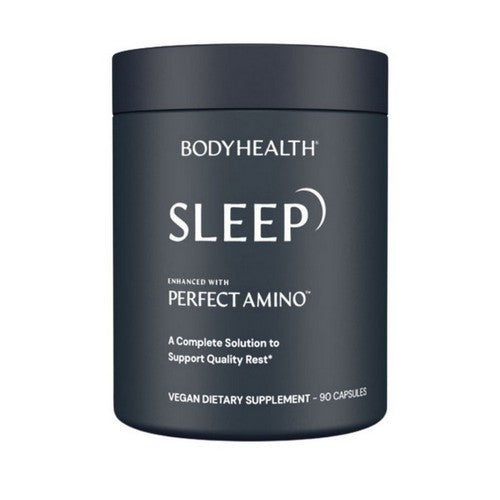
Sleep

1 capsule · how many a day not stated

Add to my list
Per day$0.46

Calculated at 1 serving a day (1 capsule). The label does not state how many to take daily.

Per pack$41.50

90 capsules · Green's Nutrition Affiliate Program · checked 13 Nov 2026. Delivery is not included.

Per capsule$0.46

Pack price divided by the number of capsules in the pack.

Composition

Recorded amounts. How many servings a day is not stated.

Amounts not disclosed. The label gives only the total weight of this blend, not the amount of each ingredient in it. Without the individual amounts, we cannot compare these ingredients with upper limits.

30 mgrecorded amount; daily frequency not stated10 mg per capsule · calculated from 10 mg per 1 capsule
2% of 2,000 mg — US upper limit for adults, National Academiesfrom food and supplements, adults · food is not counted here · a reference value, not a legal limit
6 mgrecorded amount; daily frequency not stated2 mg per capsule · calculated from 2 mg per 1 capsule
6% of 100 mg — US upper limit for adults, National Academiesfrom food and supplements, adults · food is not counted here · a reference value, not a legal limit
2,100 mgrecorded amount; daily frequency not stated700 mg per capsule · calculated from 700 mg per 1 capsule
No limit on file for the United States
Limits in other countries (3)Croatia, Czechia, Switzerland
1,200 mgrecorded amount; daily frequency not stated400 mg per capsule · calculated from 400 mg per 1 capsule
No limit on file for the United StatesNone on file in any country
750 mgrecorded amount; daily frequency not stated250 mg per capsule · calculated from 250 mg per 1 capsule
No limit on file for the United States
Limits in other countries (1)Switzerland
5-HTP
300 mgrecorded amount; daily frequency not stated100 mg per capsule · calculated from 100 mg per 1 capsule
No limit on file for the United StatesNone on file in any country
L-Glutamine
150 mgrecorded amount; daily frequency not stated50 mg per capsule · calculated from 50 mg per 1 capsule
No limit on file for the United StatesNone on file in any country
9 mgrecorded amount; daily frequency not stated3 mg per capsule · calculated from 3 mg per 1 capsule
No limit on file for the United States
Limits in other countries (3)Croatia, France, Italy
L-Leucine
Amount not disclosedpart of PerfectAmino Amino Acid Blend · not counted
No limit on file for the United StatesNone on file in any country
L-Valine
Amount not disclosedpart of PerfectAmino Amino Acid Blend · not counted
No limit on file for the United StatesNone on file in any country
L-Isoleucine
Amount not disclosedpart of PerfectAmino Amino Acid Blend · not counted
No limit on file for the United StatesNone on file in any country
Amount not disclosedpart of PerfectAmino Amino Acid Blend · not counted
No limit on file for the United StatesNone on file in any country
L-Phenylalanine
Amount not disclosedpart of PerfectAmino Amino Acid Blend · not counted
No limit on file for the United StatesNone on file in any country
L-Threonine
Amount not disclosedpart of PerfectAmino Amino Acid Blend · not counted
No limit on file for the United StatesNone on file in any country
L-Methionine
Amount not disclosedpart of PerfectAmino Amino Acid Blend · not counted
No limit on file for the United StatesNone on file in any country
L-Tryptophan
Amount not disclosedpart of PerfectAmino Amino Acid Blend · not counted
No limit on file for the United StatesNone on file in any country

Where no limit is shown, none is set or on file for the United States. That is not the same as having no maximum.
Manufacturer's directions

Directions: Take up to three capsules prior to night's sleep.

Other ingredients on the label

Cellulose

Limits in other countries
CountryVitamin CVitamin B6TaurineL-Glycine
United States2,000 mgreference, not a law · 2%100 mgreference, not a law · 6%—not on file—not on file
Austria500 mgrecommendation · 6%5.6 mgrecommendation · 107% · above—not on file—not on file
Belgium1,000 mglaw · 3%6 mglaw · 100%—not on file—not on file
Croatia800 mglaw · 4%20 mglaw · 30%1,000 mglaw · 210% · above—not on file
Cyprus2,000 mglaw · 2%100 mglaw · 6%—not on file—not on file
Czechia—not on file—not on file2,000 mglaw · 105% · above—not on file
Denmark1,000 mgrecommendation · 3%10 mgrecommendation · 60%—not on file—not on file
EAEU900 mglaw · 3%6 mglaw · 100%—not on file—not on file
Estonia—not on file25 mgrecommendation · 24%—not on file—not on file
Finland—not on file12 mgrecommendation · 50%—not on file—not on file
France180 mglaw · 17%2 mglaw · 300% · above—not on file—not on file
Germany250 mgrecommendation · 12%0.9 mgrecommendation · 667% · above—not on file—not on file
Ireland2,000 mgrecommendation · 2%25 mgrecommendation · 24%—not on file—not on file
Italy1,000 mgrecommendation · 3%9.5 mgrecommendation · 63%—not on file—not on file
Luxembourg1,000 mglaw · 3%4.2 mglaw · 143% · above—not on file—not on file
Malta1,000 mgrecommendation · 3%10 mglaw · 60%—not on file—not on file
Netherlands—not on file21 mglaw · 29%—not on file—not on file
Norway1,000 mglaw · 3%—not on file—not on file—not on file
Poland1,000 mgrecommendation · 3%6 mgrecommendation · 100%—not on file—not on file
Switzerland750 mglaw · 4%15 mglaw · 40%1,000 mglaw · 210% · above5,000 mglaw · 15%

Maximum amounts per daily dose of a food supplement, as each country sets them; the share is the daily amount on the label against that maximum. Law = legally binding; recommendation = an authority's recommended maximum, not binding; reference = the U.S. upper intake level for adults from all sources (National Academies), not a legal limit. Verification level V0 · 1 more ingredients have limits on file · Report an error

About the ingredients

Ingredient information

Ingredient guideVitamin CVitamin C, also called L-ascorbic acid, is a water-soluble vitamin. Most animals make vitamin C in the body; humans cannot and get it from food. Fruits and vegetables such as peppers, citrus fruits and kiwifruit are the main sources. Supplements contain it as ascorbic acid or as mineral salts such as sodium and calcium ascorbate.Read moreShow less
Terms and sources
water-soluble
It dissolves in water, not in fat. NIH Office of Dietary Supplements.

Vitamin C in the body

Vitamin C is needed to make collagen, carnitine and some neurotransmitters. It is also an antioxidant and can return used vitamin E to its active form. It is needed for normal immune function. It increases the absorption of iron from plant foods.

Terms and sources
collagen
A protein that holds together connective tissue, such as skin, tendons and blood vessels. NIH Office of Dietary Supplements.
carnitine
A substance cells need to get energy from fat. Linus Pauling Institute.
neurotransmitters
Chemical messengers between nerve cells.
antioxidant
A substance that limits damage from free radicals, reactive molecules made in cells.
iron from plant foods
Nonheme iron, the only form of iron in plant foods. NIH Office of Dietary Supplements.

An adult body holds from about 300 mg to about 2 g of vitamin C. White blood cells, the eyes, the adrenal and pituitary glands and the brain hold the most. Cells hold vitamin C in millimolar concentrations, blood plasma in micromolar concentrations. At 100 mg a day or more, cells appear to be saturated.

Terms and sources
about 300 mg
The lower figure is for very low intake. NIH Office of Dietary Supplements.
adrenal and pituitary glands
Small glands that make hormones: the adrenals sit above the kidneys, the pituitary below the brain.
millimolar
Thousandths of a mole per liter; micromolar means millionths. NIH Office of Dietary Supplements.
saturated
Holding as much as they take up. Above 200 mg a day, blood plasma levels rise little more.

The body absorbs about 70–90% of vitamin C at 30–180 mg a day. Above 1 g a day, less than 50% is absorbed, and unused vitamin C leaves in urine.

Terms and sources
less than 50%
Summary by the NIH Office of Dietary Supplements. Absorption in the gut runs through a dose-dependent transporter protein.

Information, not a prescription. Do not start, stop or combine supplements or medicines on your own.

Ingredient guideVitamin B6Vitamin B6 is the name for six related water-soluble compounds: pyridoxine, pyridoxal, pyridoxamine and their phosphate forms. Its main active form, pyridoxal 5'-phosphate (PLP), is a helper molecule for more than 100 enzymes. Supplements most often contain pyridoxine hydrochloride; some contain PLP, also called P5P. Vitamin B6 is also in multivitamins and B complex products.Read moreShow less
Terms and sources
water-soluble
They dissolve in water, not in fat. NIH Office of Dietary Supplements.
helper molecule
A coenzyme: a small molecule an enzyme needs to work. Linus Pauling Institute.
pyridoxine hydrochloride
NIH Office of Dietary Supplements names it the most common form in supplements.

Vitamin B6 in the body

Vitamin B6 takes part in more than 100 enzyme reactions, mostly in the metabolism of protein. It is involved in making neurotransmitters, the chemical messengers of the nervous system. It is also involved in immune function and in making hemoglobin, the oxygen carrier in red blood cells.

Terms and sources
more than 100 enzyme reactions
NIH Office of Dietary Supplements. It also works in the metabolism of carbohydrates and fats.
neurotransmitters
Serotonin, dopamine and GABA among them. Linus Pauling Institute.
immune function
NIH Office of Dietary Supplements.

The human body cannot make vitamin B6, so it must come from food. PLP is a helper in over 4% of all enzyme reactions. Much of the body's PLP sits in muscle, bound to the enzyme that releases glucose from stored glycogen.

Terms and sources
cannot make vitamin B6
Linus Pauling Institute.
over 4%
Linus Pauling Institute.
the enzyme
Glycogen phosphorylase. Linus Pauling Institute.

Blood PLP is the most common measure of vitamin B6 status. Levels above 30 nmol/L have been the traditional sign of enough vitamin B6 in adults.

Terms and sources
Blood PLP
Plasma pyridoxal 5'-phosphate. NIH Office of Dietary Supplements.
30 nmol/L
NIH Office of Dietary Supplements.

Information, not a prescription. Do not start, stop or combine supplements or medicines on your own.

Ingredient guideTaurineTaurine is an amino acid that the body makes from cysteine and does not use to build proteins. Meat, seafood and milk contain it; 48 plant foods tested in one survey did not. Energy drinks add it, and supplements sell it as powder or capsules, as taurine or magnesium taurate.Read moreShow less
Terms and sources
Taurine
The name comes from the ox, Bos taurus: taurine was first isolated from ox bile. Ripps and Shen, 2012.
an amino acid
Strictly, an amino sulfonic acid: it has a sulfonate group in place of the usual carboxyl group. Ripps and Shen, 2012.

Taurine in the body

Taurine is one of the most abundant amino acids in the brain, retina, muscle and other organs. Taurine joins bile acids to form bile salts. Cells also use it to keep their volume steady and to handle calcium.

Terms and sources
most abundant
Ripps and Shen, 2012. In the rat eye, it is the most abundant amino acid in the retina, lens and cornea.
bile salts
Ripps and Shen, 2012.
keep their volume steady
It works as an osmolyte, a dissolved substance that holds water in cells. Ripps and Shen, 2012.

The body makes taurine from two amino acids, methionine and cysteine. Humans and other primates have little CSD, a key enzyme for making taurine. In one study, vegan men had blood taurine of 45 µmol/L, and meat eaters 58 µmol/L. The vegans passed about 33 mg of taurine a day in urine, and the meat eaters about 113 mg.

Terms and sources
methionine and cysteine
The last step turns hypotaurine into taurine. Ripps and Shen, 2012.
CSD
cysteine sulfinic acid decarboxylase. Cats also have little of it. Ripps and Shen, 2012.
vegan men
12 men on a vegan diet for about 4 years, and 14 men who ate meat. The vegans' food diaries showed almost no taurine. Laidlaw et al., 1988.
about 33 mg
266 and 903 µmol a day in the paper. We converted these to mg.

After a 4 g dose by mouth, blood taurine peaked in about 1.5 hours. Half of it left the blood in about 1 hour.

Terms and sources
a 4 g dose
8 healthy men, fasting, in the morning. The peak was 86 mg per liter. Ghandforoush-Sattari et al., 2010.
Half of it
elimination half-life: 1.0 hour on average.

A study in Science reported that mice given taurine from middle age lived longer. The same study found that blood taurine fell with age in mice, monkeys and people. Later studies in people found blood taurine stable or higher with age. The authors of the mouse study called for trials in people.

Terms and sources
A study in Science
Singh et al., 2023. Mice got 1,000 mg per kg of body weight a day from 14 months of age.
lived longer
Median lifespan was 10–12% longer than in untreated mice.
monkeys
Monkeys given taurine for 6 months gained less weight; the study did not measure their lifespan.
Later studies
Fernandez et al., Science, 2025: three geographically distinct groups of people, at the US National Institute on Aging. Also 137 men aged 20–93: no link with age (Marcangeli et al., Aging Cell, 2025).

Information, not a prescription. Do not start, stop or combine supplements or medicines on your own.

Ingredient guideL-TheanineL-theanine is an amino acid found mainly in the leaves of the tea plant, Camellia sinensis. The body does not use it to build proteins. A cup of green tea holds roughly 8–30 mg. Supplements contain L-theanine made with microbes, with enzymes or by chemical synthesis, or extracted from tea leaves.Read moreShow less
Terms and sources
build proteins
It is a non-protein amino acid. Mátyus et al., Journal of Clinical Medicine, 2025.

L-theanine in the body

L-theanine is close in structure to glutamic acid, another amino acid. In a study of 12 adults, blood L-theanine peaked about 0.8 hours after a 100 mg dose. The body appears to split it into ethylamine and glutamic acid. L-theanine, ethylamine and glutamic acid all appear in urine.

Terms and sources
glutamic acid
Its chemical name is γ-glutamylethylamide. Hidese et al., Nutrients, 2019.
0.8 hours
About 48 minutes, after capsules and green tea alike. Scheid et al., Journal of Nutrition, 2012.

L-theanine passes from the blood into the brain. It is gone from blood plasma within 24 hours.

Terms and sources
into the brain
Through a carrier that also moves the amino acid leucine. Summary in Mátyus et al., 2025.
24 hours
Mátyus et al., 2025. The same review gives half-lives of about 15 to 65 minutes.

Information, not a prescription. Do not start, stop or combine supplements or medicines on your own.

Ingredient guideGlycineGlycine is the lightest amino acid. It is found in protein foods and is plentiful in collagen. The body also makes it, mostly from serine, another amino acid. The body uses glycine to build proteins and to make glutathione and creatine.Read moreShow less

Glycine in the body

Its molar mass is 75.07 g per mole, the lowest of the amino acids. It is a building block of proteins. The body also uses it to make glutathione, creatine and purine nucleotides.

Terms and sources
75.07 g per mole
The review calls glycine the lightest amino acid. Ramos-Jiménez et al., Sports, 2024, a review of glycine and exercise.
glutathione
The review links glutathione to limiting free radicals. Ramos-Jiménez et al., Sports, 2024.

In the nervous system, glycine is an inhibitory messenger. In blood plasma, glycine makes up about 11.5% of all amino acids.

Terms and sources
inhibitory messenger
An inhibitory neurotransmitter: it makes nerve cells less likely to fire. Ramos-Jiménez et al., Sports, 2024.
about 11.5%
The review gives normal plasma levels of 0.17–0.33 mM. Ramos-Jiménez et al., Sports, 2024.

Information, not a prescription. Do not start, stop or combine supplements or medicines on your own.

Ingredient guideMelatoninMelatonin is a hormone that the brain makes in darkness. It is involved in the timing of the body's 24-hour rhythms and of sleep. Supplements come as tablets, capsules, gummies, liquids and lozenges, with immediate or extended release. Most melatonin in supplements is made synthetically.Read moreShow less

Melatonin in the body

Melatonin is the main hormone of the pineal gland, a small gland deep in the brain. The gland makes it from the amino acid tryptophan, by way of serotonin. Its daily rise and fall gives the body's 24-hour rhythms a signal of night and day.

Terms and sources
pineal gland
Tordjman et al., Current Neuropharmacology, 2017.
by way of serotonin
Tryptophan becomes 5-hydroxytryptophan, then serotonin, then melatonin. Tordjman et al., Current Neuropharmacology, 2017.
24-hour rhythms
circadian rhythms. Melatonin rhythms are used as a marker of the body's internal time. Tordjman et al., Current Neuropharmacology, 2017.

Darkness increases melatonin production, and light at night reduces it. Signals about light travel from the eyes to the pineal gland through the brain's master clock. Release starts soon after sunset and peaks between 2 and 4 a.m. At night, blood levels are 80–120 pg/mL; in daytime, 10–20 pg/mL.

Terms and sources
light at night
NCCIH, melatonin fact sheet. Tordjman et al., Current Neuropharmacology, 2017.
master clock
the suprachiasmatic nucleus of the hypothalamus. Tordjman et al., Current Neuropharmacology, 2017.
80–120 pg/mL
picograms per milliliter of serum. About 80% of melatonin is made at night. Tordjman et al., Current Neuropharmacology, 2017.

The gut holds at least 400 times more melatonin than the pineal gland. The liver breaks down most melatonin; about 5% leaves in urine unchanged. Melatonin was first isolated in 1958, from cattle pineal glands.

Terms and sources
400 times
Cells of the gut lining also make melatonin. Tordjman et al., Current Neuropharmacology, 2017.
The liver
Tordjman et al., Current Neuropharmacology, 2017.
1958
By Aaron Lerner. Tordjman et al., Current Neuropharmacology, 2017.

Information, not a prescription. Do not start, stop or combine supplements or medicines on your own.

Ingredient guideLysineLysine is one of the nine amino acids that the body cannot make and must get from food. Animal proteins and pea and soy proteins contain more of it than grain proteins. In supplements it comes as L-lysine or as its salts, such as L-lysine hydrochloride.Read moreShow less
Terms and sources
nine amino acids
Histidine, isoleucine, leucine, lysine, methionine, phenylalanine, threonine, tryptophan and valine. NIH Office of Dietary Supplements.

Lysine in the body

Cells use lysine to build proteins; human muscle protein is 7.8% lysine. Most higher organisms cannot make lysine, so it is called indispensable.

Terms and sources
7.8% lysine
Share of total protein. Gorissen et al., 2018.
indispensable
Also called essential. Matthews, 2020.

In mammals, the liver appears to be the main site of lysine breakdown. The pathway passes through saccharopine and 2-aminoadipic acid and ends in acetyl-CoA.

Terms and sources
the liver appears
Matthews, 2020.
saccharopine
The first steps take place in mitochondria. Matthews, 2020.

In 16 healthy adults, 5 g of labeled lysine by mouth reached the blood within 30 minutes. Its level peaked at about 2 hours on average. Over several hours, some of it was turned into 2-aminoadipic acid.

Terms and sources
labeled lysine
Made with carbon-13 to tell it from the body's own lysine. The methods name the dihydrochloride salt. Dean et al., 2026; listed with the studies below.

Information, not a prescription. Do not start, stop or combine supplements or medicines on your own.

Services

Choose the option that suits you.

Quick selection

I know my goal

$5

1–2 minutes · a few questions with fixed answers

One goal. Up to three products. Set a budget per day if you like.

Product checks
form and amount on the label, plus shop prices
Daily schedule
what to take, when, how much
Totals and limits
next to the upper limit
Reasons & sources
for each product
Prices and shops
plus food and habits
Progress
what to track, when to see a doctor

Complete the questionnaire before you pay. If no product fits any of your goals, you won’t be charged.

Order · $5View example

Full selection

I have several goals

$15

5–7 minutes · questionnaire with fixed answers

Up to three goals in one set. Where two goals overlap, one product is used for both.

Product checks
form and amount on the label, plus shop prices
Daily schedule
what to take, when, how much
Totals and limits
next to the upper limit
Reasons & sources
for each product
Prices and shops
plus food and habits
Progress
what to track, when to see a doctor

Complete the questionnaire before you pay. If no product fits any of your goals, you won’t be charged.

Order · $15View example

Expert review

I want a person to look at my supplements

$50

Written review within 48 hours of your completed questionnaire

An expert reviews your supplement list and questionnaire.

Written review
duplicates, limits, forms
Detailed questionnaire
supplements, medicines, history
Optional uploads
supplement-label photos or documents relevant to your review
Your notes
your priorities and questions
Follow-up questions
in writing, when needed
Next steps
points to discuss with your doctor

Complete the questionnaire before you pay.

Order · $50View example
Sources, label & certificates

Label record

Copied from the NIH label database (DSLD 322561) · not yet compared with the label · checked 19 Oct 2026 · Report an error

The United States has no pre-market registration for supplements.
Label on file in the NIH Dietary Supplement Label Database
checked 19 Oct 2026source: NIH DSLDReport an error

Barcode 8 50039 65549 4

Third-party certificates

No third-party certificate on file for this product.

Information, not a prescription. Do not start, stop or combine supplements or medicines on your own. If you have a health condition, are pregnant or breastfeeding, take medicines, or are under 18, talk to a doctor or pharmacist first.

Photo credits

Image: © BodyHealth. Shown to identify the product. Source:

Rights holders can ask us to remove an image or send official product photos: info@verateca.com.

Product photo

BodyHealth Sleep — enlarged pack