Life Extension · capsules

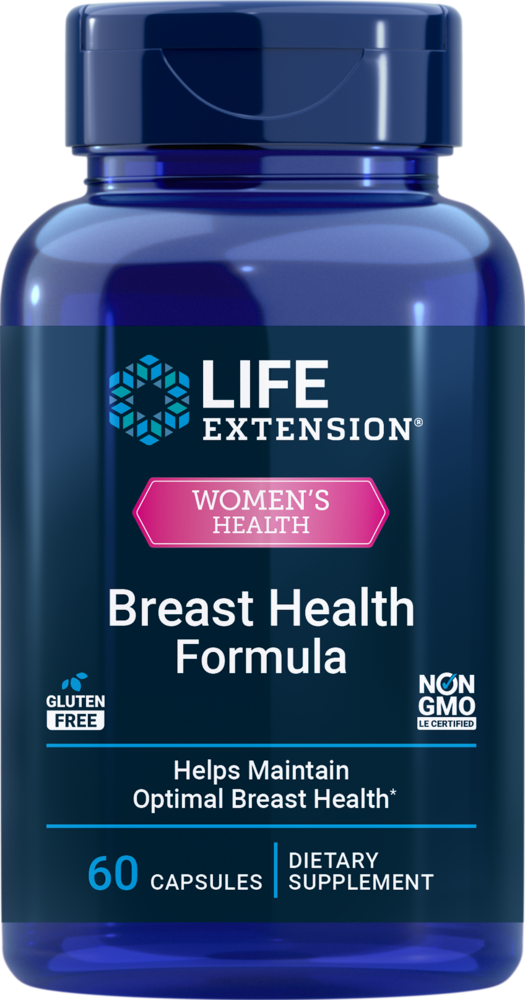
Breast Health Formula

At the recorded label maximum: 2 capsules per day

Add to my list
Per day$0.83

At the label maximum of 2 capsules a day.

Per pack$24.75

60 capsules · Vitacost · checked 13 Nov 2026. Delivery is not included.

Per capsule$0.41

Pack price divided by the number of capsules in the pack.

Composition

Amounts at the recorded label maximum. Directions may give a range.

Amounts not disclosed. The label gives only the total weight of this blend, not the amount of each ingredient in it. Without the individual amounts, we cannot compare these ingredients with upper limits.

At the recorded label maximum, the daily amount is 2 mg of iodine. This is above the US adult upper intake level of 1.1 mg a day for iodine from food and supplements. The National Academies set this scientific reference value.

Label source · Upper intake level source · Report an error

Vitamin D3as Cholecalciferol
About this formvitamin D3 (cholecalciferol). Raises vitamin D levels more than D2. Reference level V0; no form is called “better” here.
25 mcgat the recorded label maximum (1 serving × 25 mcg; 2 capsules per serving)12.5 mcg per capsule · calculated from 25 mcg per 2 capsules
25% of 100 mcg — US upper limit for adults, National Academiesfrom food and supplements, adults · food is not counted here · a reference value, not a legal limit
Calciumas Calcium D-Glucarate
16.5 mgat the recorded label maximum (1 serving × 16.5 mg; 2 capsules per serving) · as calcium itself8.25 mg per capsule · calculated from 16.5 mg per 2 capsules
<1% of 2,000 mg — US upper limit for adults, National Academies2,500 mg (ages 19–50) · 2,000 mg (51 and older) · from food and supplements, adults · food is not counted here · a reference value, not a legal limit
2 mgat the recorded label maximum (1 serving × 2 mg; 2 capsules per serving)1 mg per capsule · calculated from 2 mg per 2 capsules
182% ↑ of the upper intake level of 1.1 mg — US upper limit for adults, National Academiesfrom food and supplements, adults · food is not counted here · a reference value, not a legal limit
Indole-3-Carbinol
100 mgat the recorded label maximum (1 serving × 100 mg; 2 capsules per serving)
No limit on file for the United StatesNone on file in any country
Flax Lignan Seed Extractas Secoisolariciresinol Diglucoside
Amount not disclosedpart of Proprietary Enterolactone Precursors Blend · not counted
No limit on file for the United StatesNone on file in any country
Isoflavonesas NovaSoy
35 mgat the recorded label maximum (1 serving × 35 mg; 2 capsules per serving)17.5 mg per capsule · calculated from 35 mg per 2 capsules
No limit on file for the United StatesNone on file in any country
3;3'-Diindolylmethane
14 mgat the recorded label maximum (1 serving × 14 mg; 2 capsules per serving)
No limit on file for the United StatesNone on file in any country

Where no limit is shown, none is set or on file for the United States. That is not the same as having no maximum.

Manufacturer's directions

Read the entire label and follow the directions carefully prior to use.Directions: Take two (2) capsules daily for individuals weighing up to 160 lbs.; and for those weighing over 160 lbs.; take three (3) to four (4) capsules daily; or as recommended by a healthcare practitioner.

Other ingredients on the label

Cellulose, Microcrystalline Cellulose, Stearic Acid, Corn Starch, Maltodextrin, Silica

Limits in other countries
CountryVitamin D3CalciumIodine
United States100 mcgreference, not a law · 25%2,000 mgreference, not a law · 1%
Comparison note2,500 mg (ages 19–50) · 2,000 mg (51 and older)
1,100 mcgreference, not a law · 182% · above
Austria20 mcgrecommendation · 125% · above800 mgrecommendation · 2%180 mcgrecommendation · 1111% · above
Belgium75 mcglaw · 33%1,600 mglaw · 1%225 mcglaw · 889% · above
Croatia10 mcglaw · 250% · above1,500 mglaw · 1%225 mcglaw · 889% · above
Cyprus10 mcglaw · 250% · above1,500 mglaw · 1%500 mcglaw · 400% · above
Denmark95 mcgrecommendation · 26%1,327 mgrecommendation · 1%134 mcgrecommendation · 1493% · above
EAEU15 mcglaw · 167% · above2,500 mglaw · 1%300 mcglaw · 667% · above
Estonia100 mcgrecommendation · 25%2,500 mgrecommendation · 1%600 mcgrecommendation · 333% · above
Finland100 mcgrecommendation · 25%2,500 mgrecommendation · 1%600 mcgrecommendation · 333% · above
France5 mcglaw · 500% · above800 mglaw · 2%150 mcglaw · 1333% · above
Germany20 mcgrecommendation · 125% · above500 mgrecommendation · 3%100 mcgrecommendation · 2000% · above
Ireland100 mcgrecommendation · 25%2,500 mgrecommendation · 1%600 mcgrecommendation · 333% · above
Italy50 mcgrecommendation · 50%1,200 mgrecommendation · 1%225 mcgrecommendation · 889% · above
Luxembourg50 mcglaw · 50%1,600 mglaw · 1%225 mcglaw · 889% · above
Malta25 mcgrecommendation · 100%1,500 mgrecommendation · 1%200 mcgrecommendation · 1000% · above
Netherlands75 mcglaw · 33%—not on file—not on file
Norway80 mcglaw · 31%705 mglaw · 2%—not on file
Poland50 mcgrecommendation · 50%1,500 mgrecommendation · 1%150 mcgrecommendation · 1333% · above
Switzerland70 mcglaw · 36%750 mglaw · 2%200 mcglaw · 1000% · above

Maximum amounts per daily dose of a food supplement, as each country sets them; the share is the daily amount on the label against that maximum. Law = legally binding; recommendation = an authority's recommended maximum, not binding; reference = the U.S. upper intake level for adults from all sources (National Academies), not a legal limit. Verification level V0 · Report an error

About the ingredients

Ingredient information

Ingredient guideVitamin DVitamin D is a fat-soluble vitamin. The skin makes it when ultraviolet light from the sun reaches it, and a few foods contain it. Supplements contain one or both of its two main forms: vitamin D3 and vitamin D2. Labels state the amount in micrograms (mcg), international units (IU) or both.Read moreShow less
Terms and sources
fat-soluble
It dissolves in fat, not in water. NIH Office of Dietary Supplements.

Vitamin D in the body

Vitamin D from the sun, food and supplements is inactive at first. The liver turns it into 25-hydroxyvitamin D, the form a blood test measures. Mainly the kidneys then make the active form.

Terms and sources
25-hydroxyvitamin D
Also called calcidiol or 25(OH)D. Results come in nmol/L or ng/mL; 50 nmol/L equals 20 ng/mL.
active form
1,25-dihydroxyvitamin D, also called calcitriol.

Vitamin D is needed for normal absorption of calcium from the gut and for normal bones. It is also needed for normal muscle and immune function. Many tissues in the body carry vitamin D receptors.

Terms and sources
vitamin D receptors
Proteins in cells that respond to the active form of vitamin D. NIH Office of Dietary Supplements.

Information, not a prescription. Do not start, stop or combine supplements or medicines on your own.
Ingredient guideCalciumCalcium is the most abundant mineral in the human body. An adult body holds about 1.2–1.4 kg of it, almost all in bones and teeth. Milk, yogurt and cheese are rich sources. Supplements contain calcium as part of a compound, most often calcium carbonate or calcium citrate.Read moreShow less
Terms and sources
1.2–1.4 kg
About 1,200 g in women and 1,400 g in men. NIH Office of Dietary Supplements.

Calcium in the body

About 99% of the body's calcium is in bones and teeth. The other 1% is in the blood and soft tissues. This small part is needed for normal muscle function, nerve signaling, blood clotting and hormone release. It also takes part as blood vessels tighten and relax.

Terms and sources
bones and teeth
There it sits in hydroxyapatite, a mineral of calcium and phosphate. Linus Pauling Institute; NIH Office of Dietary Supplements.

The body keeps blood calcium in a narrow range, about 8.8–10.4 mg/dL. When intake is low, it draws calcium from bone to hold that range. A blood test therefore does not show how much calcium a person gets. Bone is rebuilt all the time; teeth are not. Vitamin D is needed to absorb calcium in the gut.

Terms and sources
8.8–10.4 mg/dL
2.2–2.6 mmol/L, total calcium in serum in healthy people. NIH Office of Dietary Supplements.
absorb calcium in the gut
Vitamin D is needed for active transport, the main route when intake is low. NIH Office of Dietary Supplements.

Information, not a prescription. Do not start, stop or combine supplements or medicines on your own.

Ingredient guideIodineIodine is an essential trace element that the thyroid gland builds into the hormones thyroxine (T4) and triiodothyronine (T3). Seaweed, fish and other seafood, dairy products, eggs and iodized salt are the main food sources. Supplements contain it as potassium iodide, sodium iodide or potassium iodate, or as kelp and other seaweed.Read moreShow less
Terms and sources
thyroid gland
NIH Office of Dietary Supplements; Linus Pauling Institute.
iodized salt
Salt with added iodine. NIH Office of Dietary Supplements.
kelp
A brown seaweed. Its iodine content varies widely. NIH Office of Dietary Supplements.

Iodine in the body

Thyroid hormones regulate many biochemical reactions, including protein synthesis and enzyme activity, NIH notes. They are also needed for normal bone and nervous system development before birth and in infancy. The pituitary hormone TSH controls how much iodine the thyroid takes up and how much hormone it releases. Selenium-containing enzymes turn T4 into the active hormone T3 in the liver, brain and other tissues.

Terms and sources
NIH notes
NIH Office of Dietary Supplements.
before birth and in infancy
NIH Office of Dietary Supplements.
TSH
Thyroid-stimulating hormone, also called thyrotropin. NIH Office of Dietary Supplements.
Selenium-containing enzymes
Iodothyronine deiodinases. Linus Pauling Institute.

A healthy adult holds 15 to 20 mg of iodine; 70% to 80% of it is in the thyroid. The thyroid uses about 80 mcg of iodine a day to make its hormones. More than 90% of the iodine people eat leaves in the urine. So urinary iodine is the usual measure of iodine status. A median urinary iodine of 100–199 mcg/L shows adequate intake in a group of adults, NIH notes. TSH can stay normal when intake is low, so it is not a sensitive marker of intake, NIH notes.

Terms and sources
15 to 20 mg
NIH Office of Dietary Supplements; Linus Pauling Institute.
about 80 mcg
Linus Pauling Institute.
More than 90%
Within 24 to 48 hours, LPI notes. NIH Office of Dietary Supplements; Linus Pauling Institute.
urinary iodine
One spot sample does not show one person's status; repeated 24-hour or spot samples are more accurate for individuals. NIH Office of Dietary Supplements.
100–199 mcg/L
Median of many people's urine samples. NIH Office of Dietary Supplements.
not a sensitive marker
NIH Office of Dietary Supplements.

NIH notes: "High intakes of iodine can cause some of the same symptoms as iodine deficiency—including goiter, elevated TSH levels, and hypothyroidism—because excess iodine in susceptible individuals inhibits thyroid hormone synthesis and thereby increases TSH stimulation, which can produce goiter. Iodine-induced hyperthyroidism can also result from high iodine intakes, including when iodine is administered to treat iodine deficiency. Studies have also shown that excessive iodine intakes cause thyroiditis and thyroid papillary cancer. Cases of acute iodine poisoning are rare and are usually caused by doses of many grams. Acute poisoning symptoms include burning of the mouth, throat, and stomach; fever; abdominal pain; nausea; vomiting; diarrhea; weak pulse; and coma."

Terms and sources
NIH notes
NIH Office of Dietary Supplements, Iodine fact sheet for health professionals, section on health risks from excessive iodine. Citation numbers are left out.

It continues: "Responses to excess iodine and the doses required to cause adverse effects vary. Some people, such as those with autoimmune thyroid disease and iodine deficiency, may experience adverse effects with iodine intakes considered safe for the general population."

Terms and sources
It continues
The next paragraph of the same NIH section.

It ends: "The FNB has established iodine ULs for food and supplement intakes (Table 3). In most people, iodine intakes from foods and supplements are unlikely to exceed the UL. Long-term intakes above the UL increase the risk of adverse health effects. The ULs do not apply to individuals receiving iodine for medical treatment, but such individuals should be under the care of a physician."

Terms and sources
It ends
The last paragraph of the same NIH section. Table 3 is the NIH table of upper limits by age. FNB is the Food and Nutrition Board of the US National Academies.

NIH adds: "Results from a 2010 study, however, raise some questions as to the safety of widespread iodine supplementation in areas of relative iodine sufficiency. In this cross-sectional study, pregnant women living in Spain had a significantly increased risk of hyperthyrotropinemia (TSH >3 microU/mL) if they consumed iodine supplements in doses ≥200 mcg/day compared with those who consumed doses <100 mcg/day. These findings suggest that taking higher doses of supplemental iodine during pregnancy could induce thyroid dysfunction in some women and underscore the need for additional research into the effects on maternal thyroid function of iodine supplementation during pregnancy."

Terms and sources
NIH adds
NIH Office of Dietary Supplements, section on development before birth and in infancy. Citation numbers are left out. In the NIH text, it follows recommendations of 150 mcg a day in pregnancy and breastfeeding. They come from the American Thyroid Association and the American Academy of Pediatrics.

LPI adds: "The American Thyroid Association advises against consuming iodine (or kelp) supplements containing 500 μg/day or more of iodine."

Terms and sources
LPI adds
Linus Pauling Institute, section on safety. It cites American Thyroid Association statements. The association is a medical society, not a regulator.

Information, not a prescription. Do not start, stop or combine supplements or medicines on your own.

Services

Choose the option that suits you.

Quick selection

I know my goal

$5

1–2 minutes · a few questions with fixed answers

One goal. Up to three products. Set a budget per day if you like.

Product checks
form and amount on the label, plus shop prices
Daily schedule
what to take, when, how much
Totals and limits
next to the upper limit
Reasons & sources
for each product
Prices and shops
plus food and habits
Progress
what to track, when to see a doctor

Complete the questionnaire before you pay. If no product fits any of your goals, you won’t be charged.

Order · $5View example

Full selection

I have several goals

$15

5–7 minutes · questionnaire with fixed answers

Up to three goals in one set. Where two goals overlap, one product is used for both.

Product checks
form and amount on the label, plus shop prices
Daily schedule
what to take, when, how much
Totals and limits
next to the upper limit
Reasons & sources
for each product
Prices and shops
plus food and habits
Progress
what to track, when to see a doctor

Complete the questionnaire before you pay. If no product fits any of your goals, you won’t be charged.

Order · $15View example

Expert review

I want a person to look at my supplements

$50

Written review within 48 hours of your completed questionnaire

An expert reviews your supplement list and questionnaire.

Written review
duplicates, limits, forms
Detailed questionnaire
supplements, medicines, history
Optional uploads
supplement-label photos or documents relevant to your review
Your notes
your priorities and questions
Follow-up questions
in writing, when needed
Next steps
points to discuss with your doctor

Complete the questionnaire before you pay.

Order · $50View example
Sources, label & certificates

Label record

Copied from the NIH label database (DSLD 328303) · not yet compared with the label · checked 19 Oct 2026 · Report an error

The United States has no pre-market registration for supplements.
Label on file in the NIH Dietary Supplement Label Database
checked 19 Oct 2026source: NIH DSLDReport an error

Barcode 7 37870 19426 2

Third-party certificates

No third-party certificate on file for this product.

Information, not a prescription. Do not start, stop or combine supplements or medicines on your own. If you have a health condition, are pregnant or breastfeeding, take medicines, or are under 18, talk to a doctor or pharmacist first.

Photo credits

Image: © Life Extension. Shown to identify the product. Source:

Rights holders can ask us to remove an image or send official product photos: info@verateca.com.

Product photo

Life Extension Breast Health Formula — enlarged pack