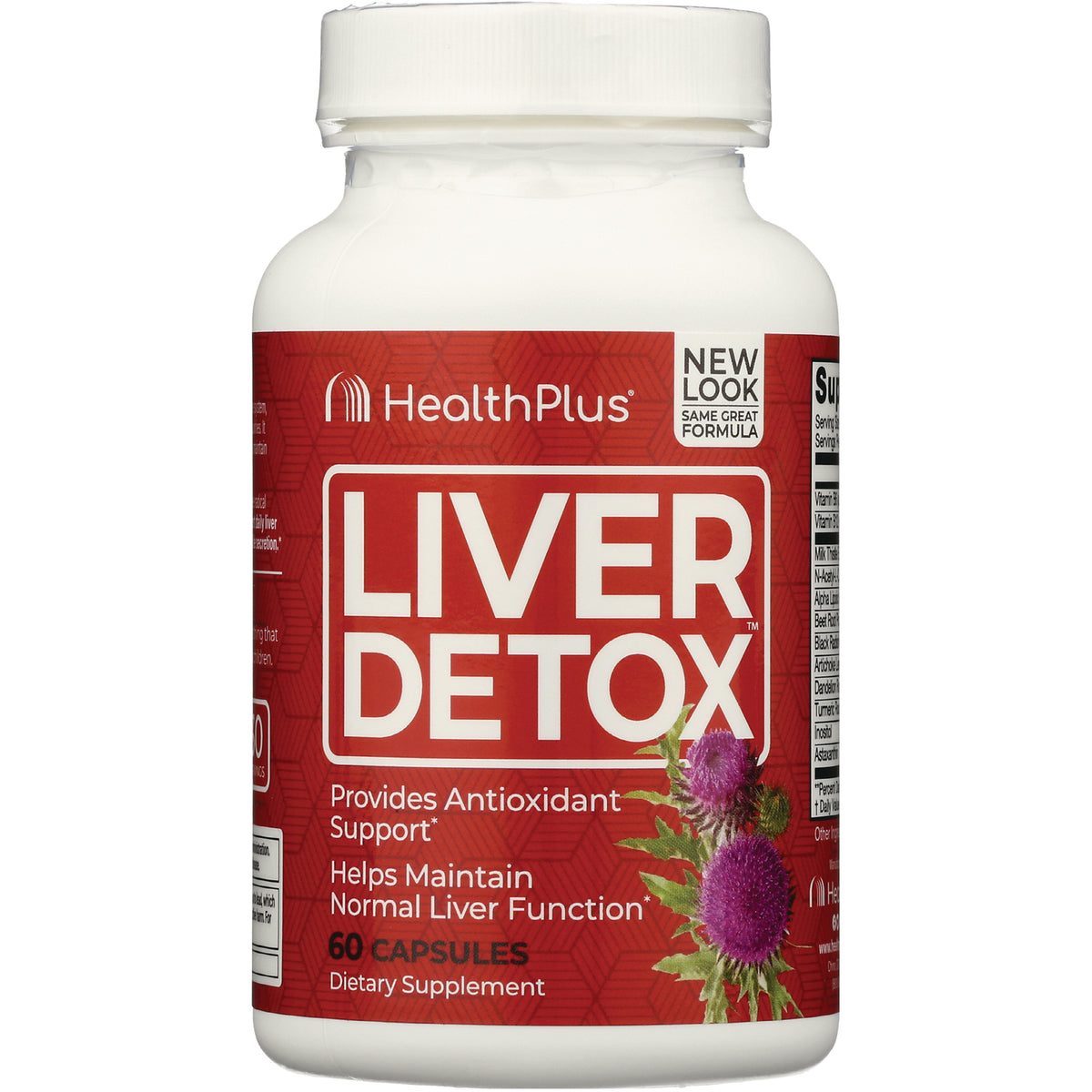
Health Plus · capsules

Super Liver Cleanse

At the recorded label maximum: 3 capsules per day

Add to my list
Per day$0.85

At the label maximum of 3 capsules a day.

Per pack$25.49

90 capsules · Swanson · checked 25 Oct 2026. Delivery is not included.

Per capsule$0.28

Pack price divided by the number of capsules in the pack.

Composition

Amounts at the recorded label maximum. Directions may give a range.

Vitamin B6as Pyridoxine Hydrochloride
30 mgat the recorded label maximum (3 capsules × 10 mg)10 mg per capsule · calculated from 10 mg per 1 capsule
30% of 100 mg — US upper limit for adults, National Academiesfrom food and supplements, adults · food is not counted here · a reference value, not a legal limit
Vitamin B12as Cyanocobalamin
About this formcyanocobalamin. Most studied and cheapest form. Reference level V0; no form is called “better” here.
300 mcgat the recorded label maximum (3 capsules × 100 mcg)100 mcg per capsule · calculated from 100 mcg per 1 capsule
No US upper limitNational Academies: not determined — too little data on harm
Limits in other countries (9)Austria, Croatia, Cyprus, Eurasian Economic Union (EAEU), France, Germany, Italy, Malta, Poland
270 mgat the recorded label maximum (3 capsules × 90 mg)90 mg per capsule · calculated from 90 mg per 1 capsule
No limit on file for the United StatesNone on file in any country
Beet
270 mgat the recorded label maximum (3 capsules × 90 mg)90 mg per capsule · calculated from 90 mg per 1 capsule
No limit on file for the United StatesNone on file in any country
Dandelion
270 mgat the recorded label maximum (3 capsules × 90 mg)90 mg per capsule · calculated from 90 mg per 1 capsule
No limit on file for the United StatesNone on file in any country
Milk Thistle seed extract 4:1
270 mgat the recorded label maximum (3 capsules × 90 mg)90 mg per capsule · calculated from 90 mg per 1 capsule
No limit on file for the United StatesNone on file in any country
Turmeric root powder
About this formturmeric root powder. 2–5% curcumin — far less than extracts. Reference level V0; no form is called “better” here.
270 mgat the recorded label maximum (3 capsules × 90 mg)90 mg per capsule · calculated from 90 mg per 1 capsule
No limit on file for the United StatesNone on file in any country
Black Radish
90 mgat the recorded label maximum (3 capsules × 30 mg)30 mg per capsule · calculated from 30 mg per 1 capsule
No limit on file for the United StatesNone on file in any country
Inositol
30 mgat the recorded label maximum (3 capsules × 10 mg)10 mg per capsule · calculated from 10 mg per 1 capsule
No limit on file for the United States
Limits in other countries (3)Croatia, Eurasian Economic Union (EAEU), Switzerland
1,500 mgat the recorded label maximum (3 capsules × 500 mg)500 mg per capsule · calculated from 500 mg per 1 capsule
No limit on file for the United States
Limits in other countries (1)Eurasian Economic Union (EAEU)

Where no limit is shown, none is set or on file for the United States. That is not the same as having no maximum.

Manufacturer's directions

SUGGESTED USE: As a dietary supplement; take 1 capsule three times daily. May be used regularly or one bottle every 5 months as part of the Total Body Cleansing System.

Other ingredients on the label

Gelatin, Magnesium Stearate

Limits in other countries
CountryVitamin B6Vitamin B12InositolAstaxanthin
United States100 mgreference, not a law · 30%—not on file—not on file—not on file
Austria5.6 mgrecommendation · 536% · above25 mcgrecommendation · 1200% · above—not on file—not on file
Belgium6 mglaw · 500% · above—not on file—not on file—not on file
Croatia20 mglaw · 150% · above25 mcglaw · 1200% · above2,000 mglaw · 2%—not on file
Cyprus100 mglaw · 30%3,000 mcglaw · 10%—not on file—not on file
Denmark10 mgrecommendation · 300% · above—not on file—not on file—not on file
EAEU6 mglaw · 500% · above9 mcglaw · 3333% · above1,500 mglaw · 2%6 mglaw · 25000% · above
Estonia25 mgrecommendation · 120% · above—not on file—not on file—not on file
Finland12 mgrecommendation · 250% · above—not on file—not on file—not on file
France2 mglaw · 1500% · above3 mcglaw · 10000% · above—not on file—not on file
Germany0.9 mgrecommendation · 3333% · above25 mcgrecommendation · 1200% · above—not on file—not on file
Ireland25 mgrecommendation · 120% · above—not on file—not on file—not on file
Italy9.5 mgrecommendation · 316% · above1,000 mcgrecommendation · 30%—not on file—not on file
Luxembourg4.2 mglaw · 714% · above—not on file—not on file—not on file
Malta10 mglaw · 300% · above1,000 mcgrecommendation · 30%—not on file—not on file
Netherlands21 mglaw · 143% · above—not on file—not on file—not on file
Poland6 mgrecommendation · 500% · above100 mcgrecommendation · 300% · above—not on file—not on file
Switzerland15 mglaw · 200% · above—not on file1,000 mglaw · 3%—not on file

Maximum amounts per daily dose of a food supplement, as each country sets them; the share is the daily amount on the label against that maximum. Law = legally binding; recommendation = an authority's recommended maximum, not binding; reference = the U.S. upper intake level for adults from all sources (National Academies), not a legal limit. Verification level V0 · Report an error

About the ingredients

Ingredient information

Ingredient guideVitamin B6Vitamin B6 is the name for six related water-soluble compounds: pyridoxine, pyridoxal, pyridoxamine and their phosphate forms. Its main active form, pyridoxal 5'-phosphate (PLP), is a helper molecule for more than 100 enzymes. Supplements most often contain pyridoxine hydrochloride; some contain PLP, also called P5P. Vitamin B6 is also in multivitamins and B complex products.Read moreShow less
Terms and sources
water-soluble
They dissolve in water, not in fat. NIH Office of Dietary Supplements.
helper molecule
A coenzyme: a small molecule an enzyme needs to work. Linus Pauling Institute.
pyridoxine hydrochloride
NIH Office of Dietary Supplements names it the most common form in supplements.

Vitamin B6 in the body

Vitamin B6 takes part in more than 100 enzyme reactions, mostly in the metabolism of protein. It is involved in making neurotransmitters, the chemical messengers of the nervous system. It is also involved in immune function and in making hemoglobin, the oxygen carrier in red blood cells.

Terms and sources
more than 100 enzyme reactions
NIH Office of Dietary Supplements. It also works in the metabolism of carbohydrates and fats.
neurotransmitters
Serotonin, dopamine and GABA among them. Linus Pauling Institute.
immune function
NIH Office of Dietary Supplements.

The human body cannot make vitamin B6, so it must come from food. PLP is a helper in over 4% of all enzyme reactions. Much of the body's PLP sits in muscle, bound to the enzyme that releases glucose from stored glycogen.

Terms and sources
cannot make vitamin B6
Linus Pauling Institute.
over 4%
Linus Pauling Institute.
the enzyme
Glycogen phosphorylase. Linus Pauling Institute.

Blood PLP is the most common measure of vitamin B6 status. Levels above 30 nmol/L have been the traditional sign of enough vitamin B6 in adults.

Terms and sources
Blood PLP
Plasma pyridoxal 5'-phosphate. NIH Office of Dietary Supplements.
30 nmol/L
NIH Office of Dietary Supplements.

Information, not a prescription. Do not start, stop or combine supplements or medicines on your own.
Ingredient guideVitamin B12Vitamin B12 is a water-soluble vitamin that contains the mineral cobalt. Only certain bacteria and archaea can make it. People get it from foods of animal origin, fortified foods and supplements. Supplements use four forms: cyanocobalamin, methylcobalamin, adenosylcobalamin and hydroxocobalamin.Read moreShow less
Terms and sources
cobalt
Because of the cobalt, compounds with vitamin B12 activity are called cobalamins. NIH Office of Dietary Supplements.
archaea
A group of single-celled microbes. Linus Pauling Institute, Oregon State University.

Vitamin B12 in the body

Vitamin B12 has the largest and most complex chemical structure of all the vitamins. It is the only vitamin that contains a metal, cobalt. In the body, it works with two enzymes. One of them turns homocysteine into the amino acid methionine.

Terms and sources
two enzymes
Methionine synthase and L-methylmalonyl-CoA mutase. NIH Office of Dietary Supplements.
homocysteine
Blood homocysteine rises quickly as vitamin B12 status declines. NIH Office of Dietary Supplements.

Vitamin B12 is needed for the development and function of the nervous system, red blood cell formation and DNA synthesis. Methylcobalamin and adenosylcobalamin are the forms the body uses. The body stores about 1–5 mg, roughly 1,000 to 2,000 times the amount a person eats in a day. In people with enough vitamin B12, supplements do not appear to change athletic performance or endurance.

Terms and sources
forms the body uses
The metabolically active forms; adenosylcobalamin is also written 5-deoxyadenosylcobalamin. Cyanocobalamin and hydroxocobalamin become active after the body converts them.
athletic performance
Summary by the NIH Office of Dietary Supplements.

In food, vitamin B12 is bound to protein, and stomach acid and enzymes release it. It then binds to intrinsic factor, a protein made in the stomach. Vitamin B12 in supplements and fortified foods is already free and skips the release step.

Terms and sources
intrinsic factor
The pair is absorbed at the end of the small intestine. NIH Office of Dietary Supplements.

Information, not a prescription. Do not start, stop or combine supplements or medicines on your own.

Ingredient guideArtichoke leaf extractArtichoke leaf extract is made from the leaves of the globe artichoke, Cynara cardunculus, also named Cynara scolymus. As a vegetable, people eat the immature flower head, not the leaves. Supplements contain leaf extract in capsules and tablets, leaf powder or liquid extracts, alone or in blends.Read moreShow less
Terms and sources
Cynara cardunculus
Botanists now place globe artichoke, cultivated cardoon and wild cardoon in this one species. Sonnante et al., Annals of Botany, 2007.
immature flower head
Also called the capitulum or head. Sonnante et al., Annals of Botany, 2007.

Artichoke leaf extract in the body

Artichoke leaf extract is not a nutrient, and the body has no daily requirement for it. Globe artichoke belongs to the Asteraceae family and comes from the Mediterranean basin. Its wild ancestor is wild cardoon; cultivated cardoon, the same species, is grown for its leaf stalks. The edible portion is typically only 30–40% of the plant's biomass.

Terms and sources
Asteraceae family
Sonnante et al., Annals of Botany, 2007.
wild ancestor
Wild cardoon is the progenitor of both crops. Sonnante et al., Annals of Botany, 2007.
30–40% of the plant's biomass
The stems and leaves are discarded or used as animal feed or fertilizer. Olas, Nutrients, 2024. The review summarizes earlier work.

The main phenolic compounds of the leaf extract are caffeoylquinic acids and flavonoids. Cynarin is one of the dicaffeoylquinic acids. Of all parts of the plant, the leaves hold the most luteolin. Cynarin rises as the plant grows, from 0.01% to 0.05% of dry matter. Leaves and stems also hold bitter compounds called sesquiterpenes, such as cynaropicrin.

Terms and sources
caffeoylquinic acids
Mono- and dicaffeoylquinic acids, such as chlorogenic acid and cynarin, and caffeic acid. Wittemer et al., Phytomedicine, 2005.
flavonoids
Such as luteolin-7-O-glucoside. Wittemer et al., Phytomedicine, 2005.
dicaffeoylquinic acids
Sonnante et al., Annals of Botany, 2007.
the most luteolin
Olas, Nutrients, 2024.
0.01% to 0.05%
Olas, Nutrients, 2024. The review summarizes earlier analyses.
sesquiterpenes
The review says they are believed to taste very bitter. Olas, Nutrients, 2024.

In 14 healthy volunteers, the extract's own caffeoylquinic acids and luteolin glycosides were not found in blood or urine. Instead, blood and urine held their breakdown products, such as caffeic, ferulic and isoferulic acid. These peaked within 1 hour; dihydrocaffeic and dihydroferulic acid peaked only after 6–7 hours. Luteolin appeared only in bound forms, with a peak within half an hour. In another study of 10 volunteers, urine held ferulic, isoferulic, dihydroferulic and vanillic acid after the extract.

Terms and sources
14 healthy volunteers
Each took two different leaf extracts, one after the other. Wittemer et al., Phytomedicine, 2005. The first author's affiliation is Lichtwer Pharma AG.
breakdown products
All but dihydroferulic acid were present as sulfates or glucuronides. Wittemer et al., Phytomedicine, 2005.
6–7 hours
The authors read this as two different routes of breakdown. Wittemer et al., Phytomedicine, 2005.
bound forms
As sulfate or glucuronide, not as the glucoside in the extract and not as free luteolin. Wittemer et al., Phytomedicine, 2005.
10 volunteers
The abstract says three capsules of 320 mg artichoke extract, given every 4 hours (at 0, 4 and 8 hours). It does not say which part of the plant was used. Rechner et al., Free Radical Research, 2001.

Neither the US complementary health center (NCCIH) nor the NIH Office of Dietary Supplements has a fact sheet on artichoke. So the safety text on this page comes from the EU herbal medicine monograph.

Terms and sources
a fact sheet
Artichoke is not in NCCIH's Herbs at a Glance list or in the ODS list of fact sheets. National Center for Complementary and Integrative Health; NIH Office of Dietary Supplements.

The European Medicines Agency's EU herbal medicine monograph on artichoke leaf covers it as a traditional herbal medicine. For these herbal medicines, it states for children: "The use in children under 12 years of age is not recommended (see section 4.4 ‘Special warnings and precautions for use’)." On how long to use it, it states: "If the symptoms persist longer than 2 weeks during the use of the medicinal product, a doctor or a qualified health care practitioner should be consulted." Under contraindications, it lists: "Hypersensitivity to the active substance or to plants of the Asteraceae family (Compositae)." It also lists: "Obstruction of bile duct, cholangitis, liver disease, gallstones and any other biliary disorders that require medical supervision and advice." Under special warnings, it adds: "The use in children under 12 years of age has not been established due to lack of adequate data." Under interactions with other medicines, it states: "None reported." The monograph also states: "Safety during pregnancy and lactation has not been established. In the absence of sufficient data, the use during pregnancy and lactation is not recommended." It adds: "No fertility data available." On driving, it states: "No studies on the effect on the ability to drive and use machines have been performed." As side effects, it notes: "Slight diarrhoea with abdominal spasm, epigastric complaints like nausea, and heartburn have been reported. The frequency is not known." It adds: "Allergic reactions may occur. The frequency is not known." And: "If other adverse reactions not mentioned above occur, a doctor or a qualified health care practitioner should be consulted." On taking too much, it states: "No case of overdose has been reported." On laboratory safety data, it states: "Not required as per Article 16c(1)(a)(iii) of Directive 2001/83/EC, unless necessary for the safe use of the product." It adds: "Adequate tests on reproductive toxicity, genotoxicity and carcinogenicity have not been performed." In a later periodic review, the EMA committee found no new data that called for a revision of the monograph.

Terms and sources
EU herbal medicine monograph
Cynara cardunculus L. (syn. Cynara scolymus L.), folium. The quotes below are from it. EU herbal medicine monograph on artichoke leaf, European Medicines Agency.
contraindications
Reasons not to use the product, in medicine labeling terms. EU herbal medicine monograph on artichoke leaf, European Medicines Agency.
a later periodic review
Reports in the EU safety database were non-serious. The committee found them covered by the side-effect section. It notes a rat study where rosuvastatin blood levels were lower with the extract. The committee did not find this a reason to revise. Addendum to the assessment report on artichoke leaf, European Medicines Agency.

Information, not a prescription. Do not start, stop or combine supplements or medicines on your own.

Ingredient guideAstaxanthinAstaxanthin is a red carotenoid, a fat-soluble pigment made by some algae and yeasts. It is found in the flesh of salmon and trout and in the shells of shrimp and other crustaceans. Astaxanthin can come from the alga Haematococcus pluvialis, from yeast or from chemical synthesis. It comes free or as esters, bound to fatty acids.Read moreShow less
Terms and sources
carotenoid
One of a family of more than 750 pigments. Linus Pauling Institute.
in the shells
Park et al., 2010.
chemical synthesis
Ambati et al., 2014. The synthetic form differs chemically from algae astaxanthin (Brendler and Williamson, 2019).
esters
See the forms below. Ambati et al., 2014.

Astaxanthin in the body

Astaxanthin belongs to the xanthophylls, carotenoids that contain oxygen. Its molecule has two rings, each with a hydroxyl and a keto group, joined by a long chain. The body cannot turn astaxanthin into vitamin A.

Terms and sources
xanthophylls
Ambati et al., 2014.
keto group
Its chemical name is 3,3'-dihydroxy-β,β-carotene-4,4'-dione. Molar mass 596.84 g/mol. Ambati et al., 2014.
vitamin A
It has no provitamin A activity in people, unlike beta-carotene. Ambati et al., 2014.

After a dose with a meal, astaxanthin travels in the blood with fat-carrying particles. In a study of 3 men given 100 mg, levels peaked at about 7 hours and halved in 21 hours. Astaxanthin esters are split during absorption; only free astaxanthin was found in the blood.

Terms and sources
fat-carrying particles
In 3 men given 100 mg: 36–64% in VLDL and chylomicrons, 29% in LDL, 24% in HDL. Østerlie et al., 2000.
halved in 21 hours
Østerlie et al., 2000: elimination half-life 21 ± 11 hours. It was about 16 hours in 32 men (Mercke Odeberg et al., 2003). In 3 other men given esters, it was about 52 hours (Coral-Hinostroza et al., 2004).
only free astaxanthin
3 men given astaxanthin diesters; no esters were detected in plasma. Coral-Hinostroza et al., 2004.

Information, not a prescription. Do not start, stop or combine supplements or medicines on your own.

Need help choosing?

Choose the option that suits you.

Quick selection

I know my goal

$5

1–2 minutes · a few questions with fixed answers

One goal. Up to three products. Set a budget per day if you like.

Product checks
form and amount on the label, plus shop prices
Daily schedule
what to take, when, how much
Totals and limits
next to the upper limit
Reasons & sources
for each product
Prices and shops
plus food and habits
Progress
what to track, when to see a doctor

Complete the questionnaire before you pay. If no product fits any of your goals, you won’t be charged.

Order · $5View example

Full selection

I have several goals

$15

5–7 minutes · questionnaire with fixed answers

Up to three goals in one set. Where two goals overlap, one product is used for both.

Product checks
form and amount on the label, plus shop prices
Daily schedule
what to take, when, how much
Totals and limits
next to the upper limit
Reasons & sources
for each product
Prices and shops
plus food and habits
Progress
what to track, when to see a doctor

Complete the questionnaire before you pay. If no product fits any of your goals, you won’t be charged.

Order · $15View example

Expert review

I want a person to look at my supplements

$50

Written review within 48 hours of your completed questionnaire

An expert reviews your supplement list and questionnaire.

Written review
duplicates, limits, forms
Detailed questionnaire
supplements, medicines, history
Optional uploads
supplement-label photos or documents relevant to your review
Your notes
your priorities and questions
Follow-up questions
in writing, when needed
Next steps
points to discuss with your doctor

Complete the questionnaire before you pay.

Order · $50View example
Sources, label & certificates

Label record

Copied from the NIH label database (DSLD 47081) · not yet compared with the label · checked 2 Nov 2026 · Report an error

The United States has no pre-market registration for supplements.
Label on file in the NIH Dietary Supplement Label Database
checked 2 Nov 2026source: NIH DSLDReport an error

Barcode 0 83502 55001 3

Third-party certificates

Label mentions: A healthy liver is an essential part of maintaining optimum health. Super Liver Cleanse is designed to support the body and may help the liver of certain irritants. Such irritants may be caused by alcohol, sugar, stress, or a poor diet., The Total Body Cleansing System is designed to allow the body to focus specifically on one targeted cleanse at a time. This allows the body to process the product more efficiently and may help you gain significant benefits from your cleansing regimen., ~ HELPS MAINTAINS NORMAL LIVER FUNCTION ~ SUPPORTS A HEALTHY LIVER. Not yet checked against the certifiers’ registries.

Information, not a prescription. Do not start, stop or combine supplements or medicines on your own. If you have a health condition, are pregnant or breastfeeding, take medicines, or are under 18, talk to a doctor or pharmacist first.

Photo credits

Image: © Health Plus. Shown to identify the product. Source: swansonvitamins.com

Rights holders can ask us to remove an image or send official product photos: info@verateca.com.

Product photo

Health Plus Super Liver Cleanse — enlarged pack