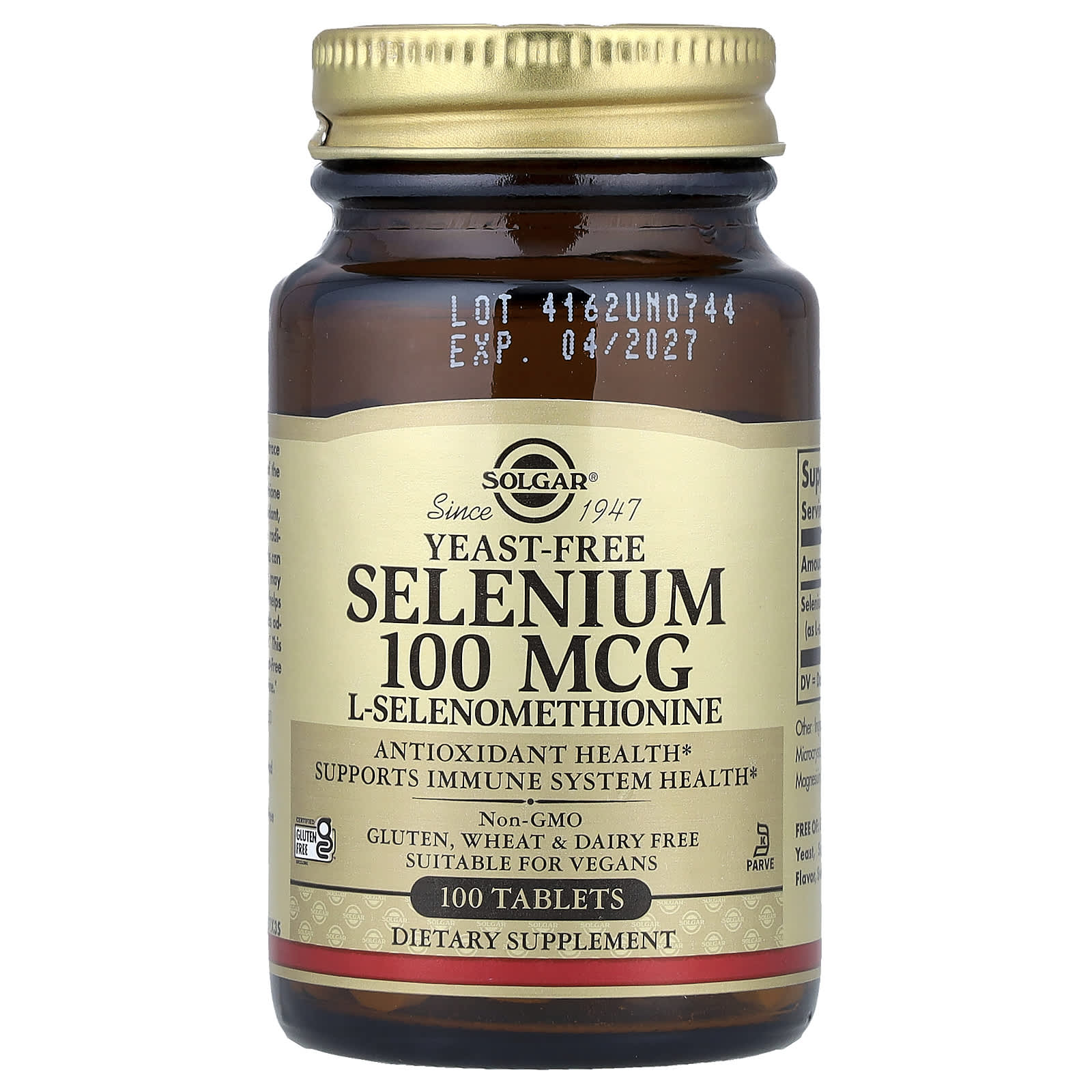
Terms and sources
- selenoproteins
- In these proteins, selenium sits inside the amino acid selenocysteine. NIH Office of Dietary Supplements; Linus Pauling Institute.
- selenium yeast
- Yeast grown in a high-selenium medium; it holds selenium mainly as selenomethionine. NIH Office of Dietary Supplements.
Selenium in the body
Selenoproteins include glutathione peroxidases, thioredoxin reductases and selenoprotein P. Their roles include thyroid hormone metabolism, DNA synthesis, reproduction and protection from oxidative damage. The thyroid gland holds more selenium for its size than any other organ. Selenoprotein P, made mainly in the liver, carries selenium to other tissues.
Terms and sources
- glutathione peroxidases
- Enzymes that break down hydrogen peroxide and fat peroxides. Linus Pauling Institute.
- thyroid hormone metabolism
- NIH Office of Dietary Supplements.
- more selenium for its size
- NIH: "Selenium concentration is higher in the thyroid gland than in any other organ in the body…"
- carries selenium
- Linus Pauling Institute.
About 28% to 46% of the body's selenium is in skeletal muscle. The body keeps its selenium steady mainly through the urine. Selenomethionine can also be built into ordinary body proteins in place of the amino acid methionine. Blood selenium of 8 mcg/dL or more is usually considered sufficient in healthy people. Research suggests that selenoprotein P and glutathione peroxidase rise with supplements only when selenium status is low, NIH notes.
Terms and sources
- 28% to 46%
- NIH Office of Dietary Supplements.
- through the urine
- At higher intakes, selenium also leaves through the lungs and in stool. NIH Office of Dietary Supplements.
- in place of the amino acid methionine
- Only proteins with selenocysteine count as selenoproteins. Linus Pauling Institute.
- 8 mcg/dL
- Plasma or serum selenium. Hair and nail selenium show intake over months or years. NIH Office of Dietary Supplements.
- NIH notes
- NIH Office of Dietary Supplements.
NIH notes: "Selenosis is the result of chronically high intakes of selenium. It is most commonly characterized by hair loss and nail brittleness or loss, but other signs and symptoms can include a garlic odor in the breath, a metallic taste in the mouth, skin rash, nausea, diarrhea, fatigue, irritability, and nervous system abnormalities. The Tolerable Upper Intake Level for selenium is 400 mcg for adults, and it ranges from 45 mcg to 400 mcg for infants, children, and adolescents, depending on age."
Terms and sources
- NIH notes
- NIH Office of Dietary Supplements, Selenium fact sheet for health professionals, section on health risks from excessive selenium. The opening paragraph.
NIH continues: "Chronically high intakes of the organic and inorganic forms of selenium have similar effects. Early indicators of excess intake are a garlic odor in the breath and a metallic taste in the mouth. The most common clinical signs of chronically high selenium intakes, or selenosis, are hair loss and nail brittleness or loss. Other signs and symptoms include skin rash, nausea, diarrhea, fatigue, irritability, and nervous system abnormalities."
Terms and sources
- NIH continues
- The next paragraph of the same NIH section.
It continues: "As discussed earlier, Brazil nuts contain very high amounts of selenium (68–91 mcg per nut) and could cause selenium toxicity if consumed regularly. Acute selenium toxicity has resulted from the ingestion of misformulated over-the-counter products that contain very large amounts of selenium. In 2008, for example, 201 people experienced severe adverse reactions from taking a liquid dietary supplement that contained 200 times the labeled amount of selenium. Acute selenium toxicity can cause severe gastrointestinal and neurological symptoms; acute respiratory distress syndrome; myocardial infarction; hair loss; muscle tenderness; tremors; lightheadedness; facial flushing; kidney failure; cardiac failure; and, in rare cases, death."
Terms and sources
- It continues
- The next paragraph of the same NIH section.
NIH also describes a subgroup result from SELECT, a large trial of 200 mcg a day in men. NIH notes: "Further investigation in a case-cohort of 1,739 men with prostate cancer and 3,117 matched controls from the SELECT trial found that selenium supplementation did not affect prostate cancer risk in men with low baseline selenium status (based on toenail selenium levels). However, the researchers did find an increased risk of high-grade prostate cancer in men with higher baseline selenium status (≥60th percentile of toenail selenium) and recommended that men over age 55 avoid selenium supplementation at doses that exceed recommended dietary intakes."
Terms and sources
- subgroup result from SELECT
- NIH Office of Dietary Supplements, Selenium fact sheet for health professionals, section on selenium and health.
Information, not a prescription. Do not start, stop or combine supplements or medicines on your own.